Jal Shakti Minister Paatil holds water conservation drive in Amroha
Synopsis
Union Jal Shakti Minister C. R. Paatil on 3 July 2026 highlighted a student water conservation awareness event in Amroha, UP, where notebooks were distributed and participants pledged to spread the conservation message — part of PM Modi's jan bhagidari push under Namami Gange and Jal Shakti Abhiyan.
Key Takeaways
Union Jal Shakti Minister C.
Paatil posted about a water conservation awareness programme held in Amroha, Uttar Pradesh on 3 July 2026 .
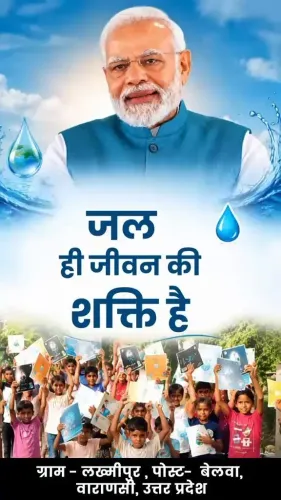
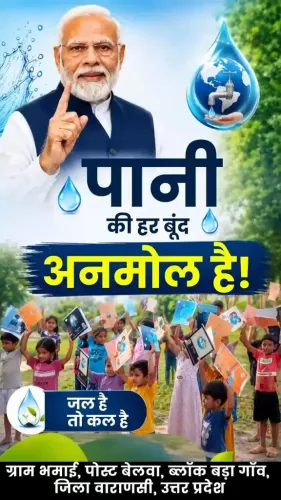
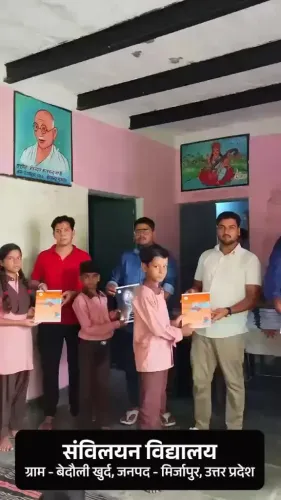
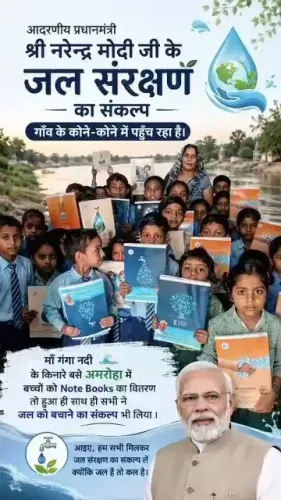
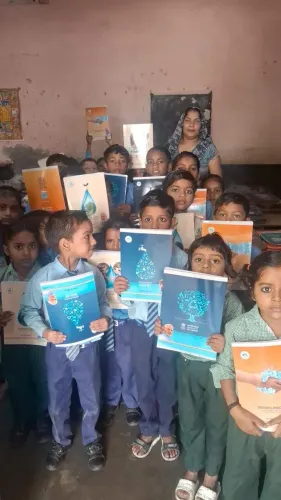
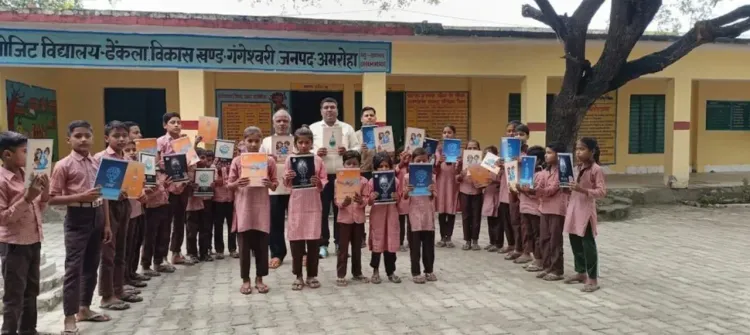
The event targeted school students near the banks of the Ganga , with notebooks distributed as part of the outreach.
Participants took a collective pledge to conserve water and spread the message within their communities.
The drive is part of PM Narendra Modi 's broader jan bhagidari (people's participation) framework for water conservation.
The programme aligns with three central schemes: Namami Gange (2014), Jal Shakti Abhiyan (2019), and Jal Jeevan Mission (2019).
Union Jal Shakti Minister C. R. Paatil on Friday, 3 July 2026, highlighted a student-focused water conservation awareness programme held in Amroha, Uttar Pradesh, situated near the banks of the Ganga. The event, conducted under the broader push for jan bhagidari (people's participation) championed by Prime Minister Narendra Modi, saw students receive notebooks and collectively pledge to spread the message of water conservation in their communities.
Context
Paatil's post, written in Hindi, states that under the leadership of PM Modi, the message of water conservation is now reaching every citizen, and continuous efforts are being made to turn it into a powerful people's movement. He wrote: 'माँ गंगा के तट पर बसे अमरोहा में विद्यार्थियों के बीच जागरूकता कार्यक्रम आयोजित किया गया' — 'An awareness programme was organised among students in Amroha, situated on the banks of Mother Ganga.' Notebooks were distributed, and participants took a collective pledge to conserve water and carry the message to society at large.
Amroha, a town in western Uttar Pradesh within the Ganga basin, has been a recurring site for outreach events linking river conservation with community engagement. By anchoring the programme there, the ministry reinforces the symbolic and geographic centrality of the Ganga to India's water policy narrative.
Policy Backdrop
The event sits within a layered policy framework built over the past decade. The Namami Gange programme, launched in 2014–15, was designed to address both the physical pollution of the river and the behavioural attitudes of communities living along its banks. It remains the government's flagship river-rejuvenation effort, combining sewage infrastructure with public awareness modules.
Complementing it, the Jal Shakti Abhiyan — initiated in 2019 — expanded the conservation mandate beyond the Ganga to a nationwide campaign targeting rainwater harvesting and groundwater recharge. The Jal Jeevan Mission, also launched in 2019, further embedded community participation as a formal requirement, aiming to provide functional household tap connections while building local ownership over water sources. School-level outreach, including pledge drives and distribution of awareness material, has been a recurring tool across all three initiatives.
Stakeholders and Impact
The primary beneficiaries of such awareness programmes are school students and Ganga basin communities — groups that government planners identify as both vulnerable to water scarcity and capable of driving long-term behavioural change. Reaching students through pledge-based events and branded stationery is a low-cost, high-visibility strategy that has been deployed in multiple states under the Jal Shakti Abhiyan framework.
For Amroha specifically, such events reinforce local civic identity around the Ganga while giving the central ministry a visible presence in a constituency-level setting. The distribution of notebooks bearing conservation messaging serves as a durable reminder of the pledge, extending the campaign's reach beyond the event itself.
What's Next
Observers will watch for further rollout of school-based awareness modules under Jal Shakti Abhiyan 2.0, as well as any parliamentary updates on funding and targets for Namami Gange Phase II. The ministry's continued use of ground-level events suggests an intent to sustain public visibility for water conservation ahead of any major policy announcements. Whether such pledges translate into measurable community-level outcomes will depend on follow-up mechanisms that go beyond single-day awareness drives.
Point of View
The Jal Shakti Ministry reinforces the river's role as the symbolic spine of India's water conservation narrative. Student pledge drives are a low-cost, replicable format that generates political visibility while building a pipeline of conservation-aware citizens — a long-term bet on demand-side change. The frequency of such events will be a useful indicator of how seriously the ministry is investing in the soft-power dimension of its water agenda ahead of Jal Shakti Abhiyan 2.0.
NationPress
2 Oct 2026
Frequently Asked Questions
What happened at the water conservation event in Amroha?
A student awareness programme was held in Amroha, Uttar Pradesh, near the banks of the Ganga, where notebooks were distributed and participants took a collective pledge to conserve water and spread the message in their communities.
Who organised the Amroha water conservation programme?
The event was organised as part of the Union Jal Shakti Ministry's jan bhagidari outreach under schemes including Namami Gange and Jal Shakti Abhiyan, with Minister C. R. Paatil highlighting the programme on social media on 3 July 2026.
What is the Jal Shakti Abhiyan?
The Jal Shakti Abhiyan is a nationwide water conservation campaign launched in 2019 by the central government, focusing on rainwater harvesting, groundwater recharge, and community participation across India.
What is Namami Gange and how does it relate to this event?
Namami Gange is a flagship programme launched in 2014–15 for the conservation and rejuvenation of the Ganga river, combining infrastructure works with public awareness drives — the framework under which school-level outreach events like the Amroha programme are conducted.
Why is Amroha significant for water conservation events?
Amroha is a town in western Uttar Pradesh situated within the Ganga basin, making it a symbolically and geographically relevant site for conservation outreach tied to the Namami Gange mission.