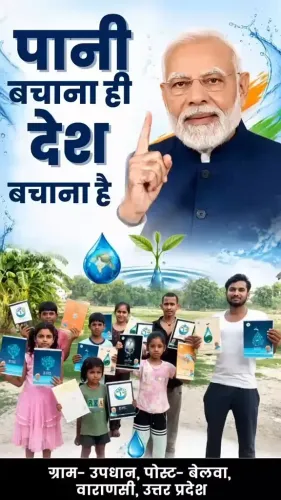
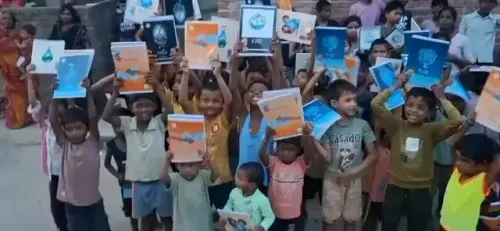
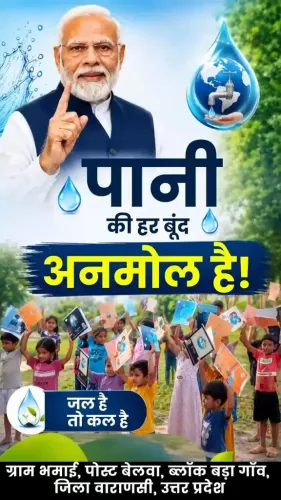
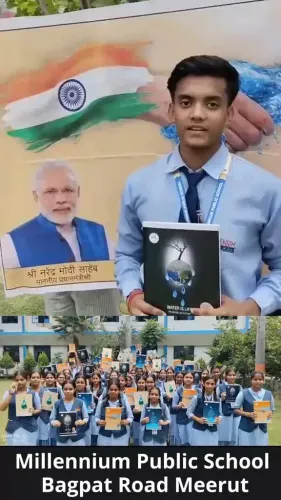
Jal Shakti Minister Paatil holds water awareness drive in Varanasi village
Synopsis
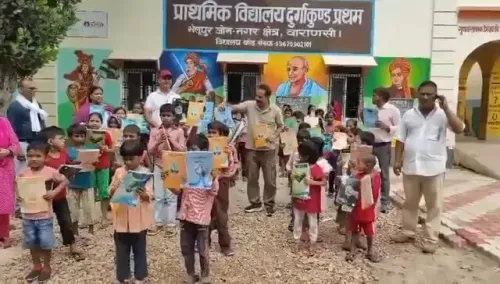
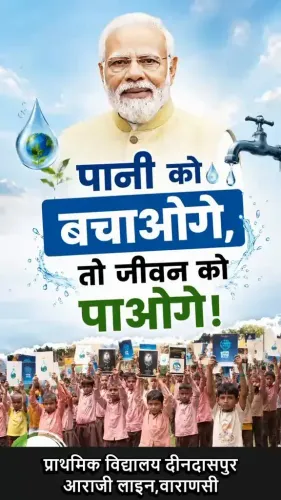
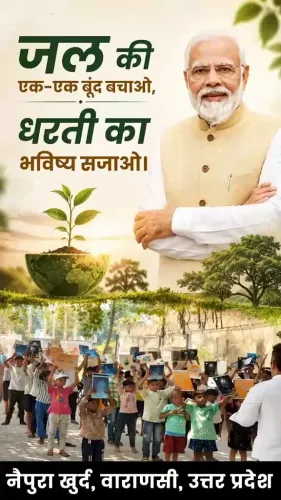
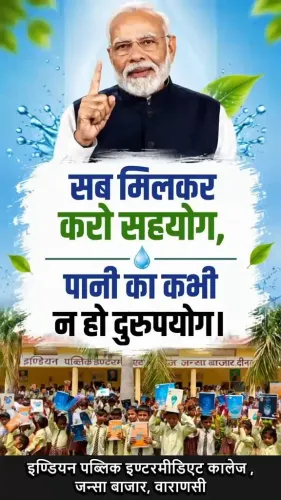
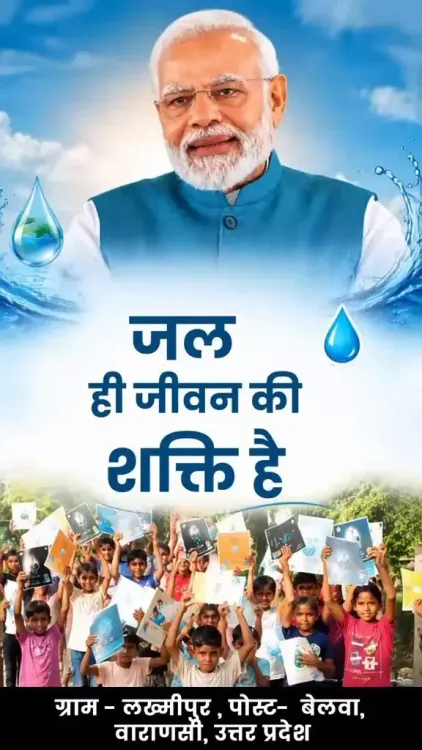
Union Jal Shakti Minister C. R. Paatil announced on 22 July 2026 that schoolchildren at Gram Lakhmipur Post Belwa in Varanasi received water-conservation awareness sessions and notebooks, crediting the initiative to Prime Minister Narendra Modi's leadership.
Key Takeaways
Union Jal Shakti Minister C.
Paatil announced the event on 22 July 2026 via a post on X.
The awareness drive was held at Gram Lakhmipur Post Belwa in Varanasi , Prime Minister Modi's Lok Sabha constituency.
Schoolchildren received notebooks alongside the water-conservation awareness session.
The activity aligns with the Jal Shakti Abhiyan and Jal Jeevan Mission , both launched in 2019 .
The Jal Shakti Ministry was formed in 2019 by merging two water-related central ministries.
State-level Jal Jeevan Mission Phase-II targets and potential school water-club guidelines are the next policy milestones to watch.
Union Jal Shakti Minister C. R. Paatil on Wednesday, 22 July 2026 announced that a water-conservation awareness session was conducted at Gram Lakhmipur Post Belwa in Varanasi, where schoolchildren also received notebooks as part of the outreach effort. The minister credited the initiative to the leadership of Prime Minister Narendra Modi, in whose Lok Sabha constituency the event was held.
Context
Paatil shared the update on X, writing in Hindi that under the leadership of 'aadarniya Pradhan Mantri Shri Narendra Modi ji' ('respected Prime Minister Narendra Modi'), children at Gram Lakhmipur Post Belwa in Varanasi were made aware of 'Jal Sanrakshan' (water conservation) and notebooks were distributed among them. He noted that 'all the children were very happy and thanked Modi ji from the heart.'
The event is the latest in a series of village-level outreach activities organised under the Jal Shakti Ministry that combine awareness messaging with distribution of educational materials, particularly in Uttar Pradesh.
Policy Backdrop
The Jal Shakti Ministry was created in 2019 by merging the ministries of water resources and drinking water and sanitation, with a mandate to coordinate conservation and supply efforts across India. The same year saw the launch of two flagship programmes: the Jal Shakti Abhiyan, a nationwide campaign targeting water-stressed blocks, and the Jal Jeevan Mission, aimed at providing functional household tap connections to all rural households.
Since 2014, the central government has woven water-conservation messaging into school and village programmes under the Swachh Bharat and Namami Gange frameworks, later consolidated under the Jal Shakti Ministry. Events in Varanasi — Prime Minister Modi's parliamentary seat — frequently combine awareness sessions with distribution of educational materials to reinforce national water-security priorities at the grassroots.
Stakeholders and Impact
The immediate beneficiaries of the Lakhmipur Belwa event are the schoolchildren of the village and the broader rural community of eastern Uttar Pradesh. Awareness activities of this kind are designed to build long-term behavioural change around water use in regions that face seasonal water stress.
Such grassroots drives also serve a political-communication function: they visibly associate the Prime Minister's home constituency with the delivery of central government schemes, reinforcing the link between national policy and local benefit for residents of Varanasi.
What's Next
Attention will now turn to state-level implementation reports for Jal Jeevan Mission Phase-II targets in Uttar Pradesh and any new guidelines on school water clubs that may be announced in the next Union Budget cycle. Continued outreach events in Varanasi and other priority districts are expected as the ministry pushes to meet its rural water-access benchmarks.
Point of View
Paatil reinforces the political branding of national water schemes at the local level — a pattern consistent with the ministry's communication strategy since 2019. The distribution of notebooks alongside awareness sessions signals an effort to embed conservation values in younger demographics, extending the reach of the Jal Shakti Abhiyan beyond adult beneficiaries. As Jal Jeevan Mission Phase-II targets come under scrutiny, such visible outreach events serve both a programmatic and a political-communication purpose.
NationPress
21 Oct 2026
Frequently Asked Questions
What happened at Gram Lakhmipur Post Belwa in Varanasi?
A water-conservation awareness session was held for schoolchildren at Gram Lakhmipur Post Belwa in Varanasi, during which notebooks were also distributed. Union Jal Shakti Minister C. R. Paatil announced the event on 22 July 2026, crediting it to Prime Minister Narendra Modi's leadership.
What is the Jal Shakti Abhiyan?
The Jal Shakti Abhiyan is a nationwide water-conservation campaign launched in 2019 targeting water-stressed blocks across India. It operates under the Jal Shakti Ministry and focuses on source strengthening, rainwater harvesting, and community awareness.
Why does Varanasi frequently host central government scheme events?
Varanasi is Prime Minister Narendra Modi's Lok Sabha constituency, making it a natural focal point for high-visibility demonstrations of central government initiatives. Events there help reinforce the connection between national policy priorities and local delivery.
What is the Jal Jeevan Mission?
The Jal Jeevan Mission, launched in 2019, aims to provide functional household tap connections to every rural home in India. It places strong emphasis on community participation and awareness, and its Phase-II targets are currently under state-level implementation.
What is C. R. Paatil's role in the Indian government?
C. R. Paatil is the Union Minister of Jal Shakti in the Government of India. He is also a senior BJP leader and former president of the BJP's Gujarat state unit.