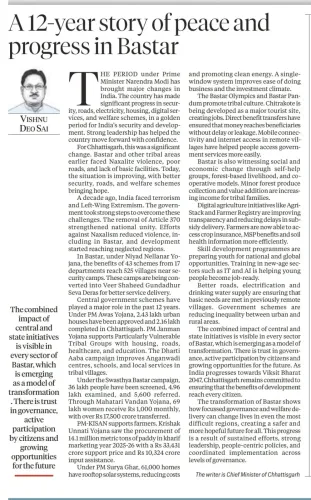
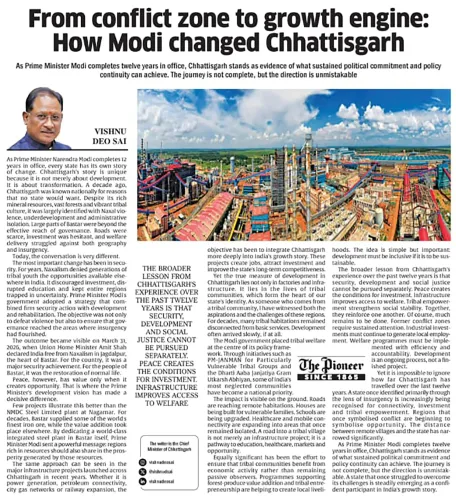
CM Sai Hails Bastar's Journey From Red Terror to Tricolour
Synopsis
Chhattisgarh CM Vishnu Deo Sai marked Bastar's shift from Maoist insurgency to development on August 17, 2026, describing the journey from the 'red corridor' to the tricolour as a story of trust, effort, and a new future for the long-troubled region.
Key Takeaways
CM Vishnu Deo Sai posted on August 17, 2026 , framing Bastar's transformation from Maoist insurgency to development as a defining journey.
He described the shift as moving from the 'red corridor' — long India's most Maoist-affected belt — to the 'shelter of the tricolour.' The post invokes development, trust, and effort as the three pillars replacing fear and armed conflict in Bastar.
The message arrives in the post- Independence Day period, when the BJP-led Chhattisgarh government is consolidating its governance narrative after winning the 2023 assembly elections .
No specific scheme or incident is cited; the post is a broad political and emotional claim about the region's direction of travel.
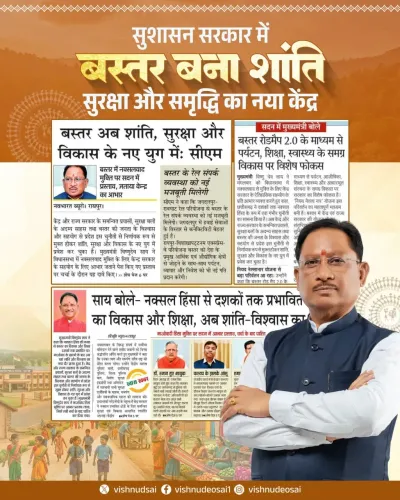
Where gunfire once silenced villages, the tricolour now flies. Chhattisgarh Chief Minister Vishnu Deo Sai on Monday, August 17, 2026, invoked a powerful image of transformation in Bastar — declaring that a region long synonymous with Maoist insurgency is today scripting a story of development, trust, and a new future.
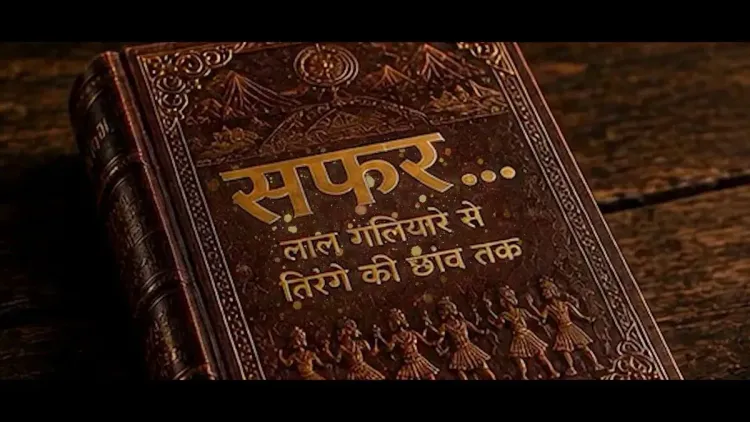
In a post that blends poetry with politics, CM Sai described the journey as 'lal galiare se tirangle ki chhaon tak' — 'from the red corridor to the shelter of the tricolour.' The contrast is deliberate and pointed: fear and the echo of guns on one side, development and belief on the other.
Bastar's Long Shadow: What the 'Red Corridor' Meant
Bastar, a sprawling forested division in southern Chhattisgarh, was for decades the heartland of Left Wing Extremism in India. The so-called red corridor — a belt of Maoist-affected districts stretching across central and eastern India — had its most entrenched presence here. Security forces, civilians, and elected representatives all bore the cost of that violence. Roads went unbuilt. Schools sat empty. Governance barely reached the last village.
That history is precisely what gives CM Sai's framing its weight. Calling it a 'journey' acknowledges that the change did not happen overnight — it was fought for, district by district, village by village.
The Tricolour as a Marker of Reclaimed Ground
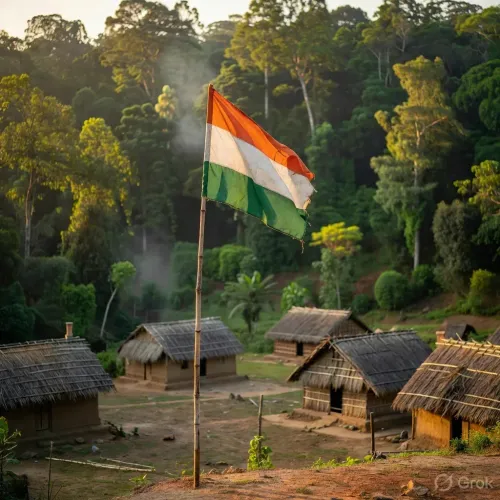
The tricolour in Sai's post is not decorative — it is territorial. In the lexicon of India's counter-insurgency narrative, hoisting the national flag in a formerly Maoist-controlled area signals state authority restored. CM Sai's words — 'vikas, vishwas aur prayas ka tiranga', the tricolour of development, trust, and effort — reframe the flag as a symbol of civilian life returning to normal, not merely a security milestone.
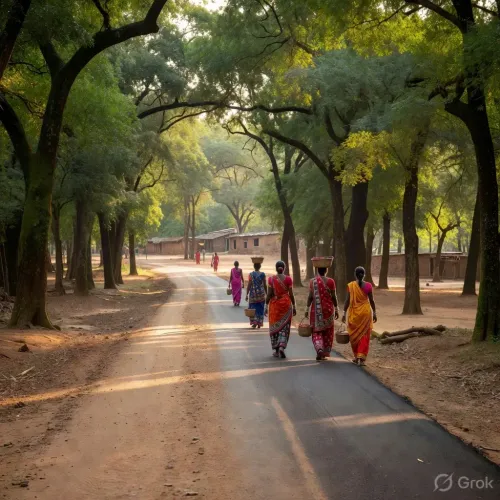
'Returning joys and a changing picture in Bastar,' he wrote, 'are telling the story of new trust and a new future.' The language is aspirational, but the subtext is administrative: roads, schools, health posts, and livelihoods filling the vacuum that violence once held.
Why This Moment, Why This Message
The post arrives in the weeks following Independence Day, a period when political leaders across India traditionally take stock of national progress. For a BJP chief minister in Chhattisgarh — a state the party wrested back in the 2023 assembly elections after five years in opposition — Bastar's transformation is both a governance claim and a political one. Demonstrating that the state's most troubled region is stabilising is central to the BJP's Chhattisgarh narrative.
No specific event, scheme, or incident is cited in the post itself, but the sentiment is unmistakable: the administration wants Bastar's story told as one of arrival, not of ongoing crisis.
Bastar is not fully pacified — that much any honest accounting would note. But the direction of travel, as CM Sai frames it, has changed. And in a region where change once came only in the form of violence, even the direction matters.
Point of View
And invoking it now signals the party intends to make security-to-development conversion a pillar of its 2028 campaign narrative. The absence of specific data or schemes in the post is telling: this is about sentiment and direction, not accountability. Analysts watching Chhattisgarh will note that the administration's credibility on Bastar will ultimately rest on measurable outcomes — roads built, schools opened, surrendered cadres rehabilitated — not on poetic declarations alone.
NationPress
18 Aug 2026
Frequently Asked Questions
What is the red corridor in India?
The red corridor refers to a belt of districts across central and eastern India — including large parts of Chhattisgarh, Jharkhand, and Odisha — where Maoist (Naxalite) insurgents historically exercised significant influence, disrupting governance and development for decades.
Why is Bastar significant in the context of Maoist insurgency?
Bastar in southern Chhattisgarh was long considered the heartland of Left Wing Extremism in India, with dense forests providing cover for armed groups and making state administration extremely difficult for many years.
What did CM Vishnu Deo Sai say about Bastar on August 17, 2026?
CM Sai described Bastar's journey as moving from the 'red corridor' — marked by fear and gunfire — to the 'shelter of the tricolour,' with development, trust, and effort now defining the region's story.
When did the BJP return to power in Chhattisgarh?
The BJP won the Chhattisgarh assembly elections in 2023 , returning to power after five years in opposition, with Vishnu Deo Sai sworn in as Chief Minister.
What does 'lal galiare se tirangle ki chhaon tak' mean?
The Hindi phrase translates to 'from the red corridor to the shelter of the tricolour' — a poetic formulation CM Sai used to describe Bastar's shift from Maoist-dominated conflict to state-led development.