CM Sai: Bastar Moves From Gun Shadow to Ramp Confidence
Synopsis
Chhattisgarh Chief Minister Vishnu Deo Sai has highlighted Bastar's shift from armed conflict to development opportunity, crediting PM Modi's vision and Home Minister Amit Shah's security resolve for the region's transformation away from Left Wing Extremism.
Key Takeaways
CM Vishnu Deo Sai on August 13, 2026 cited Bastar's transformation as evidence of the government's anti-LWE push bearing results.
Bastar in southern Chhattisgarh has historically been one of India's most intense Maoist insurgency zones.
Since 2014 , the central government has combined paramilitary deployments, surrender schemes, and infrastructure projects to reduce LWE influence.
Official data has shown a sustained decline in LWE-related violent incidents across Chhattisgarh , Jharkhand , and Odisha over the past decade.
Home Minister Amit Shah has publicly framed LWE elimination as a time-bound mission, with Chhattisgarh as the primary remaining theatre.
Road connectivity, mobile towers, schools, and welfare delivery in Bastar are the on-ground metrics the government points to as proof of progress.
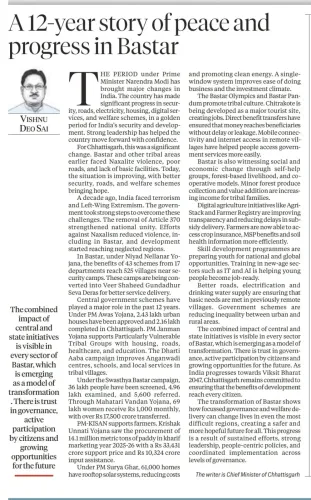
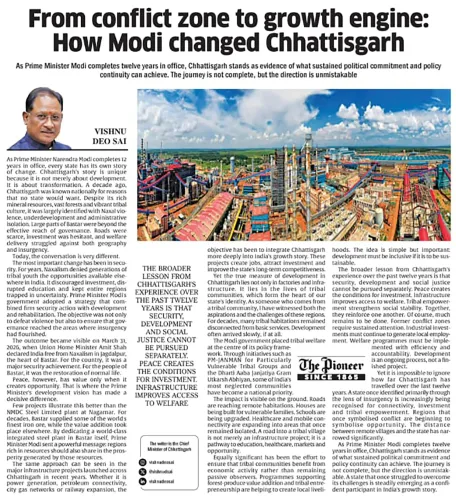
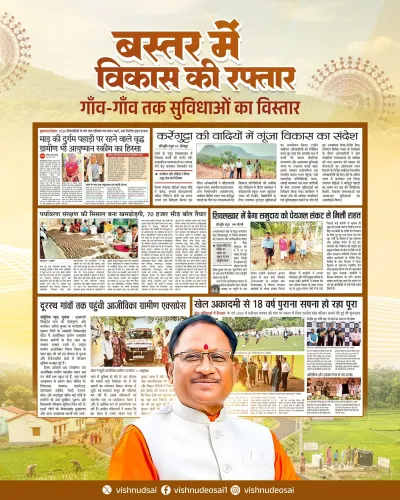
A region once defined by the sound of gunfire is now drawing attention for something entirely different: a fashion ramp. Chhattisgarh Chief Minister Vishnu Deo Sai on Thursday, August 13, 2026 pointed to Bastar's visible transformation as proof that the combined security-and-development push against Left Wing Extremism is delivering on the ground.
In his post, CM Sai wrote: 'From the shadow of the gun to the confidence of the ramp — Bastar's transformation speaks for itself. Peace is prevailing, opportunities are opening up and lives are changing.' He credited the shift to Prime Minister Narendra Modi's vision and Union Home Minister Amit Shah's 'firm resolve to free Bastar from Left Wing Extremism and take development to the last mile.'
Bastar's Long Road From Maoist Heartland
Bastar, a sprawling division in southern Chhattisgarh, has for decades been among the most intense theatres of Maoist insurgency in India. Armed violence, displacement, and a near-complete absence of state services defined life for tribal communities across its forests and hills. Roads were contested territory; mobile towers were targets; schools and health posts struggled to function.
Since 2014, the central government has pursued a twin-track approach: expanding paramilitary presence alongside accelerated infrastructure — roads, telecom connectivity, welfare delivery — designed to drain the insurgency of its social base. Surrender and rehabilitation schemes have run in parallel, offering former cadres a path back. Official data across Chhattisgarh, Jharkhand, and Odisha has pointed to a sustained decline in LWE-related violent incidents over the past decade.
The Ramp as Symbol — and What It Signals
The imagery CM Sai invokes — a fashion ramp rising where armed groups once held sway — is deliberate. It is a shorthand for normalcy: young people from tribal communities stepping into spaces of aspiration rather than conflict. Whether in craft exhibitions, skill-development showcases, or cultural events, such moments have become part of the government's communication of progress in the region.
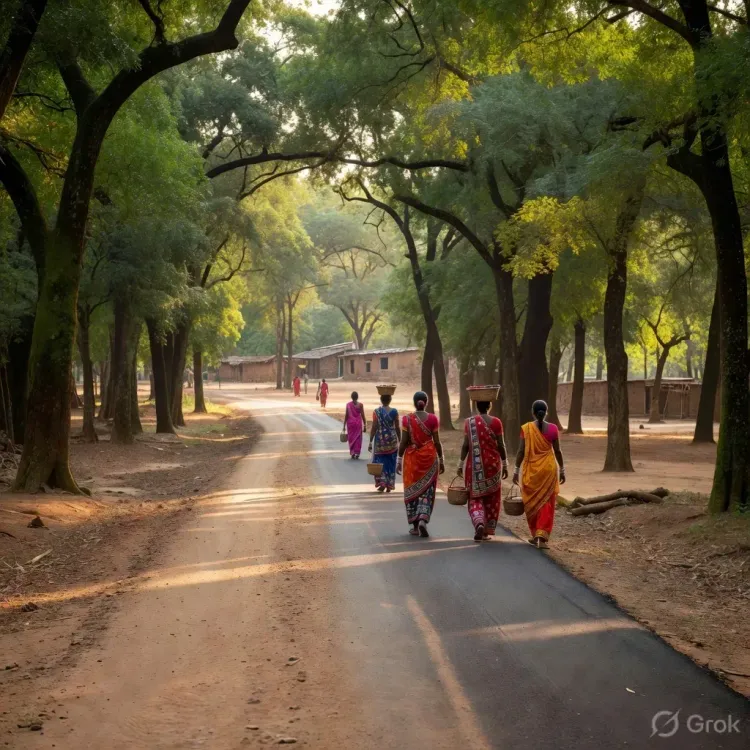
The deeper argument is structural. Roads now reach villages that were inaccessible for years. Mobile connectivity has expanded. Schools and anganwadis are functioning in areas where they previously could not. The Ministry of Home Affairs tracks LWE violence data quarterly, and that trajectory — fewer incidents, fewer districts on the red-zone map — is the metric the government points to as the real scorecard.
Modi-Shah Doctrine and Chhattisgarh's Place in It
Home Minister Amit Shah has repeatedly described the elimination of Left Wing Extremism as a time-bound mission, publicly setting targets for bringing Naxalism to a conclusive end. Chhattisgarh, as the primary remaining theatre, sits at the centre of that ambition. CM Sai's post is, in part, a state-level endorsement of that federal push — framing Bastar's changing face as validation of the approach from Delhi.
For tribal communities who lived through the worst years of the conflict, the measure of transformation will ultimately be in livelihoods secured, land rights protected, and public services sustained — not just security metrics. Both dimensions are now in the frame as the government moves toward what it describes as the final phase of LWE eradication.
Bastar's ramp moment is either a turning point or a symbol of one already passed. Either way, the region is being watched.
Point of View
Contrast-driven imagery to reinforce the BJP's core governance narrative ahead of any future electoral cycle in Chhattisgarh. By explicitly naming Modi and Shah, the Chief Minister anchors state-level progress to the federal leadership, a pattern consistent with how BJP chief ministers have framed anti-LWE gains since 2019. The 'gun to ramp' framing is striking precisely because it is measurable in human terms, not just security statistics — it shifts the conversation from body counts to life chances. The real test, as analysts and tribal rights advocates have long argued, is whether development gains outlast the security surge and reach the most marginalised communities within Bastar's complex social landscape.
NationPress
28 Sept 2026
Frequently Asked Questions
What is the current situation of Naxalism in Bastar in 2026?
Bastar in southern Chhattisgarh has seen a significant reduction in Left Wing Extremism-related violence over the past decade according to official data, with the central government combining security operations, surrender schemes, and infrastructure development to shrink Maoist influence. CM Vishnu Deo Sai's August 2026 post signals continued official confidence in the region's transformation.
What has the Modi government done to reduce LWE in Chhattisgarh?
Since 2014, the central government has deployed additional paramilitary forces, expanded road and telecom connectivity, run rehabilitation schemes for surrendering cadres, and directed welfare funds into LWE-affected districts. Home Minister Amit Shah has described eliminating Naxalism as a time-bound mission.
Why is Bastar significant in India's fight against Left Wing Extremism?
Bastar division in southern Chhattisgarh has historically been the most intense theatre of Maoist insurgency in India, with armed groups controlling large forested areas and disrupting governance for decades. It remains the primary focus of the central government's anti-LWE strategy.
What does 'gun to ramp' mean in CM Sai's Bastar post?
CM Vishnu Deo Sai used the phrase 'from the shadow of the gun to the confidence of the ramp' to contrast Bastar's violent Maoist past with its present-day normalcy, where tribal youth are participating in cultural and aspirational activities — symbolising peace and development replacing armed conflict.
What role does Amit Shah play in Chhattisgarh's anti-Naxal operations?
As Union Home Minister, Amit Shah oversees India's internal security policy, including the national strategy against Left Wing Extremism. He has personally set public targets for ending Naxalism and has been closely associated with the security surge in Chhattisgarh.