CM Yogi: UP got ₹50 lakh crore investment proposals in 9.5 years

Synopsis
Chief Minister Yogi Adityanath announced on 12 November 2026 that Uttar Pradesh has received over ₹50 lakh crore in investment proposals over nine-and-a-half years, with more than ₹15 lakh crore already grounded — a headline figure the government says reflects a decade of ease-of-doing-business reforms.
Key Takeaways
₹50 lakh crore+ in investment proposals received by Uttar Pradesh over the past 9.5 years since the BJP government took office in March 2017 .
More than ₹15 lakh crore of proposed investments have reportedly been grounded in actual projects, according to CM Yogi Adityanath.
The state's turnaround strategy centred on ease-of-doing-business reforms, single-window clearances, and large-scale investor summits.
Key sectors targeted include defence, aerospace, electronics, data centres, and food processing across UP's 75 districts .
Opposition parties have historically demanded district-level employment data and third-party audits to verify investment tallies.
The next investor summit outcomes and official commissioning data will be the key test of these headline figures.
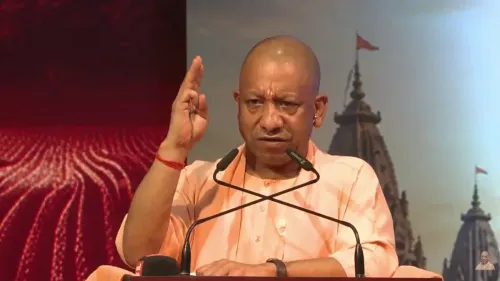
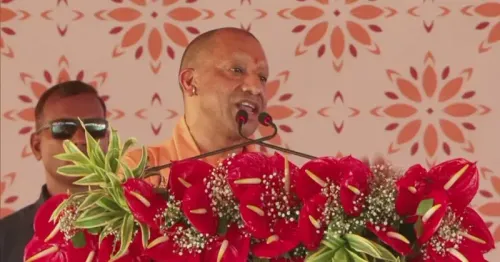
In nine-and-a-half years, Uttar Pradesh has gone from being tagged a 'BIMARU' laggard to posting investment numbers that rival entire national economies — and Uttar Pradesh Chief Minister Yogi Adityanath is making sure the country notices. On Thursday, 12 November 2026, the Chief Minister shared a sweeping economic milestone on X, declaring that the state has received investment proposals worth more than ₹50 lakh crore since his government took charge, with over ₹15 lakh crore of that already grounded in real projects.
Posting in Hindi, CM Yogi wrote: 'पिछले साढ़े 9 वर्षों में उत्तर प्रदेश को ₹50 लाख करोड़ से अधिक के निवेश के प्रस्ताव प्राप्त हुए हैं... इनमें से ₹15 lakh करोड़ से अधिक के निवेश अब तक धरातल पर उतर चुके हैं...' — 'In the last nine-and-a-half years, Uttar Pradesh has received investment proposals of more than ₹50 lakh crore… of these, investments worth more than ₹15 lakh crore have already come to ground.'
From BIMARU to boardroom favourite: UP's investment arc since 2017
When the BJP government under Yogi Adityanath assumed office in March 2017, Uttar Pradesh ranked near the bottom on ease-of-doing-business indices. The administration moved quickly — overhauling land-acquisition clearances, introducing single-window approval systems, and cracking down on what officials described as an extortion-driven licensing culture that had long spooked investors.
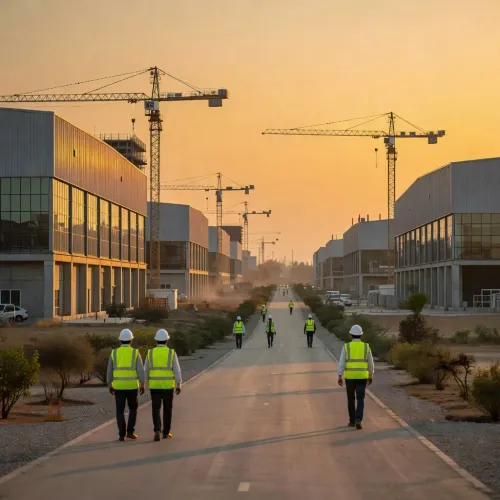
The centrepiece of that pivot was a series of large-scale investor summits, designed to put Lucknow on the map as a credible manufacturing and services destination. Sectors targeted ranged from defence and aerospace corridors — anchored around the Purvanchal Expressway and Bundelkhand Expressway belts — to data centres, electronics, and food processing clusters spread across the state's 75 districts.
The ₹15 lakh crore question: proposals vs pavement
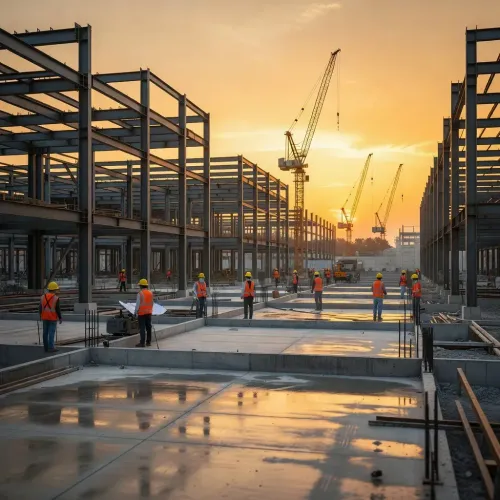
The figure that carries the most weight is not the headline ₹50 lakh crore in proposals — investor summits routinely generate ambitious pledge numbers — but the ₹15 lakh crore that CM Yogi says has actually hit the ground. That conversion rate, if independently verified, would mark a significant improvement on the historical norm in Indian states, where the gap between intent and implementation has historically been wide.
Grounded investment typically translates into factory commissions, infrastructure spend, and job creation — the metrics that matter most to UP's workforce, which at over 200 million people is the largest of any Indian state. The state government has consistently argued that employment generation, particularly in tier-2 and tier-3 cities, is the downstream proof of its economic narrative.
What the next investor summit will need to show
The political stakes around these numbers are high. Opposition parties in Uttar Pradesh have questioned the methodology behind investment tallies in the past, pressing for district-level employment data and third-party audits of commissioned plants. The government's credibility on the economic front will be stress-tested at the next major investor conclave, where the focus will shift from proposals and groundings to actual jobs created and exports generated.
For now, CM Yogi's post plants a marker: that the state's decade-long reform effort is producing results large enough to reshape how India's most populous state is perceived in boardrooms from Mumbai to Tokyo. Whether the data holds up to scrutiny will determine how that story gets written next.
Point of View
As it pre-empts the standard critique that investor summit pledges rarely materialise. Anchoring the claim to a precise nine-and-a-half-year timeline ties the achievement directly to the BJP's governance record in UP, framing economic data as an electoral asset ahead of future assembly and general election cycles. The credibility of these figures will be contested: opposition parties and independent economists will scrutinise conversion rates and job-creation data closely. If the numbers withstand audit, they would represent one of the most significant state-level economic transformations in post-liberalisation India.
NationPress
12 Nov 2026
Frequently Asked Questions
How much investment has Uttar Pradesh received in the last 9.5 years?
Chief Minister Yogi Adityanath announced on 12 November 2026 that Uttar Pradesh has received investment proposals worth more than ₹50 lakh crore over the past nine-and-a-half years, with over ₹15 lakh crore already grounded in real projects.
What is the difference between investment proposals and grounded investment in UP?
Investment proposals are commitments made by companies at investor summits or through MoUs, while grounded investment refers to capital that has actually been deployed — in factories, infrastructure, or operations. CM Yogi's claim is that ₹15 lakh crore of the ₹50 lakh crore proposed has been physically implemented.
What reforms did UP introduce to attract investment after 2017?
After taking office in March 2017, the Yogi Adityanath government overhauled land-acquisition clearances, introduced single-window approval systems, and held periodic large-scale investor summits targeting sectors like defence, electronics, data centres, and food processing.
Which sectors has Uttar Pradesh targeted for investment growth?
UP has focused on defence and aerospace corridors, electronics manufacturing, data centres, food processing, and infrastructure projects, with clusters spread across the state's 75 districts and anchored around expressway belts like Purvanchal and Bundelkhand.
How is the opposition responding to UP's investment claims?
Opposition parties in Uttar Pradesh have historically questioned the methodology behind investment tallies, calling for district-level employment data and independent audits of commissioned plants to verify the government's headline figures.