CM Vishnu Deo Sai Holds Jan Darshan at Bagiya Camp Office
Synopsis
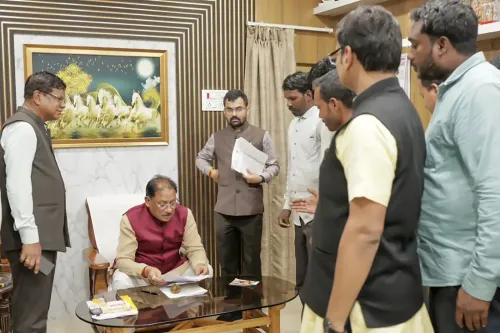
Chhattisgarh Chief Minister Vishnu Deo Sai conducted a Jan Darshan session at his camp office in Bagiya on 17 August 2026, personally hearing citizens' grievances and issuing on-the-spot directives to officials for swift resolution — framing the outreach as the core of his government's governance philosophy.
Key Takeaways
CM Vishnu Deo Sai held a Jan Darshan public-audience session on 17 August 2026 .
The venue was the Chief Minister's Camp Office in Bagiya , his home village in Jashpur district .
Citizens from the surrounding region presented their problems, needs, and suggestions directly to the CM.
Officials present were issued immediate directives for swift resolution of grievances raised on the spot.
Sai framed the session as an expression of his government's core jan seva aur jan kalyan (public service and welfare) commitment.
Governance, at its most elemental, is a two-way conversation — and Chhattisgarh Chief Minister Vishnu Deo Sai made that point concrete on Monday, 17 August 2026, stepping out of Raipur's corridors of power to sit with ordinary citizens at his camp office in Bagiya, his home village.
A Chief Minister at His Doorstep
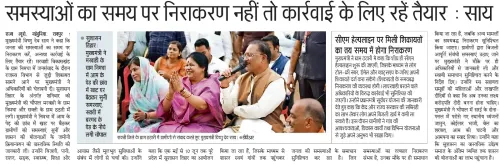
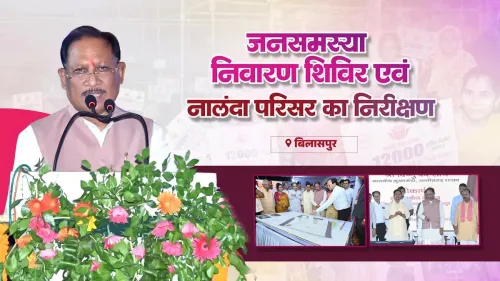
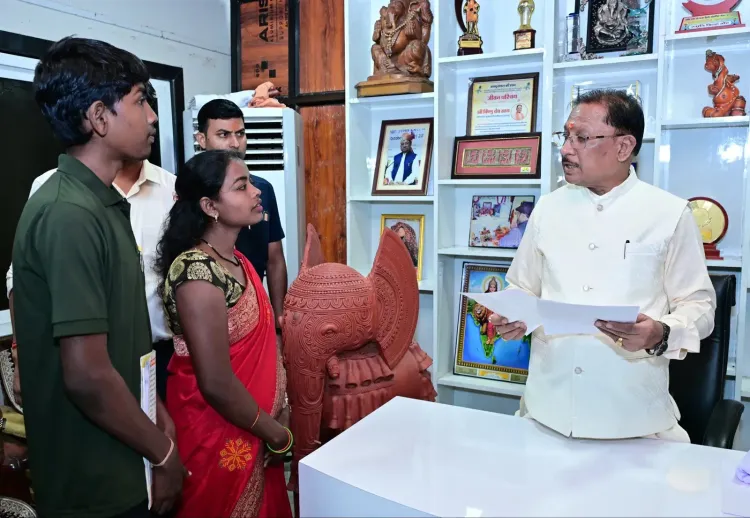
The Jan Darshan — a structured public-audience session — was held at the Chief Minister's Camp Office in Bagiya, a deliberate choice of venue that carries symbolic weight: the state's top executive receiving constituents not in a secretariat chamber but in the village he grew up in. CM Sai described the session as an 'aatmiya bhet' (warm, personal meeting) with the brothers and sisters of the region, listening to their problems, needs, and suggestions.
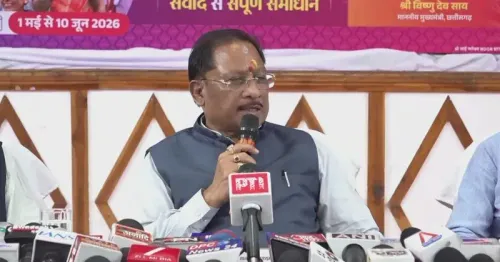
In his own words, the purpose was unambiguous: 'Listening to every person, resolving their problems, and bringing positive change to their lives is the fundamental goal of good governance.' Officials accompanying him were given on-the-spot directives for swift resolution of the grievances raised.
What 'Jan Darshan' Actually Means on the Ground
The Jan Darshan format bypasses layers of bureaucratic filtering that typically stand between a citizen and a senior elected official. Petitioners speak directly, grievances are logged in real time, and department officers present at the session receive immediate instructions — collapsing a process that might otherwise take months into a single morning. For residents of Bagiya and surrounding areas, the camp office visit meant access that would ordinarily require a trip to Raipur.
CM Sai framed the session within his government's broader jan seva aur jan kalyan (public service and public welfare) mandate — positioning grassroots outreach not as a one-off event but as a continuous operating principle.
Bagiya's Place in Sai's Political Identity
Bagiya, located in the Jashpur district of Chhattisgarh, is where Vishnu Deo Sai was born and built his early political base. Maintaining a camp office there — and using it for formal governance functions like Jan Darshan — keeps him visibly rooted in the tribal heartland that defines much of his constituency and his party's outreach in the state. It is a signal, repeated in action rather than rhetoric, about where the government says it is listening.
The next test, as always, is whether the instructions issued to officials on 17 August translate into resolved files — and whether the citizens who walked into Bagiya that morning walk away with answers.
Point of View
Ground-level governance — and CM Sai's choice of Bagiya, his tribal home village, amplifies that message with personal authenticity. By issuing on-the-spot directives rather than forwarding complaints through routine channels, the format creates visible accountability pressure on district officials. The real measure of its effectiveness, however, lies in follow-through rates — a metric rarely made public. For a state with significant tribal and rural populations, sustained camp-office outreach could meaningfully close the citizen-government distance, but only if the bureaucratic pipeline actually delivers.
NationPress
2 Oct 2026
Frequently Asked Questions
What is Jan Darshan in Chhattisgarh?
Jan Darshan is a structured public-audience programme where senior officials or the Chief Minister directly meet citizens to hear their grievances, needs, and suggestions, bypassing routine bureaucratic channels for faster resolution.
Where is CM Vishnu Deo Sai's camp office in Bagiya?
The Chief Minister's Camp Office is located in Bagiya , CM Sai's home village in Jashpur district , Chhattisgarh, which he uses for periodic public-outreach sessions.
What happened at the Jan Darshan on 17 August 2026?
CM Vishnu Deo Sai personally met residents of the Bagiya region, listened to their problems and suggestions, and directed accompanying officials to resolve the grievances swiftly.
Why does CM Sai hold events in Bagiya instead of Raipur?
Bagiya is CM Sai's native village in Jashpur district. Holding governance events there signals proximity to his grassroots base and gives citizens in that region direct access to the Chief Minister without travelling to the state capital.
What is the BJP government's governance philosophy in Chhattisgarh?
CM Sai has articulated the government's approach as listening to every citizen, resolving their problems, and bringing positive change to their lives — a principle he describes as the fundamental goal of good governance, implemented through initiatives like Jan Darshan.