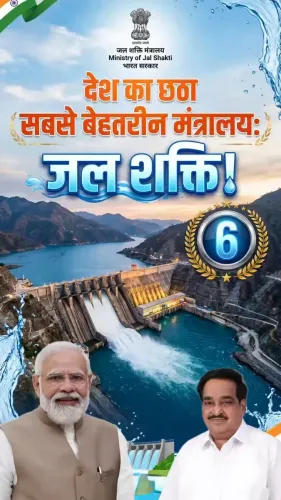
Jal Shakti Minister Paatil hails water conservation as mass movement
Synopsis
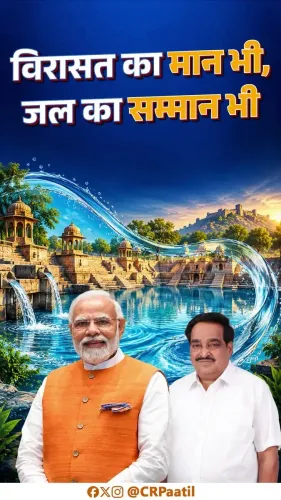
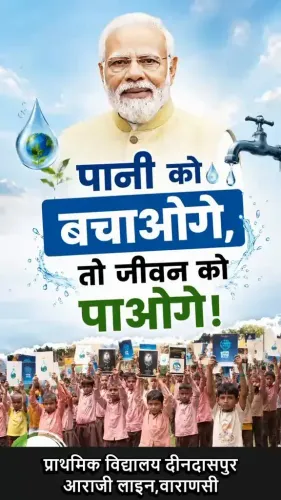
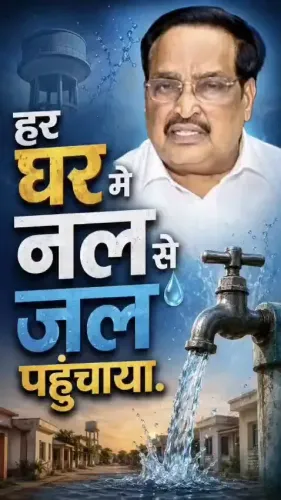
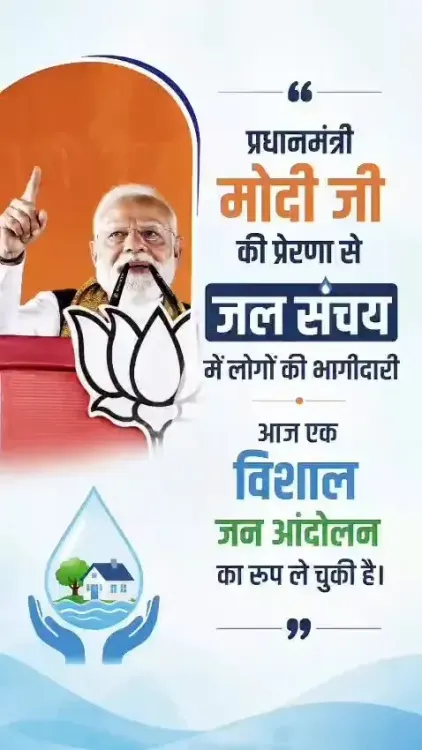
Union Jal Shakti Minister C. R. Paatil has declared that water conservation through public participation has become a massive people's movement under PM Modi's inspiration, posting the tribute as part of the BJP's #12YearsOfSeva campaign on 13 June 2026.
Key Takeaways
Paatil , Union Minister of Jal Shakti, posted on 13 June 2026 crediting PM Modi for turning water conservation into a mass public movement.
The post is part of the BJP's #12YearsOfSeva campaign marking twelve years of the Modi government since May 2014 .
The Ministry of Jal Shakti was formed in 2019 by merging two water-related departments to consolidate policy under one roof.
Key schemes include Jal Jeevan Mission (rural tap water, 2019), Jal Shakti Abhiyan: Catch the Rain (2020), and Atal Bhujal Yojana (groundwater management, 2019).
Primary beneficiaries are rural households and farmers , with gram panchayats and self-help groups central to community-level implementation.
Upcoming Jal Jeevan Mission progress reports and NITI Aayog reviews will be watched for data backing the 'mass movement' characterisation.
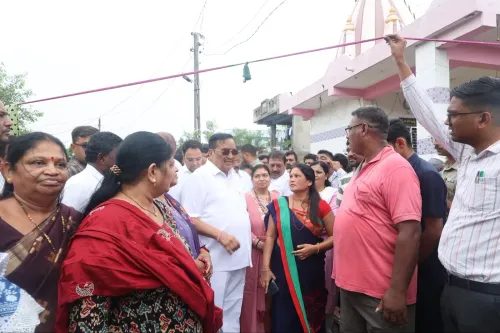
Union Jal Shakti Minister C. R. Paatil on Saturday, 13 June 2026 declared that water conservation through public participation has grown into a massive people's movement, crediting the inspiration of Prime Minister Narendra Modi. The statement came as part of the ruling BJP's #12YearsOfSeva campaign marking twelve years of the Modi government.
In his post on X, Paatil wrote: 'Pradhanmantri Modi ji ki prerna se jal sanchay jan bhagidari se aaj ek vishal jan andolan ka roop le chuki hai' — translating to: 'Inspired by Prime Minister Modi, water conservation through public participation has today taken the form of a massive people's movement.'
Context
The post is part of a coordinated BJP messaging exercise under the hashtag #12YearsOfSeva, which marks the party's twelve years in power at the Centre since May 2014. Senior ministers and leaders have used the occasion to highlight what the government describes as transformative policy achievements across sectors. Paatil, as the minister responsible for water, chose to spotlight the community-driven dimension of India's water conservation agenda.
Policy Backdrop
The Ministry of Jal Shakti, formed in 2019 by merging the water resources and drinking water departments, has anchored the government's two-pronged water strategy: infrastructure delivery and community mobilisation. The flagship Jal Jeevan Mission, launched in 2019, aims to provide functional household tap connections to all rural households, while the annual Jal Shakti Abhiyan: Catch the Rain campaign, started in 2020, promotes rainwater harvesting and local water recharge structures.
Alongside these, the Atal Bhujal Yojana, approved in 2019, targets sustainable groundwater management in priority blocks. Together, these schemes represent a deliberate consolidation of water-related policy under a single ministry, pairing central funding with grassroots mobilisation — an approach Paatil's post frames as a 'jan andolan', or people's movement.
Stakeholders and Impact
The primary beneficiaries of this policy architecture are rural households and farmers, who face the sharpest consequences of water stress. Community participation in rainwater harvesting and groundwater recharge has been positioned not merely as a government programme but as a civic responsibility, with local bodies, self-help groups, and gram panchayats drawn into implementation. The messaging from Paatil reinforces this framing by attributing the movement's scale to voluntary public engagement rather than top-down mandate alone.
The water conservation campaigns have also carried environmental significance, targeting aquifer replenishment and reducing dependence on groundwater extraction in over-stressed districts across states including Gujarat, Rajasthan, Uttar Pradesh, and Maharashtra.
What's Next
Observers will watch for the next annual progress report on Jal Jeevan Mission household connections and any fresh state-level water conservation targets that may be announced in upcoming budget cycles or NITI Aayog reviews. With the #12YearsOfSeva campaign under way, the government is expected to release consolidated data on scheme outcomes, which will allow independent assessment of the 'mass movement' claim. The degree to which community participation metrics are quantified — beyond infrastructure numbers — will be a key indicator of how the ministry frames its next phase of water governance.
Point of View
Reinforcing the BJP's broader narrative of governance through public mobilisation. By anchoring the message to PM Modi's inspiration during the #12YearsOfSeva campaign, the post serves a dual purpose: celebrating policy milestones while personalising them around the prime minister's leadership. The emphasis on community ownership also provides a buffer against criticism of infrastructure gaps, since it positions shortfalls as shared responsibility. Analysts will note that the test of this framing lies in independently verifiable participation data, which the ministry has yet to release in a comprehensive public format.
NationPress
27 Oct 2026
Frequently Asked Questions
What is Jal Shakti Abhiyan and how does it work?
Jal Shakti Abhiyan is an annual water conservation campaign launched by the Indian government in 2019 that focuses on rainwater harvesting, watershed development, and community-level water recharge. It mobilises local bodies, farmers, and citizens to build water conservation structures before and during the monsoon season.
What has C. R. Paatil said about water conservation in India?
Union Jal Shakti Minister C. R. Paatil stated on 13 June 2026 that water conservation driven by public participation has become a massive people's movement in India, inspired by Prime Minister Narendra Modi.
What is the Jal Jeevan Mission?
Jal Jeevan Mission is a central government scheme launched in 2019 with the objective of providing functional household tap water connections to every rural household in India, improving access to safe and adequate drinking water.
What is the #12YearsOfSeva campaign by BJP?
#12YearsOfSeva is a BJP campaign marking twelve years of the Narendra Modi-led government at the Centre since May 2014, during which senior ministers and party leaders have highlighted key policy achievements across sectors.
What is the Atal Bhujal Yojana?
Atal Bhujal Yojana is a central scheme approved in 2019 aimed at sustainable groundwater management in water-stressed priority blocks across several Indian states, combining community participation with scientific monitoring.