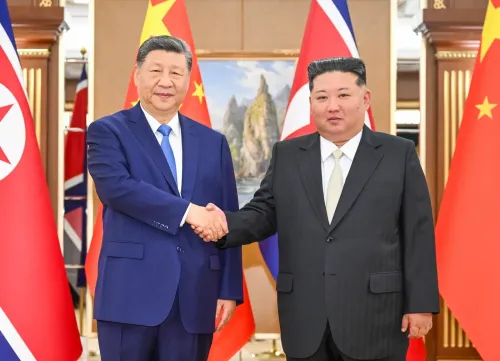
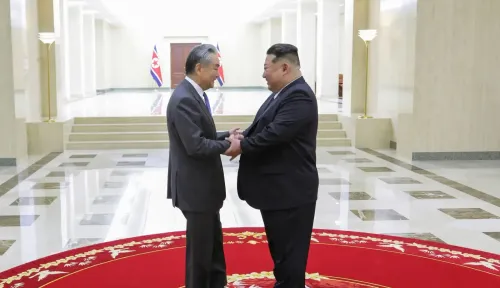
Kim Jong-un's China visit may signal North Korea-US summit prep: Seoul
Synopsis
Kim Jong-un attended an economic bridge opening in Dandong — but brought his foreign minister and top security aides, not economic officials. South Korea's Unification Minister is now raising the possibility that the visit was cover for diplomatic groundwork on a potential North Korea-US summit, with China's US-affairs veteran Ma Zhaoxu notably in the room.
Key Takeaways
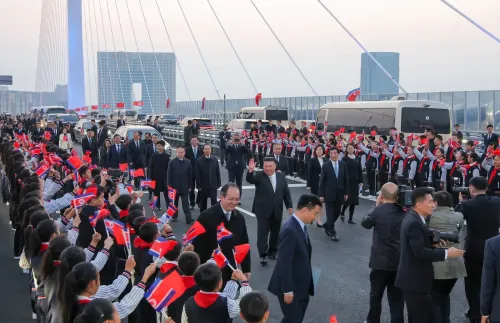
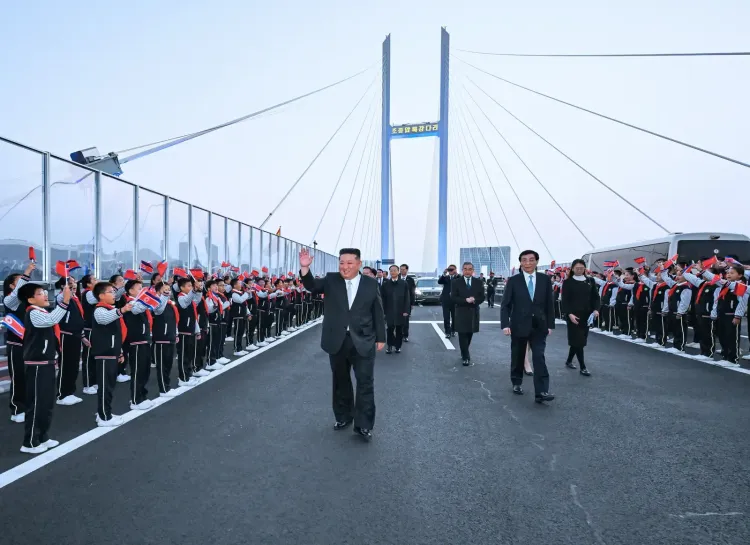
Kim Jong-un made a surprise one-day visit to Dandong, China on Saturday, 25 October 2026 for the inauguration of a new bridge over the Amnok (Yalu) River .
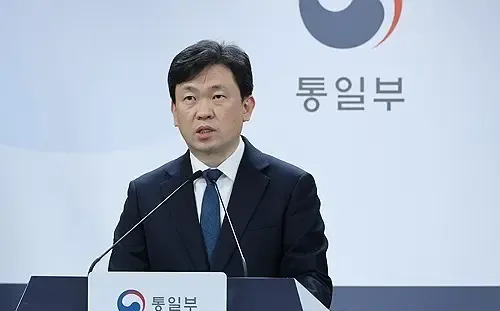
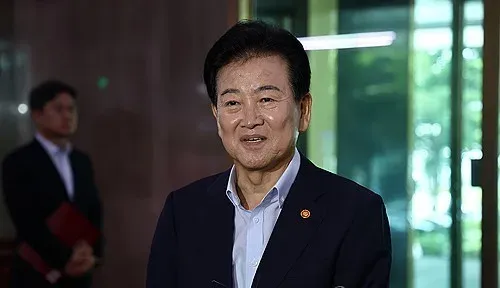
South Korea's Unification Minister Chung Dong-young described the visit as 'unprecedented', noting no economic officials were present despite the event's stated economic purpose.
The North Korean delegation included Foreign Minister Choe Son-hui , party secretaries, and security officials — but no trade or industry representatives.
China fielded Wang Huning (CCP's fourth-ranking official), Foreign Minister Wang Yi , and Ma Zhaoxu , a diplomat with deep expertise in US affairs.
Chung suggested the visit may have been preparatory groundwork for a possible North Korea-US summit .
South Korea's Unification Minister Chung Dong-young said on Tuesday, 27 October 2026 that North Korean leader Kim Jong-un's surprise one-day visit to the Chinese border city of Dandong last Saturday may have carried diplomatic and security implications well beyond its stated economic framing, given the unusual composition of both delegations.
Why the Delegation Composition Raised Flags
'The fact that both sides fielded their diplomatic and security teams deserves a close look,' Chung said at a parliamentary audit session in Seoul, responding to a lawmaker's question about the significance of Kim's rare cross-border trip. Crucially, he noted that no economic officials were present at the inauguration of the newly opened bridge over the Amnok River — known in China as the Yalu River — despite the bridge being explicitly designed to boost bilateral trade and economic cooperation.
Who Was in the Room
The North Korean delegation was stacked with political heavyweights. Kim was accompanied by his sister Kim Yo-jong, a department director of the Workers' Party of Korea; party central committee secretaries Jo Yong-won, Ri Il-hwan, and Kim Song-nam; Foreign Minister Choe Son-hui; and First Vice Premier Kim Tok-hun, among others.
On the Chinese side, the roster was equally senior. It included Wang Huning, the fourth-ranking official in the Chinese Communist Party (CCP); Foreign Minister Wang Yi; Liu Haixing, head of the party's international department; and Executive Vice Foreign Minister Ma Zhaoxu, a veteran diplomat widely regarded as China's most experienced hand in US affairs.
An 'Unprecedented' Visit With No Bilateral Talks
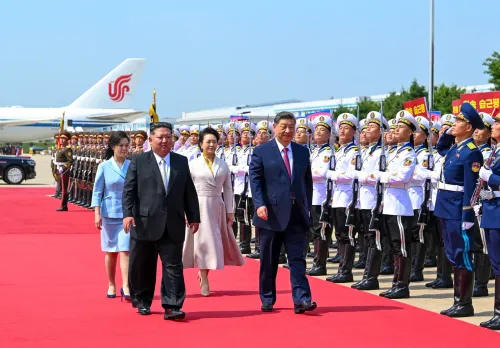
Chung described the trip as 'unprecedented' on two counts: Kim made a rare visit to China without holding any formal talks with his Chinese counterpart, and the event he attended — an economic infrastructure opening — was attended almost exclusively by key security and foreign policy aides rather than trade or industry officials. This combination of factors, analysts note, is internally contradictory if the sole purpose were economic signalling.
The North Korea-US Summit Theory
'We have to look carefully at what it means,' Chung said, stopping short of a definitive conclusion. His remarks, however, pointed in a clear direction: the visit may have served as a preparatory channel for a possible North Korea-US summit, using the bridge inauguration as diplomatic cover. This comes amid renewed global focus on Korean Peninsula security dynamics and shifting US foreign policy postures.
Notably, the presence of Ma Zhaoxu — whose portfolio centres on Washington — lends weight to the summit-preparation theory. China has historically acted as an intermediary or guarantor in inter-Korean and US-North Korea diplomacy, and a quiet high-level alignment ahead of any potential talks would be consistent with past patterns from the 2018–2019 Singapore and Hanoi summits.
What Comes Next
Seoul has not publicly confirmed any intelligence pointing to an imminent Pyongyang-Washington channel, but Chung's parliamentary remarks signal that South Korea's government is treating the Dandong visit as a geopolitically significant event. Observers will watch for any follow-up diplomatic signals from Pyongyang, Beijing, or Washington in the coming weeks.
Point of View
And the other side responds with its fourth-ranking party official and its foremost US-affairs diplomat, the economic framing collapses under its own weight. Seoul's reading — that this may be diplomatic groundwork for a North Korea-US summit — is the more coherent explanation. What mainstream coverage risks underplaying is the signal embedded in Ma Zhaoxu's presence: China is positioning itself not just as a witness but as an active architect of any future Pyongyang-Washington channel, consistent with its role in the 2018 Singapore process.
NationPress
27 Oct 2026
Frequently Asked Questions
What was Kim Jong-un doing in Dandong, China?
Kim Jong-un made a surprise one-day visit to the Chinese border city of Dandong on Saturday, 25 October 2026, to attend the inauguration of a newly opened bridge over the Amnok (Yalu) River, a project framed as a boost to North Korea-China economic cooperation.
Why does South Korea think the visit was about more than economics?
South Korea's Unification Minister Chung Dong-young pointed out that neither delegation included economic officials — unusual for an event centred on trade infrastructure. Instead, both sides sent diplomatic and security heavyweights, leading Chung to call the visit 'unprecedented' and suggesting it may have served a broader geopolitical purpose.
Who represented North Korea and China at the Dandong event?
North Korea's delegation included Kim Yo-jong, Foreign Minister Choe Son-hui, three party central committee secretaries, and First Vice Premier Kim Tok-hun. China sent Wang Huning (CCP's fourth-ranked official), Foreign Minister Wang Yi, party international department head Liu Haixing, and Executive Vice Foreign Minister Ma Zhaoxu.
Could this visit be related to a North Korea-US summit?
South Korea's Unification Minister suggested the visit may have been preparation for a possible North Korea-US summit, noting the presence of Ma Zhaoxu — a Chinese diplomat with extensive experience in US affairs — as a significant signal. No official confirmation of any summit track has been made public.
How does this compare to past North Korea-China diplomatic encounters?
The visit is described as unprecedented because Kim Jong-un visited China without holding formal bilateral talks with his Chinese counterpart — a break from past high-level exchanges. It echoes the quiet behind-the-scenes diplomacy that preceded the 2018 Singapore and 2019 Hanoi summits between North Korea and the United States, when Beijing played an active intermediary role.