Uttarakhand CM Office Unveils Farm-Focused Supplementary Budget

Synopsis
Uttarakhand's FY 2026-27 supplementary budget allocates ₹1,100 crore for farmer procurement, ₹70 crore for JICA-backed climate-resilient rainfed agriculture, ₹35 crore for PMFME food processing, and smaller funds for trout farming, beekeeping, cooperatives, and kisan pension — a comprehensive rural-livelihood package for a mountain state.
Key Takeaways
₹1,100 crore allocated under Annapurti Yojana for procurement of paddy and wheat from Uttarakhand farmers — the largest single line item in the supplementary budget. ₹70 crore earmarked for the JICA-assisted Uttarakhand Climate-Resilient Rainfed Agriculture Project , targeting rain-dependent hill farms. ₹35 crore provisioned for the national PMFME scheme to boost micro food-processing enterprises and agricultural value addition. ₹20 crore for the Deendayal Upadhyay Sahakari Kisan Kalyan Yojana (cooperative welfare) and ₹9 crore for the Kisan Pension Yojana . ₹28 crore for the Trout Promotion Scheme and ₹1 crore to seed a new beekeeping policy as livelihood-diversification measures. ₹9 crore for gau sadan (cattle shelter) construction to reduce crop damage from stray cattle in hill villages.
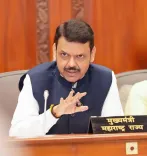
A mountain state with some of India's most fragile smallholder farms just put its money where its valleys are. The Chief Minister's Office of Uttarakhand announced on Tuesday, 27 October 2026 that the state's FY 2026-27 supplementary budget has earmarked a sweeping package of agricultural and rural-livelihood allocations, anchored by a headline ₹1,100 crore for paddy and wheat procurement from farmers.
The centrepiece allocation flows through the Annapurti Yojana — Uttarakhand's assured-procurement scheme for paddy and wheat — making it one of the single largest line items in the supplementary budget. For hill farmers who cultivate small terraced plots with no guarantee of market access, a state purchase commitment of this scale is a direct income floor. The post describes it as one of the 'principal heads' of the budget.
₹70 Crore for a JICA-Backed Climate Farming Project
Uttarakhand's hilly terrain makes roughly two-thirds of its cultivated area dependent on rain. The supplementary budget responds directly to that reality: ₹70 crore has been allocated to the Uttarakhand Jalvayu Anukal Barani Krishi Pariyojana — the state's climate-resilient rainfed agriculture project, developed with support from JICA (Japan International Cooperation Agency). The project has a track record of piloting drought-tolerant varieties and water-conservation techniques across hill districts.
The logic is straightforward — if a crop failure wipes out a family's only income, no procurement scheme can compensate. Climate adaptation funding and purchase guarantees together form a two-sided safety net.
Food Processing and Cooperatives: Diversifying the Income Base
The budget also bets on value addition. The PM Micro Food Processing Enterprises Upgradation Scheme (PMFME), a national programme launched in 2020 to formalise and strengthen micro food enterprises, receives approximately ₹35 crore in the Uttarakhand allocation. For a state rich in high-value local produce — from mandua (finger millet) to rhododendron — processing support could turn a subsistence crop into a marketable product.
Cooperative-channel welfare gets ₹20 crore under the Deendayal Upadhyay Sahakari Kisan Kalyan Yojana, which routes support to farmers through cooperative societies. A separate Kisan Pension Yojana — aligned with the national framework for small and marginal farmers — draws ₹9 crore, providing a modest but symbolically significant retirement cushion for aging cultivators.
Trout, Bees, and Cattle Shelters Fill Out the Rural Picture
Three smaller but telling provisions round out the package. The Trout Promotion Scheme receives approximately ₹28 crore — trout farming in cold Himalayan streams is one of Uttarakhand's most viable diversification bets, carrying premium prices in urban markets. A new beekeeping policy is seeded with ₹1 crore, an entry-level allocation meant to formalise and expand apiculture in forest-edge communities. Finally, ₹9 crore has been set aside for the construction of gau sadans (cattle shelters), addressing stray cattle pressures that damage standing crops in hill villages.
Taken together, the budget weaves procurement security, climate adaptation, enterprise development, and cooperative welfare into a single rural policy statement — a deliberate signal that Uttarakhand's fiscal priorities in FY 2026-27 are anchored in its mountains, not just its plains.
The real test will come in utilisation: whether the ₹1,100 crore procurement actually reaches terrace-farm households before harvest margins are squeezed, and whether the trout and beekeeping allocations translate into tangible enterprise on the ground.
Point of View
100 crore Annapurti Yojana allocation signals political prioritisation of food-security optics ahead of what could be a challenging rabi season. More telling, however, is the continued reliance on JICA-backed rainfed agriculture funding, which reflects the state's candid acknowledgment that its hill economy cannot be stabilised by procurement alone — it requires ecological resilience-building. The PMFME and trout scheme funding also points to a broader BJP-governed state pattern of aligning with national scheme architectures while tailoring them to Himalayan geographies, creating a layered fiscal narrative of 'Delhi plus Dehradun' policy design.
NationPress
27 Oct 2026
Frequently Asked Questions
What is the Annapurti Yojana in Uttarakhand?
Annapurti Yojana is Uttarakhand's state procurement scheme that guarantees purchase of paddy and wheat directly from farmers, providing them an assured income floor independent of market price fluctuations. The FY 2026-27 supplementary budget has allocated ₹1,100 crore for this scheme.
What is the JICA rainfed agriculture project in Uttarakhand?
The Uttarakhand Jalvayu Anukal Barani Krishi Pariyojana is a climate-resilient rainfed agriculture initiative developed with financial and technical support from the Japan International Cooperation Agency (JICA). It promotes drought-tolerant varieties and water conservation in Uttarakhand's hill districts, and has received ₹70 crore in the 2026-27 supplementary budget.
How much has Uttarakhand allocated for food processing in the supplementary budget?
Uttarakhand has allocated approximately ₹35 crore for the PM Micro Food Processing Enterprises Upgradation Scheme (PMFME) in its FY 2026-27 supplementary budget, aimed at supporting micro-level agro-processing units and adding value to local agricultural produce.
What is the Kisan Pension Yojana in Uttarakhand?
Kisan Pension Yojana is a pension scheme for small and marginal farmers in Uttarakhand, aligned with the national PM-KMY framework. The state's FY 2026-27 supplementary budget has proposed ₹9 crore for this scheme.
Why is trout farming important in Uttarakhand's budget?
Trout farming in Uttarakhand's cold Himalayan streams commands premium prices in urban markets and is one of the most viable livelihood-diversification options for hill communities. The supplementary budget allocates approximately ₹28 crore to the Trout Promotion Scheme to scale up this activity.