CM Dhami Pushes Animal Husbandry as Self-Employment Drive
Synopsis
Uttarakhand CM Pushkar Singh Dhami announced the state is subsidising up to 90 per cent of bank loan interest under the Mukhyamantri Rajya Pashudhan Mission Yojana, targeting rural youth, women, and farmers to build self-reliance through animal husbandry and curb out-migration from hill villages.
Key Takeaways
Uttarakhand CM Pushkar Singh Dhami announced the state bears up to 90 per cent of loan interest on animal-husbandry self-employment schemes.
The flagship instrument is the Mukhyamantri Rajya Pashudhan Mission Yojana , designed to make livestock rearing a viable self-employment avenue.
Primary beneficiaries are rural youth, women, and farmers in Uttarakhand's hill districts.
The scheme complements central programmes including the National Livestock Mission and Rashtriya Gokul Mission , both launched in 2014 .
The policy is part of a broader anti-migration strategy to create local employment and strengthen the village economy in Uttarakhand .
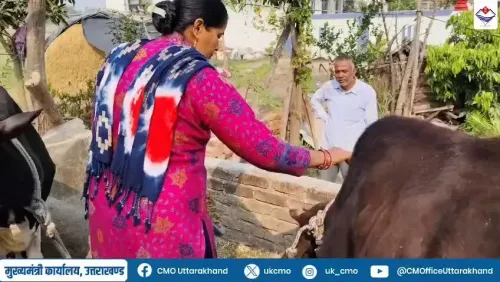
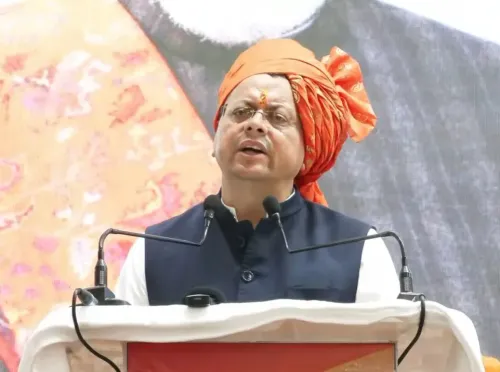
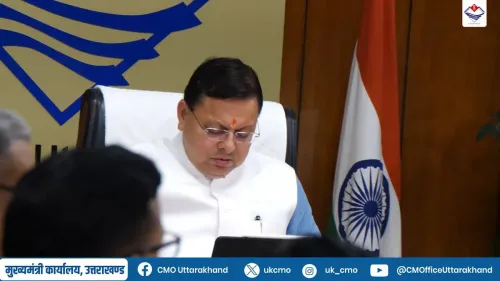
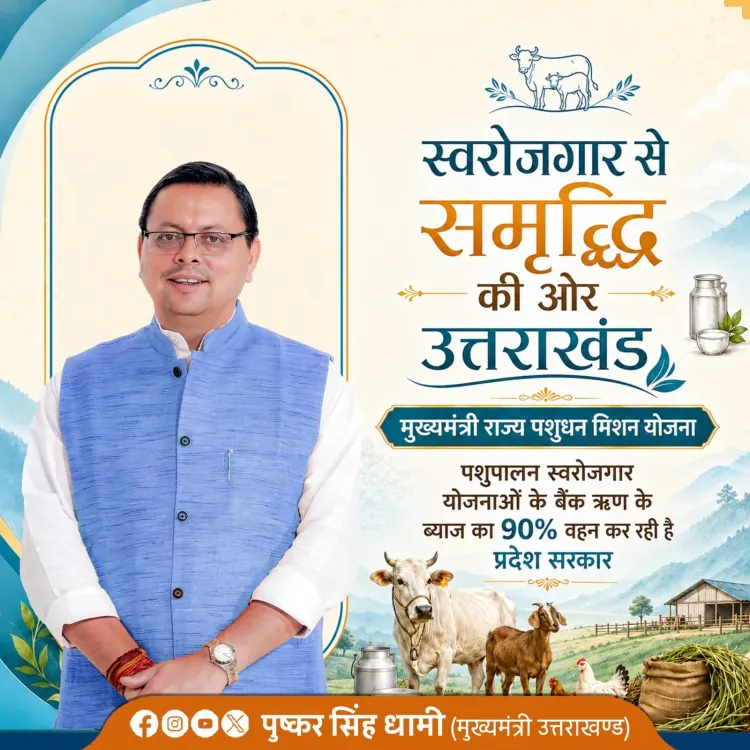
Uttarakhand Chief Minister Pushkar Singh Dhami on Saturday, 30 May 2026, announced that the state government is bearing up to 90 per cent of the interest on bank loans taken under animal-husbandry self-employment schemes, positioning livestock rearing as a primary vehicle for rural economic independence in the state.
Posting on X, CM Dhami said the Mukhyamantri Rajya Pashudhan Mission Yojana is being used to turn animal husbandry into a robust self-employment avenue. In his words: 'मुख्यमंत्री राज्य पशुधन मिशन योजना के माध्यम से प्रदेश में पशुपालन को मजबूत स्वरोजगार का माध्यम बनाया जा रहा है' ('Through the Chief Minister's State Livestock Mission Scheme, animal husbandry is being made a strong means of self-employment in the state'). He added that the government's resolve is to strengthen the village economy, provide local employment to youth, and take Uttarakhand to new heights of prosperity.
Context
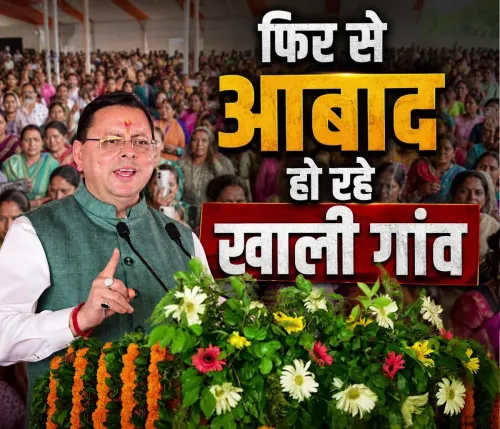
Uttarakhand is a Himalayan state that has long grappled with rural out-migration, driven by limited arable land, small farm holdings, and a scarcity of local employment opportunities. Animal husbandry — dairy farming, poultry, and goat rearing — has historically supplemented household incomes in hill villages where crop cultivation alone is insufficient. The state government under CM Dhami, who took office in 2021, has made reversing this migration trend a policy priority.
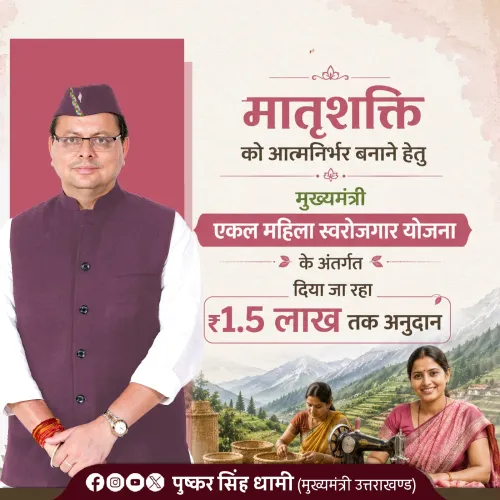
The Mukhyamantri Rajya Pashudhan Mission Yojana is the state's flagship instrument for channelling that intent. By subsidising the cost of institutional credit, the scheme lowers the financial barrier for first-generation livestock entrepreneurs, particularly in remote districts where commercial banking penetration is thin.
Policy Backdrop
The scheme sits within a layered policy architecture. At the national level, the National Livestock Mission, launched in 2014, was designed to support livestock rearing, breed improvement, and rural employment generation. The Rashtriya Gokul Mission, also launched in 2014, specifically targets indigenous cattle development and dairy-based livelihoods. Uttarakhand's state-level interest subvention model builds on these central programmes by adding a deeper financial cushion for beneficiaries.
Uttarakhand state budgets from 2021 onward have included interest subsidy provisions for dairy and poultry units under self-employment programmes. The approach of bearing up to 90 per cent of loan interest mirrors subsidy models applied to agriculture and MSMEs in other Indian states, but is tailored to the specific constraints of hill-terrain farming where returns on investment take longer to materialise.
Stakeholders and Impact
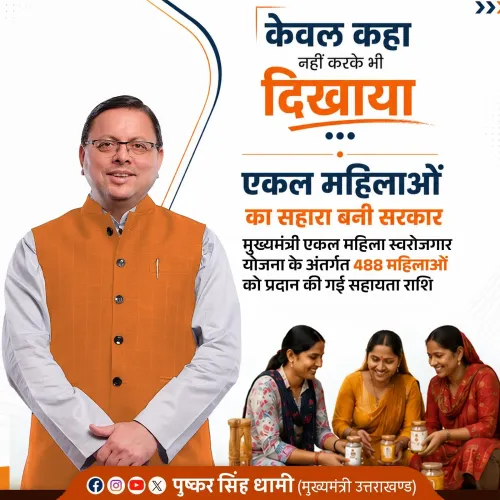
The scheme explicitly targets three groups: rural youth, women, and farmers. For young people, it offers a locally rooted livelihood option that reduces the compulsion to migrate to plains cities for work. For women, who already shoulder a disproportionate share of livestock care in hill households, it converts unpaid labour into a formally recognised and financially supported enterprise.
Farmers with small or marginal holdings stand to diversify income streams beyond seasonal crop cycles. Analysts tracking hill-state economies note that interest subvention on livestock loans, when combined with market-linkage support, can meaningfully raise household incomes and slow the demographic hollowing of mountain villages.
What's Next
Attention will now turn to state budget allocations and quarterly progress reports on loan disbursal under the scheme. Possible convergence with central livestock missions in the next fiscal year could amplify the programme's reach. The government's stated resolve to build a stronger village economy will be tested by the pace of loan approvals, the quality of veterinary support infrastructure, and the availability of cold-chain and market access for livestock produce across Uttarakhand's hill districts.
Point of View
The anti-migration dimension gives the policy a sharper urgency than in plains states, since demographic decline in hill villages carries both economic and electoral consequences. The explicit targeting of women and youth signals an attempt to broaden the scheme's social reach beyond traditional male farmer constituencies. Whether the initiative translates into measurable reductions in out-migration will depend on execution — particularly market linkage and veterinary infrastructure — rather than credit access alone.
NationPress
14 Oct 2026
Frequently Asked Questions
What is the Mukhyamantri Rajya Pashudhan Mission Yojana?
The Mukhyamantri Rajya Pashudhan Mission Yojana is an Uttarakhand state scheme that promotes animal husbandry as a self-employment avenue by subsidising the interest on bank loans taken for livestock-related enterprises, with the state bearing up to 90 per cent of the interest cost.
Who can benefit from Uttarakhand's animal husbandry self-employment scheme?
The scheme primarily targets rural youth, women, and farmers in Uttarakhand, enabling them to take bank loans for livestock-based enterprises at heavily subsidised interest rates to support self-reliance and local employment.
How much interest subsidy does Uttarakhand provide on livestock loans?
According to CM Pushkar Singh Dhami's announcement, the Uttarakhand government bears up to 90 per cent of the interest on bank loans taken under animal-husbandry self-employment schemes linked to the Mukhyamantri Rajya Pashudhan Mission Yojana.
What central schemes support animal husbandry in India?
The National Livestock Mission, launched in 2014, supports livestock rearing and rural employment nationally, while the Rashtriya Gokul Mission, also from 2014, focuses on indigenous cattle development and dairy livelihoods. State schemes like Uttarakhand's Pashudhan Mission build on these central programmes.
Why is animal husbandry important for Uttarakhand's rural economy?
Uttarakhand faces persistent rural out-migration due to limited arable land and scarce local jobs. Animal husbandry provides a supplementary income stream for hill farmers with small holdings, and state interest subvention schemes aim to make it a viable full-time self-employment option to retain population in villages.