CM Dhami Pushes Modern Farming, Self-Employment in Uttarakhand
Synopsis
The Chief Minister's Office of Uttarakhand says efforts under CM Pushkar Singh Dhami to modernise agriculture and expand self-employment are strengthening Pauri Garhwal's rural economy and giving village youth a path to dignified livelihoods without migrating to cities.
Key Takeaways
The Chief Minister's Office of Uttarakhand posted on 8 July 2026 highlighting rural economy efforts under CM Pushkar Singh Dhami .
Pauri Garhwal , a hilly rural district in Uttarakhand's Garhwal division, is cited as a focus area for these initiatives.
The government's twin approach combines modern agriculture with self-employment to make farmers self-reliant.
A key stated goal is enabling rural youth to earn a dignified livelihood within their villages , countering out-migration.
The initiative aligns with the national Atmanirbhar Bharat framework emphasising farmer self-reliance since 2020.
Specific scheme names, statistics, and beneficiary numbers were not disclosed in the official communication.
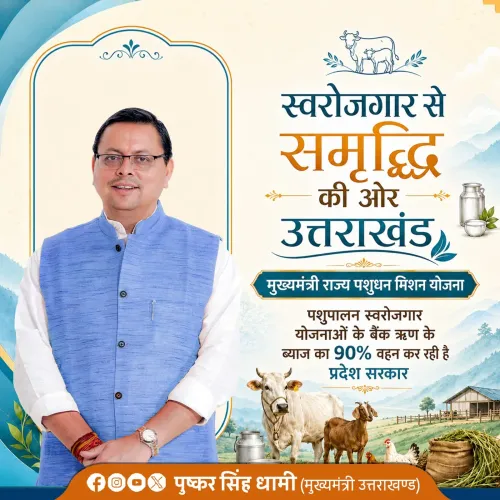
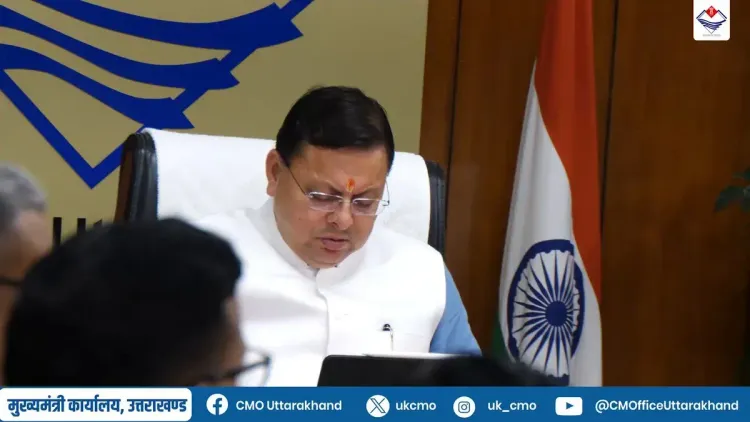
The Chief Minister's Office of Uttarakhand, on Wednesday, 8 July 2026, highlighted efforts under Chief Minister Pushkar Singh Dhami to make farmers self-reliant through modern agriculture and self-employment initiatives, with a specific focus on strengthening the rural economy of Pauri Garhwal and providing dignified livelihoods to youth within their villages.
The official post stated: 'Mukhyamantri Shri Pushkar Singh Dhami ke netritva mein aadhunik krishi aur swarojgar ke zariye kisanon ko atmanirbhar banane ki disha mein kiye ja rahe prayas gramin arthavyavastha ko nayi mazbooti de rahe hain' — translating to: 'Efforts being made under the leadership of Chief Minister Shri Pushkar Singh Dhami to make farmers self-reliant through modern agriculture and self-employment are giving new strength to the rural economy and providing youth with a new confidence of dignified livelihood while staying in the village.'
Context
Pauri Garhwal, a predominantly hilly and rural district in Uttarakhand's Garhwal division, has long faced the twin challenges of agrarian distress and youth out-migration. Limited economic opportunity in the hills has historically pushed working-age populations toward urban centres in the plains, hollowing out village communities and weakening local agricultural output. The state government's renewed emphasis on in-situ employment — livelihoods created within the village itself — addresses this structural problem directly.Policy Backdrop
Since its formation in 2000, Uttarakhand has pursued state-level programmes promoting organic farming, horticulture, and hill-adapted agriculture as economic pillars. These efforts gained additional momentum after 2020, when the national Atmanirbhar Bharat framework placed farmer self-reliance at the centre of India's rural development agenda. CM Dhami, who has led the state since 2021, has aligned Uttarakhand's agricultural policy with this broader national thrust, emphasising modern techniques and self-employment as complementary tools to revive village economies. The pairing of 'modern agriculture' with 'self-employment' signals an intent to move beyond subsistence farming toward market-linked, skill-based rural enterprise.Stakeholders and Impact
The primary beneficiaries of these initiatives are Uttarakhand's farming households and rural youth — two groups whose fortunes are deeply intertwined in a state where agriculture remains the backbone of village life. By positioning self-employment schemes alongside agricultural modernisation, the government aims to create a dual economic floor: one that supports existing farmers with better techniques and inputs, and another that gives younger residents a viable reason to remain in their home districts. Pauri Garhwal's mention in the official communication suggests the district may be a focus area for current rollout, though specific scheme names and beneficiary numbers were not disclosed in the post.What's Next
Attention will now turn to the state's next budget cycle and any district-level programme announcements from Pauri Garhwal that detail the scale and funding of these rural economy measures. If the government follows through with targeted allocations for modern farming infrastructure and self-employment support in hilly districts, Uttarakhand could offer a replicable model for other Himalayan states grappling with the same migration-and-agriculture dilemma. The broader test will be whether these efforts translate into measurable reductions in rural out-migration and verifiable income gains for farming families.Point of View
Not just agricultural output, as the real metric of success. This positions Uttarakhand within a broader Himalayan-state trend of using Atmanirbhar Bharat vocabulary to localise national rural policy. The absence of specific scheme names or data in the official communication, however, leaves the initiative's concrete impact open to scrutiny.
NationPress
7 Oct 2026
Frequently Asked Questions
What is CM Pushkar Singh Dhami doing for farmers in Uttarakhand?
CM Pushkar Singh Dhami is leading efforts to make farmers self-reliant through modern agriculture techniques and self-employment schemes, with the aim of strengthening the rural economy and providing dignified livelihoods to youth within their villages, particularly in districts like Pauri Garhwal.
Why is Pauri Garhwal mentioned in Uttarakhand's farm initiative?
Pauri Garhwal is a predominantly rural and hilly district in Uttarakhand's Garhwal division that faces significant challenges of agrarian distress and youth out-migration, making it a focus area for the state government's rural economy and self-employment push.
What is Atmanirbhar Bharat and how does it relate to Uttarakhand's farm policy?
Atmanirbhar Bharat is a national framework launched in 2020 that emphasises self-reliance, including for farmers. Uttarakhand under CM Dhami has aligned its agricultural modernisation and self-employment schemes with this national goal.
How is Uttarakhand trying to stop youth migration from villages?
The state government is promoting self-employment opportunities alongside modern farming so that rural youth can earn dignified livelihoods within their own villages, reducing the economic pressure to migrate to urban centres in the plains.
When did Uttarakhand start its organic and modern farming programmes?
Uttarakhand has pursued state-level programmes promoting organic farming, horticulture, and hill-adapted agriculture since its formation as a state in 2000, with renewed emphasis after the national Atmanirbhar Bharat push from 2020 onwards.