CM Dhami's Self-Employment Schemes Empower Uttarakhand Youth
Synopsis
The Uttarakhand CMO spotlighted CM Pushkar Singh Dhami's self-employment schemes on October 15, 2026, saying they are giving new wings to the talent of youth and women, with Udham Singh Nagar cited as a key district of focus.
Key Takeaways
The Chief Minister's Office of Uttarakhand posted on October 15, 2026 , highlighting self-employment schemes under CM Pushkar Singh Dhami .
Youth and women are the twin beneficiaries of the state-run swarojgar (self-employment) initiatives.
Udham Singh Nagar , a plains district with mixed agricultural-industrial character, is specifically cited as a site of implementation.
Uttarakhand has run self-employment and skill-training programmes since state formation in 2000 to counter out-migration from hill districts.
Scheme specifics including names, funding figures, and impact data have not yet been officially released for this cycle.
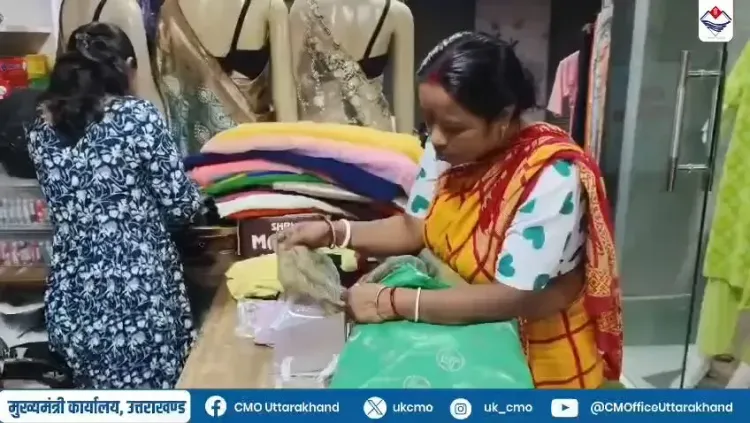
In Udham Singh Nagar, a young woman stitches the future she designed herself — and that is precisely the image Chief Minister Pushkar Singh Dhami's government wants the world to associate with Uttarakhand. The Chief Minister's Office of Uttarakhand on Thursday, October 15, 2026, highlighted how self-employment schemes running under CM Dhami's leadership are giving youth and women fresh wings to take their skills to new heights.
The post stated: 'Mukhyamantri Shri Pushkar Singh Dhami ke netritva mein sanchalit swarojgar yojanaen yuvaon va mahilaon ke hunar ko nayi udaan de rahi hain' — ('Self-employment schemes operating under the leadership of Chief Minister Shri Pushkar Singh Dhami are giving new flight to the talent of youth and women.')
Udham Singh Nagar as a model district for livelihoods
Udham Singh Nagar sits in Uttarakhand's Terai belt, a district that blends agricultural flatlands with pockets of industrial activity. It has historically served as one of the state's more economically active plains districts, making it a natural testing ground for self-employment promotion. The CMO's specific tagging of the district signals that ground-level implementation is being spotlighted — not just headline policy.
Since Uttarakhand's formation in 2000, successive state governments have run loan-linked and skill-training schemes aimed at one stubborn problem: the steady drain of young people — especially from hill districts — toward cities outside the state. Self-employment programmes that build local enterprise have been a consistent policy lever across administrations.
Skill, credit and the women-entrepreneur push
The current push under CM Dhami, who has led the state since 2021, explicitly centres women alongside youth as primary beneficiaries. That dual focus matters. Women entrepreneurs in Uttarakhand often operate in home-based crafts, food processing, and micro-retail — sectors where structured credit and mentorship can convert a household skill into a viable income stream.
Indian states across the political spectrum have discovered the same playbook: targeted self-employment support reduces the pressure on formal job markets, builds rural consumption, and — critically for a state like Uttarakhand — slows out-migration that hollows out villages. The scheme architecture typically combines training, subsidised credit linkages, and market-access support, though the specific programme names and disbursement figures tied to this cycle remain to be officially published.
Whether the momentum translates into measurable numbers — enterprises launched, loans disbursed, women-led ventures sustained — is the question district-level data from Udham Singh Nagar will eventually have to answer. For now, the state is signalling direction loudly and clearly.
Point of View
The CMO is signalling an intent to broaden the constituency for economic policy beyond traditional male-centric employment narratives. The real test will be district-level disbursement and retention data: Uttarakhand has a long history of well-announced schemes whose ground impact has been inconsistent. If Udham Singh Nagar can demonstrate measurable enterprise creation, it could become the template the BJP government carries into the next election cycle.
NationPress
15 Oct 2026
Frequently Asked Questions
What are the self-employment schemes run by the Uttarakhand government under CM Dhami?
The Uttarakhand government under CM Pushkar Singh Dhami runs state-level swarojgar (self-employment) programmes that provide skill training, credit linkages, and support to help youth and women start their own enterprises. Specific scheme names and funding figures for the current cycle have not been officially published yet.
Why is Udham Singh Nagar highlighted in Uttarakhand's self-employment push?
Udham Singh Nagar is one of Uttarakhand's major plains districts with a mixed agricultural and industrial economy, making it an active ground for self-employment promotion. The CMO's specific mention signals district-level implementation is being tracked and showcased.
How long has Uttarakhand been running self-employment programmes?
Uttarakhand has operated self-employment and skill-training schemes since the state was formed in 2000, aimed at curbing out-migration by creating local livelihoods, especially in hill districts.
Who benefits from Uttarakhand's swarojgar yojana?
The primary beneficiaries are youth and women entrepreneurs across the state, with the current government under CM Dhami explicitly centering both groups in its self-employment and skill-development outreach.
What is CM Pushkar Singh Dhami's role in Uttarakhand's employment policy?
Pushkar Singh Dhami has been Chief Minister of Uttarakhand since 2021 and has made skill-based self-employment schemes a visible pillar of his government's development agenda, particularly targeting youth unemployment and female entrepreneurship.