Kim Jong-un visits Dandong, vows to deepen China ties 'forged in blood'
Synopsis
Kim Jong-un's surprise Dandong visit — his first trip to China in over a year — was symbolically loaded but strategically ambiguous. With no meeting with Xi and the APEC summit weeks away, analysts read it as a calculated message to Washington: Pyongyang has options, and any US dialogue will come on Kim's terms.
Key Takeaways
Kim Jong-un made a one-day surprise visit to Dandong, China on 25 October 2026 — his sixth trip to China since taking power in 2011 .
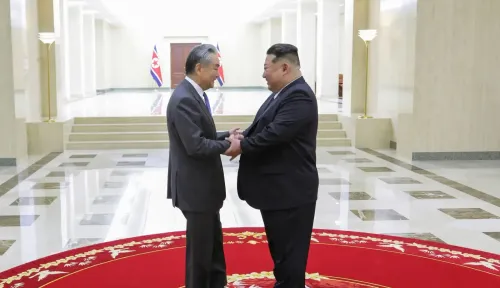
Kim met Wang Huning , China's fourth-highest-ranking official, and attended a banquet at the direction of President Xi Jinping .
He paid tribute at a war memorial marking the 76th anniversary of China's entry into the 1950–53 Korean War .
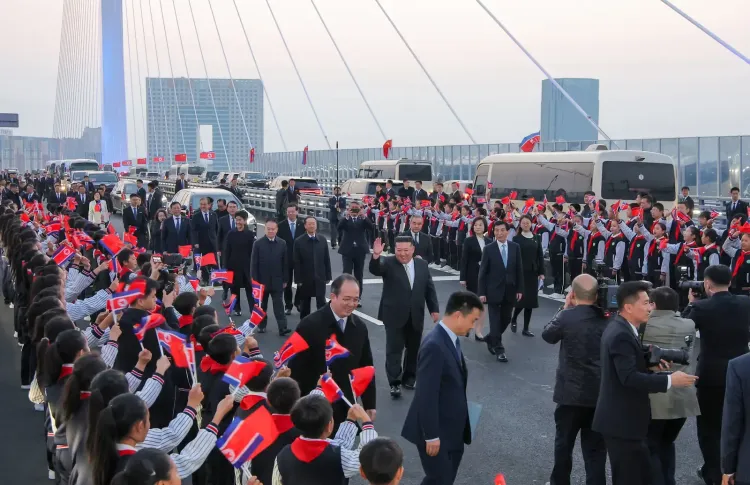
Kim returned via the newly opened New Amnok River Bridge , which links Sinuiju and Dandong — inaugurated after over a decade's delay since construction in 2014 .
Notably, Kim did not meet President Xi, leading analysts to say imminent North Korea-US dialogue is unlikely, though the visit may signal a desire to raise leverage with Washington.
The visit comes ahead of the APEC summit in China next month, which US President Donald Trump is expected to attend.
North Korean leader Kim Jong-un made a surprise visit to the Chinese border city of Dandong on Saturday, 25 October 2026, pledging to advance the two countries' relationship described as being 'forged in blood,' state media reported. The visit, confirmed by North Korea's Korean Central News Agency (KCNA), marks Kim's first known trip to China since September 2025 and his sixth overall since taking power in 2011.
Key Developments from the Dandong Visit
Kim was accompanied by senior party and government officials including Jo Yong-won, a member of the ruling Workers' Party's Praesidium; Foreign Minister Choe Son-hui; and his sister and party department director, Kim Yo-jong. On the Chinese side, Wang Huning — China's fourth-highest-ranking official and Chairman of the National Committee of the Chinese People's Political Consultative Conference — hosted the visit, along with Chinese Foreign Minister Wang Yi and other senior officials.
Kim paid tribute at a war memorial honouring Chinese soldiers who fought in the 1950–53 Korean War, as China marked the 76th anniversary of its entry into the conflict. He also attended a banquet hosted by Wang at the direction of President Xi Jinping and toured a bus factory in Dandong.
What Kim Said — and What KCNA Reported
'We will always remember the history when the excellent sons and daughters of the Chinese people helped our revolution at the cost of their blood and steadily and firmly carry forward the history of the DPRK-China friendship,' Kim was quoted as saying by the KCNA. Wang, conveying Xi's greetings, described the visit as significant for preserving and developing the two countries' 'traditional friendship and militant fraternity.'
Notably, Kim wrapped up his one-day visit by returning to North Korea via the newly opened New Amnok River Bridge — also known as the New Yalu River Bridge — which links North Korea's border city of Sinuiju with Dandong. The bridge opened earlier this month, more than a decade after construction was completed in 2014. Viewing the surrounding area from the bridge's midpoint, Kim expressed hope it would 'undoubtedly and correctly fulfil its historic mission of linking the two countries.'
The Geopolitical Backdrop
The visit comes at a delicate moment in regional diplomacy. Pyongyang has spent recent years deepening its alignment with Russia, including military cooperation amid Moscow's ongoing war in Ukraine, which had allowed ties with Beijing to cool. China remains, however, North Korea's most important economic partner and principal diplomatic ally.
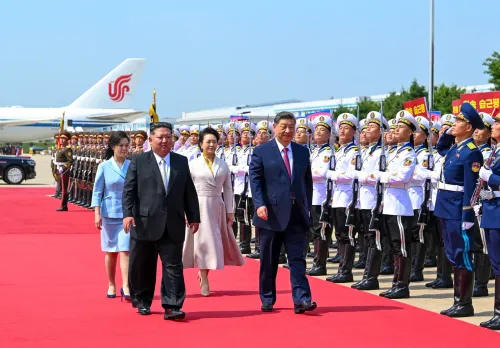
The two sides have been stepping up high-level exchanges: President Xi visited Pyongyang in June 2026, when the two leaders pledged expanded cooperation across political, economic and other fields. Kim's Dandong trip reinforces that warming trajectory.
This comes ahead of a planned Asia-Pacific Economic Cooperation (APEC) summit in China next month, which US President Donald Trump is expected to attend. Trump has publicly expressed interest in resuming dialogue with Kim, though the prospects for any direct engagement remain uncertain.
What Experts Are Saying
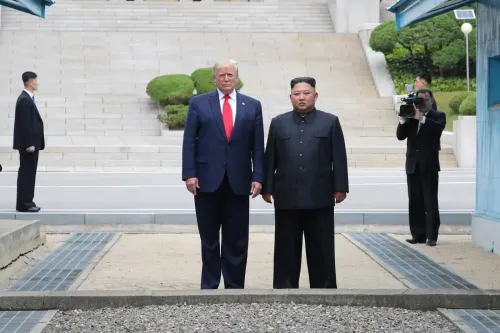
Analysts noted that Kim did not meet President Xi during this visit — a departure from the pattern before his previous summits with Trump — suggesting North Korea-US dialogue is unlikely to be imminent. Cha Du-hyeogn, vice president at the Asan Institute for Policy Studies, offered measured analysis: 'As Kim did not meet with Xi, it would be difficult to think that he might seek to coordinate with China over potential dialogue with the US. But it could be seen as a message calling for Washington to show some sincerity.'
Experts added that by demonstrating he can and will travel to China independently, Kim may be signalling an intent to raise his leverage ahead of any potential negotiations with the United States, without formally committing to a diplomatic opening.
What Comes Next
Whether the Dandong visit presages renewed North Korea-US diplomacy or remains primarily a bilateral China-DPRK gesture will become clearer as the APEC summit approaches. For now, the visit cements a renewed warmth between Pyongyang and Beijing — and keeps regional watchers guessing about Kim's next move.
Point of View
Restrained enough to avoid closing any doors. The absence of an Xi meeting is the most telling detail — it signals that Pyongyang is not yet ready to formally coordinate on US diplomacy, but wants the option on the table. With Trump eyeing an APEC appearance next month, Kim has timed this perfectly to remind all parties that he controls the pace. The reopening of the New Yalu River Bridge — delayed for over a decade — as the exit route is an additional layer of messaging: North Korea-China economic normalisation is back on, whatever happens with the West.
NationPress
25 Oct 2026
Frequently Asked Questions
Why did Kim Jong-un visit Dandong in October 2026?
Kim Jong-un visited Dandong on 25 October 2026 to mark the 76th anniversary of China's entry into the Korean War and to reinforce bilateral ties with Beijing. He paid tribute at a war memorial, met senior Chinese official Wang Huning, and toured a bus factory — signalling a renewed warmth after a period of cooler relations while North Korea deepened ties with Russia.
Did Kim Jong-un meet President Xi Jinping during the Dandong visit?
No, Kim did not meet President Xi Jinping during this trip. He was received by Wang Huning, China's fourth-highest-ranking official, who conveyed Xi's greetings. Analysts note that Kim typically met Xi before his previous summits with Trump, so the absence of an Xi meeting suggests imminent North Korea-US dialogue is unlikely.
What is the New Amnok River Bridge, and why does it matter?
The New Amnok River Bridge — also called the New Yalu River Bridge — links North Korea's Sinuiju with China's Dandong. It opened in October 2026, more than a decade after construction was completed in 2014. Kim returned to North Korea via this bridge, lending symbolic weight to its inauguration as a new artery for North Korea-China economic connectivity.
How does this visit affect prospects for North Korea-US talks?
Experts say direct North Korea-US dialogue is unlikely to be imminent. Cha Du-hyeogn of the Asan Institute for Policy Studies noted that without a Kim-Xi coordination meeting, formal diplomatic alignment with Washington is improbable in the near term. However, the visit may be intended to signal to Washington that Pyongyang has leverage and is looking for a show of sincerity before any engagement.
What is the broader context of North Korea-China relations heading into late 2026?
China remains North Korea's most important economic partner and diplomatic ally, though ties had cooled as Pyongyang deepened military cooperation with Russia amid the war in Ukraine. The relationship has been warming since President Xi visited Pyongyang in June 2026, when the two sides pledged broader cooperation. Kim's Dandong visit and the opening of the New Yalu River Bridge reinforce that trajectory.