Gadkari links organ donation awareness to road safety duty
Synopsis
Union Minister Nitin Gadkari invoked PM Modi's Mann Ki Baat address to call for greater organ donation awareness and stricter road safety habits, linking two of India's most pressing public health and transport challenges in a single civic appeal.
Key Takeaways
Union Road Transport and Highways Minister Nitin Gadkari posted on 25 October 2026 linking PM Modi's Mann Ki Baat remarks on organ donation to road safety advocacy.
PM Narendra Modi highlighted inspiring organ donation decisions made by road accident victims' families during his monthly radio address.
India has one of the world's lowest deceased organ donation rates; road accident victims form the primary source of deceased donations.
The Transplantation of Human Organs and Tissues Act (amended 2011) and the Motor Vehicles (Amendment) Act 2019 are the key legislative pillars underpinning both causes.
Gadkari called on road users to wear helmets and seat belts, obey traffic rules, and assist the injured — framing compliance as collective civic duty.
State-level organ donation registries remain inconsistent, and road fatality numbers remain high, keeping pressure on both the health and transport ministries.
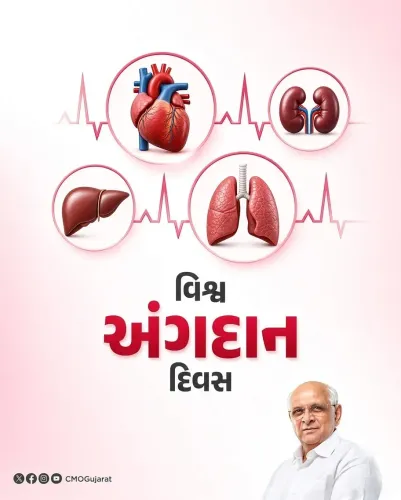
Every year, thousands of families face the unimaginable — and some, in the depths of grief, make a decision that gives strangers a second chance at life. Union Road Transport and Highways Minister Nitin Gadkari amplified that message on Sunday, 25 October 2026, drawing on Prime Minister Narendra Modi's latest Mann Ki Baat address to weave together two urgent public causes: organ donation and road safety.
Gadkari noted that Modi had highlighted the 'inspiring decisions on organ donation' made by families of road accident victims — people who, even in moments of immense sorrow, chose to donate their loved ones' organs and give new life to many others. 'Organ donation is not just a way to save lives,' Gadkari wrote, 'it is a powerful means of kindling new hope in someone's life.'
Why road accidents and organ donation are two sides of one crisis
The connection Gadkari draws is not rhetorical — it is structural. India has one of the world's lowest deceased organ donation rates, and the majority of such donations nationally come from victims of road accidents declared brain-dead. That grim arithmetic makes road fatalities both a public health tragedy and, in rare cases, the country's primary pipeline for lifesaving transplants.
The National Organ and Tissue Transplant Organisation (NOTTO), the central government body that coordinates transplants and awareness programmes, operates against this backdrop. The Transplantation of Human Organs and Tissues Act, amended in 2011, sought to expand the donor pool and simplify consent procedures, while the Motor Vehicles (Amendment) Act of 2019 tightened traffic enforcement and strengthened post-accident response mechanisms — two legislative levers aimed at reducing deaths on one hand and easing donation on the other.
Gadkari's road safety call: helmets, seat belts, and bystander action
The minister did not stop at awareness. He issued a direct appeal to road users: follow traffic rules, wear helmets and seat belts, and step forward to help the injured. 'Road safety is our shared responsibility,' he said, framing civic compliance not as a legal obligation but as a collective moral commitment.
The dual appeal — 'angdaan ke prati jagruk banein aur surakshit sadkon ka sankalp sakar karein' (become aware of organ donation and fulfil the pledge of safe roads) — captures the Ministry's long-running effort to collapse two campaigns into a single message: fewer accidents mean fewer deaths, but when tragedy does strike, donation can transform loss into legacy.
A PM's platform and a Minister's megaphone
Mann Ki Baat, the Prime Minister's monthly radio address, regularly surfaces social causes that the government then amplifies across ministries. Gadkari's post is a textbook example of that cascade — a senior minister in the road safety portfolio picking up a signal from the nation's biggest civic broadcast and directing it at the precise constituency most relevant to his mandate: India's millions of daily road users.
With state-level organ donation registries still inconsistent and road fatality numbers remaining stubbornly high, the pressure is on both health and transport ministries to move from messaging to measurable targets. The minister has now publicly staked the Ministry's credibility on both counts.
Point of View
With line ministers then amplifying sector-specific messages to targeted audiences. By fusing organ donation with road safety, the Ministry of Road Transport and Highways is quietly reframing accident fatalities as a public health resource — a shift that serves both the transplant pipeline and the optics of a ministry whose fatality statistics remain a political liability. The dual messaging also signals that the government may be preparing fresh targets on organ donation registries and road safety enforcement, using civic sentiment as political cover for tougher regulations.
NationPress
25 Oct 2026
Frequently Asked Questions
What did PM Modi say about organ donation in Mann Ki Baat?
PM Modi highlighted inspiring decisions by families of road accident victims who chose organ donation even in their darkest moments, thereby giving new life to others. The exact episode date referenced by Gadkari falls in late October 2026.
Why are road accident victims important for organ donation in India?
India has one of the world's lowest deceased donor rates, and road accident victims declared brain-dead constitute the country's primary source of deceased organ donations, making road safety and organ donation deeply interconnected issues.
What is the National Organ and Tissue Transplant Organisation (NOTTO)?
NOTTO is the central government body responsible for coordinating organ and tissue transplants across India and running national awareness programmes to increase donation rates.
What laws govern organ donation in India?
The Transplantation of Human Organs and Tissues Act, originally passed in 1994 and significantly amended in 2011, governs organ donation and transplantation in India, expanding the donor pool and simplifying consent procedures.
What road safety measures did Gadkari urge in his post?
Gadkari urged all road users to follow traffic rules, wear helmets and seat belts consistently, and actively come forward to help those injured in accidents, calling road safety a shared civic responsibility.