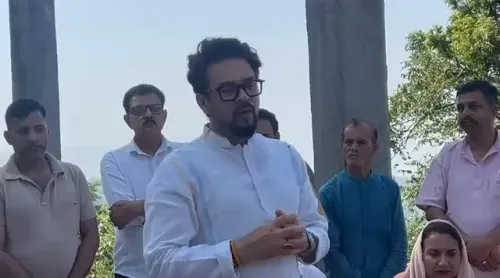
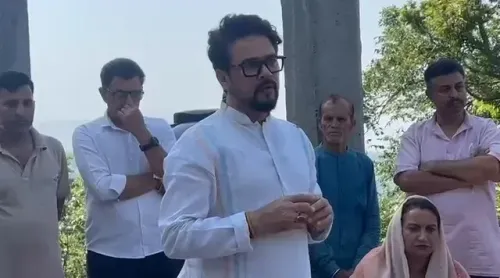
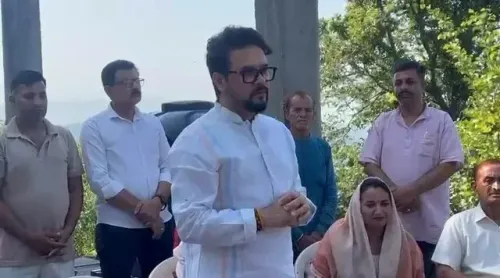
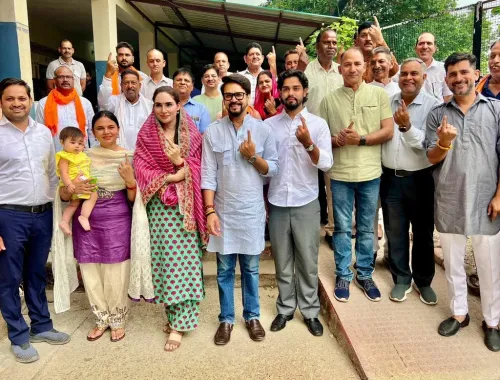
Anurag Thakur Urges Support for Himachal Local Products, SHG Women
Synopsis
BJP MP Anurag Thakur appealed from Delhi on October 25, 2026, urging people to promote local Himachali products and support the economic empowerment of Self-Help Group women under India's rural livelihoods framework.
Key Takeaways
BJP MP Anurag Thakur made a public appeal on October 25, 2026 from Delhi to promote local Himachal Pradesh products.
The appeal specifically calls for supporting the economic empowerment of Self-Help Group (SHG) women in Himachal.
Himachal's SHGs are backed by the National Rural Livelihoods Mission , launched in 2011 , which mobilises rural women into community micro-enterprises.
SHG women in the state produce handicrafts, woollens, and agricultural goods that depend on broader market access to sustain household incomes.
The appeal follows a wider national pattern of elected representatives using public platforms to generate urban demand for rural regional products.
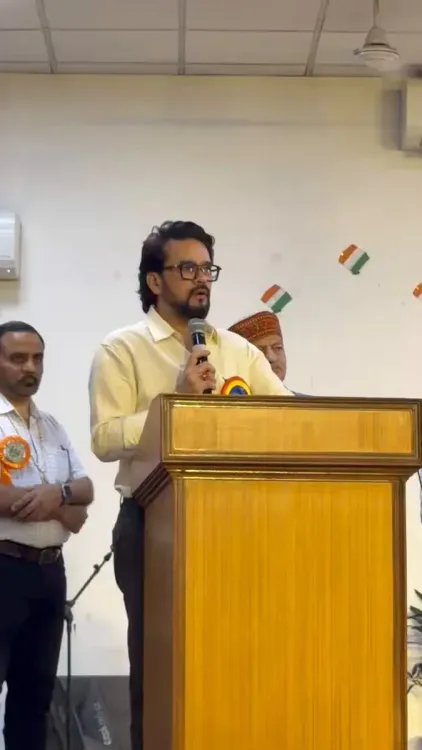
From the capital, a hill-state MP is asking the country to shop with purpose. BJP MP Anurag Thakur, the Lok Sabha member from Hamirpur, Himachal Pradesh, posted an appeal on Sunday, October 25, 2026, urging people to buy local Himachali products and become partners in the economic empowerment of women in Self-Help Groups.
In his post, Thakur wrote: 'मेरा आप सभी से निवेदन है कि हिमाचल के स्थानीय उत्पादों को बढ़ावा दें, और हमारी सेल्फ-हेल्प ग्रुप की महिलाओं के आर्थिक सशक्तिकरण में सहभागी बनें।' — 'I request all of you to promote local products of Himachal and become participants in the economic empowerment of our Self-Help Group women.' The post was tagged from Delhi, suggesting the appeal was made from the national capital, where such outreach often coincides with regional product exhibitions or public events.
What Himachal's SHG Women Actually Make
Himachal Pradesh's Self-Help Groups, supported under the National Rural Livelihoods Mission (NRLM) launched in 2011, are at the heart of this ask. Women organised under these community groups engage in savings, credit, and micro-enterprises — producing handicrafts, woollens, agricultural goods, and processed food items that carry the texture of the hills but often struggle to find markets beyond the state's borders.
The NRLM framework was designed precisely to bridge that gap: mobilise rural women, give them institutional backing, and then connect them to wider markets. For a mountain state like Himachal, where geography limits industrial scale, this model of community-led micro-enterprise is not just a welfare scheme — it is the economic backbone for thousands of households.
Why a Delhi Platform Changes the Equation
MPs and state representatives have increasingly used national-capital platforms — exhibitions, haats, social media — to push regional products into urban consumer consciousness. The logic is straightforward: a buyer in Delhi or Mumbai choosing a Himachali woollen shawl or a jar of local honey over a mass-market alternative directly transfers income to a woman in a village in Hamirpur or Kullu. No middleman, no supply-chain dilution.
Thakur's appeal fits a well-worn but genuinely effective pattern — elected representatives using their public reach to create demand pull for producer communities back home. The 'vocal for local' impulse has been a consistent thread in national policy conversations, and calls like this one translate that intent into a specific, actionable ask.
The real test, as always, will be whether this visibility converts into sustained purchasing — and whether the marketing infrastructure for Himachal's SHG products in metro markets keeps pace with the appeal.
Point of View
Where SHG-linked livelihoods are structurally significant, metro-market visibility can meaningfully move the needle on household incomes. The post also signals that the 'vocal for local' policy thrust remains a live political currency in 2026, not just a pandemic-era slogan. Whether such appeals translate into durable purchasing behaviour or institutional market-linkage programmes will define their real policy value.
NationPress
25 Oct 2026
Frequently Asked Questions
What did Anurag Thakur post about Himachal products?
Anurag Thakur posted on October 25, 2026, requesting people to promote local Himachal Pradesh products and participate in the economic empowerment of Self-Help Group women in the state.
What are Self-Help Groups and how do they help women in Himachal Pradesh?
Self-Help Groups (SHGs) are women-led community groups supported under the National Rural Livelihoods Mission (2011) that enable rural women to save, access credit, and run micro-enterprises such as handicrafts, woollen weaving, and food processing.
What is the National Rural Livelihoods Mission?
The National Rural Livelihoods Mission (NRLM) was launched in 2011 to organise rural women into Self-Help Groups, providing them institutional support for savings, credit, and sustainable micro-enterprise livelihoods.
Why is Anurag Thakur promoting Himachal local products from Delhi?
Thakur's appeal from Delhi aims to generate urban market demand for Himachali goods produced by SHG women, a strategy legislators from producer states use to improve income flows to rural communities.
Which constituency does Anurag Thakur represent?
Anurag Thakur is the BJP Lok Sabha MP from Hamirpur in Himachal Pradesh and is a former Union Minister of Information and Broadcasting and Youth Affairs and Sports.