Anurag Thakur Credits Modi Govt for Himachal Rail Links
Synopsis
BJP MP Anurag Thakur has credited twelve years of the Modi government's rail investments for directly linking Himachal Pradesh to major Indian cities. Posting from Hamirpur on June 7, 2026, he highlighted the transformation of a state historically dependent on road travel due to its mountainous terrain.
Key Takeaways
BJP MP Anurag Thakur posted on June 7, 2026 , crediting the Modi government's 12-year record for connecting Himachal Pradesh to major Indian cities by rail.
Himachal Pradesh has historically relied on narrow-gauge and road networks due to its mountainous terrain, making broad-gauge rail expansion technically challenging.
The Bhanupali–Bilaspur–Beri new line is among the key projects that received renewed funding and timelines after 2014 .
Residents of districts like Hamirpur , Bilaspur , and Una , as well as the state's tourism and horticulture sectors , are the primary beneficiaries of expanded connectivity.
Pending projects including the Una–Hamirpur and Mandi rail links will be key indicators of further progress in the state's rail network.
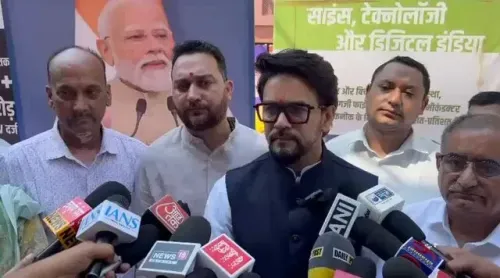
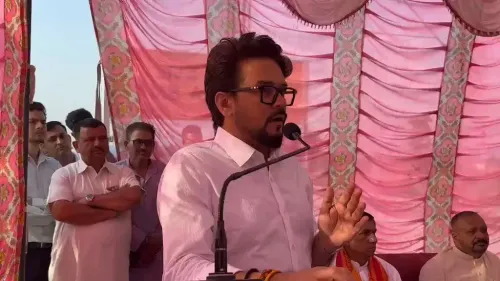
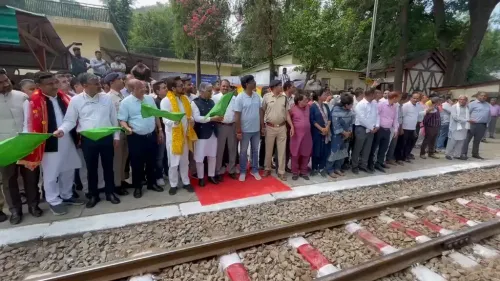
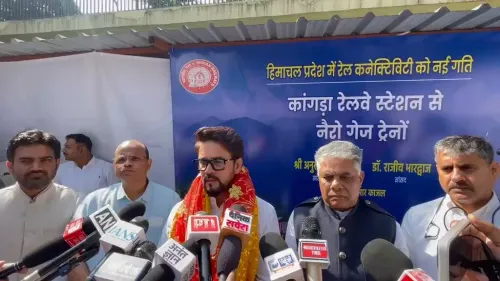
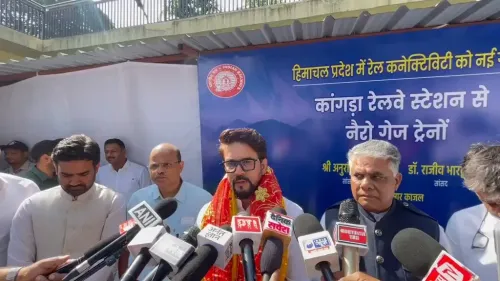
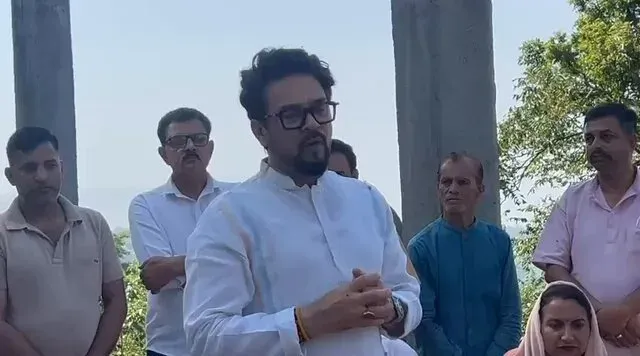
BJP MP Anurag Thakur on Sunday, June 7, 2026, credited twelve years of the Modi government's efforts for directly connecting Himachal Pradesh to major cities across India through rail services, posting from his constituency Hamirpur.
Context
Thakur wrote, 'विगत 12 वर्षों में यह मोदी सरकार के प्रयासों का प्रतिफल है' — 'This is the result of the Modi government's efforts over the past 12 years' — asserting that Himachal Pradesh is now directly connected to the country's major cities through rail services. The post, tagged to Hamirpur, comes as the ruling party continues to highlight infrastructure milestones in the run-up to political cycles in hill states.
Himachal Pradesh has historically had limited rail infrastructure, with its network consisting largely of narrow-gauge sections designed for tourism and local connectivity rather than broad-gauge intercity links. The state's mountainous terrain has made large-scale railway expansion both expensive and technically demanding.
Policy Backdrop
Since 2014, successive railway budgets have increased gross budgetary support for Indian Railways with a stated emphasis on new lines, gauge conversion, and last-mile connectivity in hill states. Projects including the Bhanupali–Bilaspur–Beri new line, surveyed in earlier decades, received renewed funding and revised timelines after 2014.
The Railway Budget 2014–15 specifically announced enhanced focus on new lines and gauge conversion in states such as Himachal Pradesh, framing connectivity to geographically difficult terrain as both an economic and strategic priority. Successive allocations have continued this thrust, with capital expenditure on the rail network reaching record levels in the years since.
Stakeholders and Impact
The primary beneficiaries of improved rail connectivity to Himachal Pradesh are its residents — particularly those in districts such as Hamirpur, Bilaspur, and Una — who previously relied almost entirely on road travel to reach large metros. Direct rail links reduce travel time, lower transport costs, and ease access to healthcare, education, and employment in cities.
The tourism sector stands to gain significantly, as easier access from major urban centres can drive higher footfall to Himachal's hill stations and pilgrimage sites. Improved connectivity also supports the movement of agricultural and horticultural produce — including the state's well-known apple crop — to wider markets.
What's Next
Parliamentary questions and railway budget allocations will be closely watched for progress on remaining Himachal projects, including the proposed Una–Hamirpur and Mandi rail links, which would extend the network deeper into the state's interior. The commissioning of new train services listed in the 2025–26 timetable will serve as a tangible measure of the connectivity gains Thakur is highlighting.
As the BJP continues to position rail infrastructure as a signature achievement of the Modi government's twelve-year tenure, Himachal Pradesh's connectivity trajectory will remain a benchmark for how effectively central capital expenditure translates into ground-level change in India's hill states.
Point of View
So the claim carries substantive weight even as it serves a political purpose. The framing of '12 years' is deliberate, anchoring the achievement squarely within the Modi era and positioning the BJP as the decisive actor in a project that predates it. Whether the remaining links — Una–Hamirpur and Mandi — are delivered on schedule will determine how durable this narrative proves to be.
NationPress
22 Oct 2026
Frequently Asked Questions
Is Himachal Pradesh now connected to major cities by train?
According to BJP MP Anurag Thakur's post on June 7, 2026, Himachal Pradesh is now directly connected to major Indian cities through rail services, which he attributed to the Modi government's efforts over the past 12 years. Specific new routes commissioned during this period were not named in the post.
What is the Bhanupali–Bilaspur–Beri rail line?
The Bhanupali–Bilaspur–Beri project is a new broad-gauge rail line in Himachal Pradesh that was surveyed in earlier decades but received renewed funding and revised timelines after 2014 as part of Indian Railways' push to improve connectivity in hill states.
Why has railway development in Himachal Pradesh been slow?
Himachal Pradesh's mountainous terrain makes railway construction technically demanding and expensive, which is why the state historically depended on narrow-gauge lines and road travel rather than a broad-gauge intercity rail network.
What rail projects are still pending in Himachal Pradesh?
Key pending projects include the Una–Hamirpur and Mandi rail links, which would extend the network deeper into the state's interior. Progress on these lines is expected to be tracked through parliamentary questions and future railway budget allocations.
How does better rail connectivity benefit Himachal Pradesh's economy?
Improved rail links reduce travel time and transport costs for residents, boost tourist arrivals to hill stations and pilgrimage sites, and help move the state's agricultural produce — including its well-known apple crop — to larger markets across India.