Anurag Thakur Slams HP Govt Over Rail Connectivity
Synopsis
BJP MP Anurag Thakur has accused the Congress-led Himachal Pradesh government of consistently evading its responsibilities instead of cooperating with the Centre to expand rail connectivity in the state, reigniting a centre-state infrastructure blame dispute.
Key Takeaways
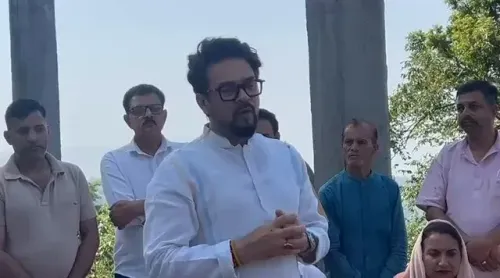
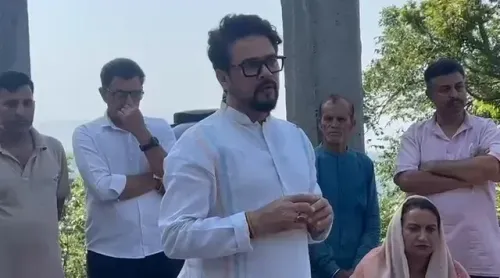
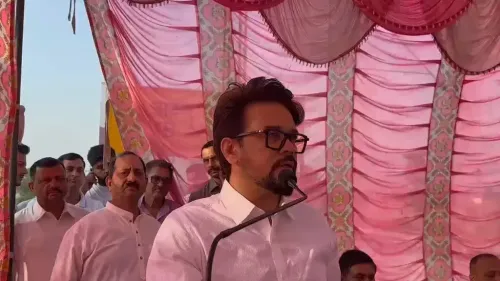
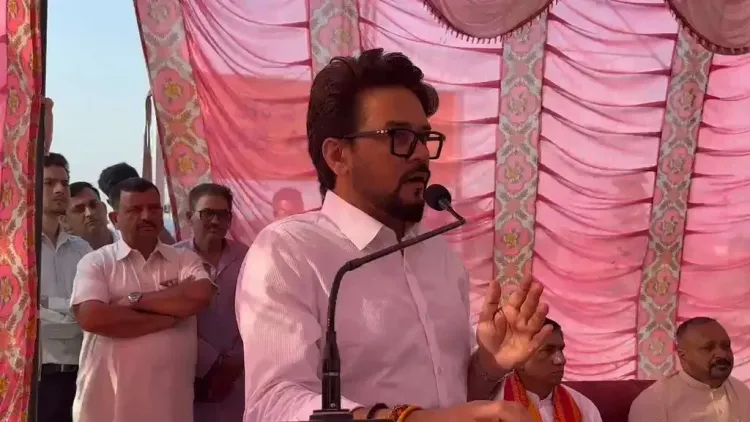
Anurag Thakur , BJP Lok Sabha MP from Hamirpur , on June 6, 2026 publicly accused the Himachal Pradesh Congress government of not cooperating with the Centre on rail expansion.
He alleged the state administration 'always runs away from its responsibilities' rather than facilitating centrally funded rail projects.
Himachal Pradesh has historically limited rail coverage due to difficult Himalayan terrain, making state-level coordination critical for project execution.
Rail projects in hill states require state facilitation for land acquisition , forest clearances, and local administrative support — areas outside the Centre's direct control.
The state's tourism sector and residents of remote districts are the primary stakeholders who would benefit from improved rail connectivity.
No formal response from the Himachal Pradesh government had been issued at the time of reporting.
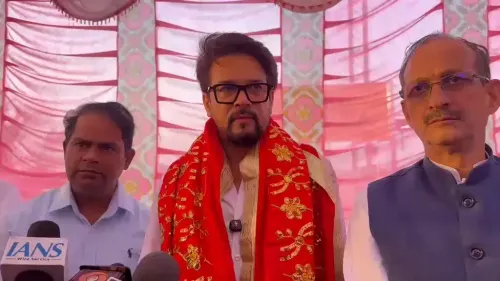
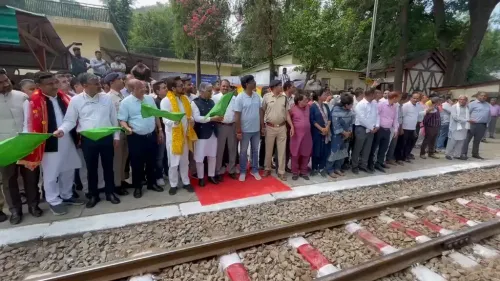
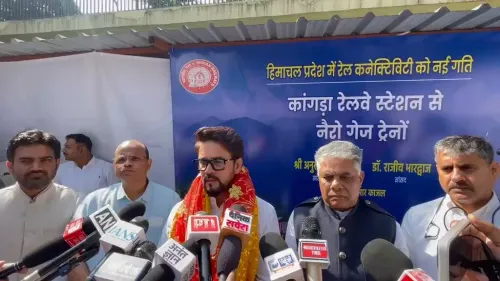
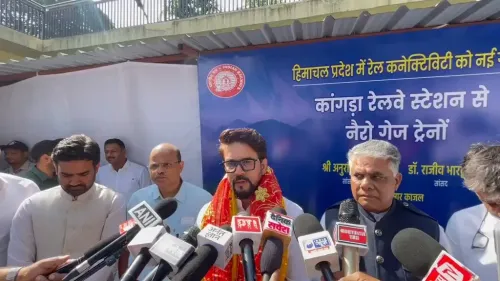
BJP MP Anurag Thakur on Saturday, June 6, 2026, accused the Himachal Pradesh Congress government of shirking its responsibilities on rail connectivity, alleging that the state administration consistently avoids cooperating with the central government on expanding the rail network in the hill state.
Context
In his post, Thakur wrote: 'हिमाचल में प्रदेश की कांग्रेस सरकार रेल कनेक्टिविटी बढ़ाने में केंद्र सरकार का सहयोग करने की बजाय अपनी जिम्मेदारियों से सदा भागने का काम करती है' — translated: 'The Congress government in Himachal Pradesh, instead of cooperating with the central government to increase rail connectivity, always runs away from its own responsibilities.' The charge targets what the Hamirpur MP describes as a pattern of non-participation by the state administration in federally driven rail expansion efforts.
Himachal Pradesh has historically had limited rail coverage owing to its rugged, mountainous terrain. Expanding the network requires close coordination between Indian Railways — which plans and funds projects at the central level — and the state government, which must facilitate land acquisition, environmental clearances, and local administrative support.
Policy Backdrop
Central budgets have periodically carried allocations for new rail lines and feasibility surveys in Himachal Pradesh, reflecting a long-standing national priority to connect remote Himalayan regions. However, rail projects in hilly states face an unusually complex execution chain: terrain surveys, forest and revenue land diversion, and resettlement processes all require active state-level engagement before construction can begin.
In this federal framework, Indian Railways depends on state governments to clear bottlenecks that lie outside the Centre's direct administrative reach. When a state government is run by an opposition party, such coordination gaps frequently become flashpoints for public political contestation, with ruling-party MPs at the Centre pointing to stalled timelines as evidence of state-level obstruction.
Stakeholders and Impact
The residents of Himachal Pradesh, particularly those in interior districts with poor road access, stand to gain the most from improved rail links — better connectivity translates directly into lower freight costs, faster emergency response, and broader economic opportunity. The state's tourism sector, a major revenue earner, is also sensitive to transport infrastructure upgrades that can widen visitor access to hill destinations.
Thakur's accusation places the Congress-led state government on the defensive ahead of any upcoming legislative or budgetary discussions on rail projects. State authorities have not yet issued a public response to the charge as of the time of this report.
What's Next
Attention will now turn to whether the Himachal Pradesh government responds formally to the allegation, and whether pending rail project clearances — including land acquisition files and forest diversion applications — are taken up in the next state assembly session or administrative review. Any mention of Himachal rail allocations in forthcoming Railway Ministry communications will also be closely watched.
The broader question is whether centre-state friction on infrastructure delivery in opposition-governed hill states will intensify as the 2027 Himachal Pradesh assembly election cycle approaches, making rail connectivity a live political issue rather than a purely administrative one.
Point of View
He shifts the narrative from 'what has the Centre delivered' to 'what is the state blocking,' a frame that tends to resonate with voters in connectivity-starved constituencies. With Himachal Pradesh's assembly election on the horizon, rail connectivity is being elevated from a bureaucratic coordination issue to a front-line political charge. The absence of a state rebuttal, at least immediately, risks letting the allegation define the news cycle unchallenged.
NationPress
23 Oct 2026
Frequently Asked Questions
What did Anurag Thakur say about Himachal Pradesh rail connectivity?
Anurag Thakur accused the Himachal Pradesh Congress government of consistently avoiding its responsibilities instead of cooperating with the central government to expand rail connectivity in the state.
Why is rail connectivity limited in Himachal Pradesh?
Himachal Pradesh has historically limited rail coverage because of its rugged Himalayan terrain, which makes construction technically difficult and requires extensive land acquisition and forest clearance processes.
Who is responsible for rail projects in Himachal Pradesh — Centre or state?
Indian Railways plans and funds rail projects at the central level, but the state government must facilitate land acquisition, environmental clearances, and local coordination, making both levels of government essential to project completion.
Has the Himachal Pradesh government responded to Anurag Thakur's accusation?
No formal response from the Himachal Pradesh government was on record at the time of this report.
How does centre-state friction affect rail projects in opposition-governed states?
When the central and state governments are run by different parties, coordination gaps on infrastructure projects often become political flashpoints, with central-government MPs citing stalled timelines as evidence of state-level obstruction.