Giriraj Singh: India Represents at 7th Philippine Silk Summit
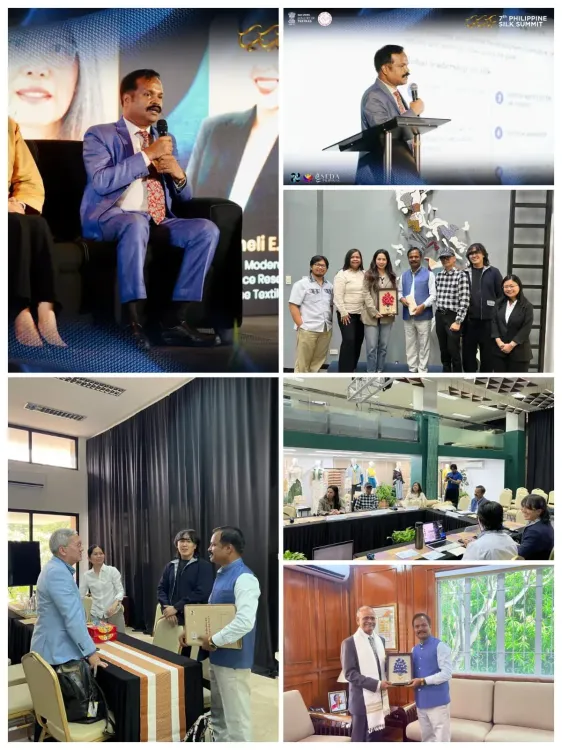
Synopsis
Union Textiles Minister Giriraj Singh announced that Central Silk Board Member Secretary P. Shivkumar represented India at the 7th Philippine Silk Summit 2026, presenting Ministry of Textiles schemes and highlighting sericulture's role in Aatmanirbhar Bharat and Viksit Bharat.
Key Takeaways
Shivkumar, IFoS , Member Secretary of the Central Silk Board and Secretary-General of the International Sericultural Commission, represented India at the 7th Philippine Silk Summit 2026 .
He presented Ministry of Textiles schemes covering research, innovation, and sustainable development in the silk sector.
The address underlined the silk sector's contribution to Aatmanirbhar Bharat and Viksit Bharat .
India's participation at Secretary-General level signals its leading role in shaping global sericulture governance through the International Sericultural Commission .
Union Textiles Minister Giriraj Singh publicised the representation on October 23, 2026 , underscoring the ministry's focus on international engagement for the silk sector.
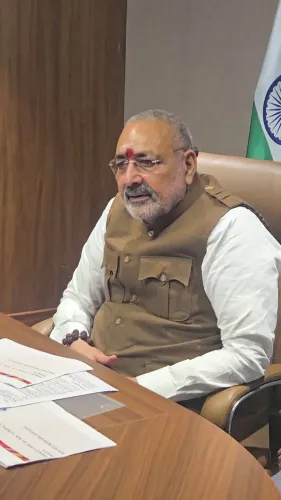
India took the global silk stage in the Philippines on Friday, October 23, 2026, as Union Textiles Minister Giriraj Singh announced that P. Shivkumar, IFoS — Member Secretary of the Central Silk Board and Secretary-General of the International Sericultural Commission — represented the country at the 7th Philippine Silk Summit 2026.
India's pitch at Manila: research, innovation, and sustainable silk
Shivkumar presented the Ministry of Textiles' schemes and the sector's ongoing initiatives in research, innovation, and sustainable development. The address underlined the silk industry's role in advancing the government's twin visions of Aatmanirbhar Bharat (self-reliant India) and Viksit Bharat (developed India).
India is one of the world's largest producers and consumers of silk, second only to China in raw silk output, and the Central Silk Board — operating under the Ministry of Textiles — is the apex body overseeing sericulture research, development, and training across the country. Shivkumar's dual role as ISC Secretary-General places India at the centre of global sericulture governance.
The Philippine Silk Summit and India's diplomatic standing in sericulture
The Philippine Silk Summit is a regional forum that brings together silk-producing nations, researchers, and industry stakeholders to align on standards, technology transfer, and market development. Hosting the 7th edition in the Philippines signals Southeast Asia's growing ambition in the silk value chain — and India's participation at senior diplomatic-official level signals it intends to shape that conversation, not merely observe it.
By deploying the head of the International Sericultural Commission as its voice, India reinforced that its interest is not only commercial but also multilateral: setting the research agenda, sharing sustainable-farming practices, and building South-South partnerships in a sector that directly employs millions of rural weavers and farmers.
Why the Ministry of Textiles is amplifying this moment
Minister Singh's decision to highlight the summit on X reflects a deliberate communications strategy: positioning Indian sericulture — and the Central Silk Board's reform programme — as part of a broader export-push narrative. With global demand for natural fibres rising amid sustainability concerns around synthetic textiles, India's pitch on eco-friendly mulberry and vanya (wild) silk aligns neatly with the global buyer mood.
The message from Manila is crisp: India's silk sector is not a legacy cottage industry — it is an innovation-backed, globally engaged pillar of the Textiles Ministry's growth agenda.
Point of View
Innovation-driven silk economy. The twin invocation of Aatmanirbhar Bharat and Viksit Bharat frames domestic sericulture reform as globally consequential, not merely a rural welfare measure. Whether this diplomatic presence translates into concrete trade agreements or technology partnerships will be the metric to watch.
NationPress
23 Oct 2026
Frequently Asked Questions
What is the Philippine Silk Summit 2026?
The Philippine Silk Summit is an international forum for silk-producing nations, researchers, and industry players to collaborate on standards, technology, and market development; the 7th edition was held in the Philippines in 2026.
Who represented India at the 7th Philippine Silk Summit?
P. Shivkumar, IFoS , Member Secretary of the Central Silk Board and Secretary-General of the International Sericultural Commission, represented India at the summit.
What is the Central Silk Board?
The Central Silk Board is a statutory body under India's Ministry of Textiles that oversees sericulture research, development, training, and promotion across the country.
What did India present at the Philippine Silk Summit?
India's representative presented the Ministry of Textiles' schemes and the silk sector's initiatives in research, innovation, and sustainable development, linking them to Aatmanirbhar Bharat and Viksit Bharat goals.
Who is Giriraj Singh and what is his role in India's silk sector?
Giriraj Singh is India's Union Minister of Textiles and a senior BJP leader and Lok Sabha MP from Begusarai, Bihar; the Ministry of Textiles oversees the Central Silk Board and all national sericulture policy.