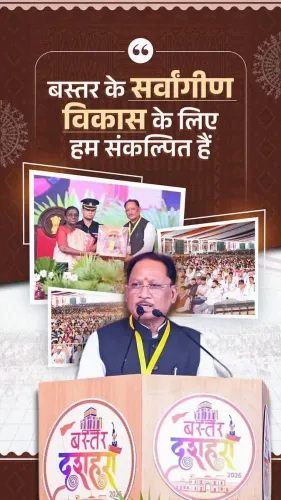
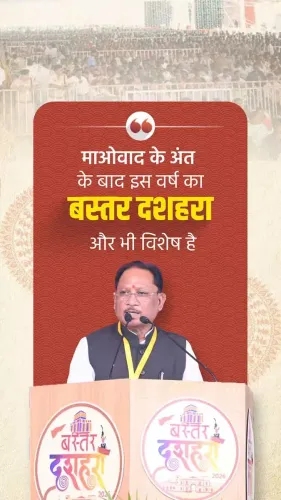
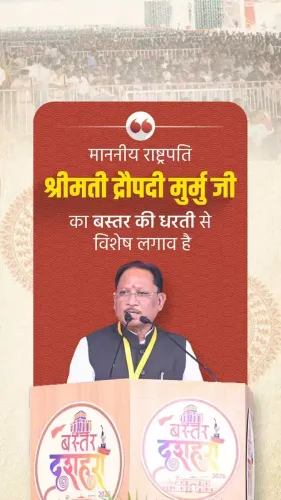
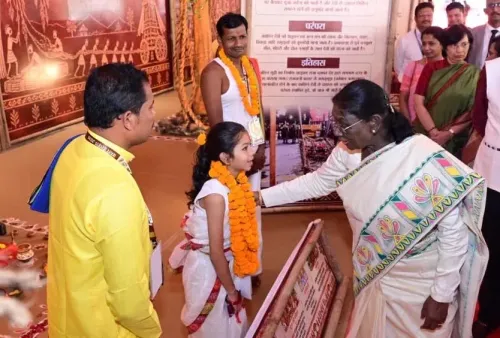
CM Sai: President Murmu graces Bastar's Muria Darbar 2026
Synopsis
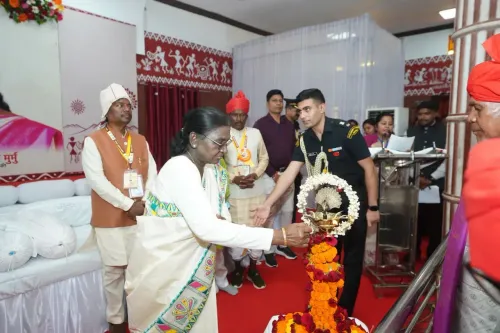
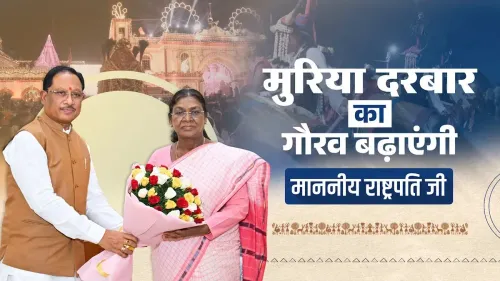
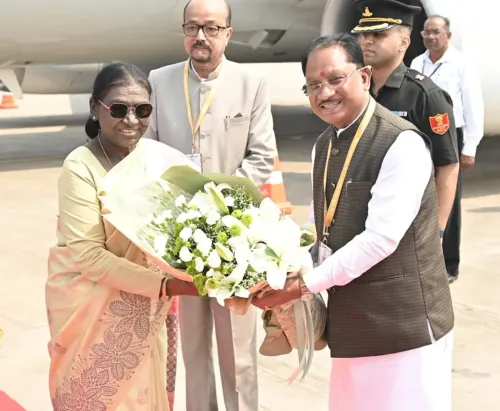
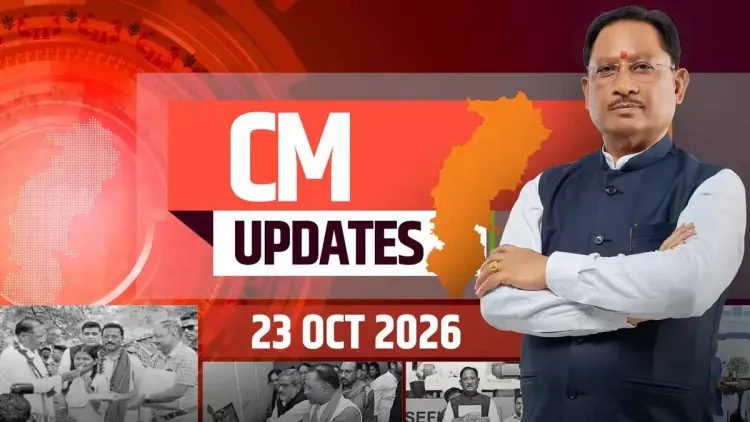
President Draupadi Murmu, India's first tribal President, presided as chief guest over the Muria Darbar — the ancient tribal assembly within Bastar's 75-day Dussehra festival — with Chhattisgarh CM Vishnu Deo Sai sharing updates from the landmark cultural event on 23 October 2026.
Key Takeaways
President Draupadi Murmu served as chief guest at the Muria Darbar during Bastar Dussehra 2026 on 23 October .
The Muria Darbar is a traditional tribal assembly where community elders discuss customs, disputes, and festival arrangements in Bastar, Chhattisgarh .
Bastar Dussehra is a 75-day festival unique to the region, blending tribal and Hindu traditions — one of the longest folk festivals in India.
President Murmu is the first person from a Scheduled Tribe community to hold the office of President of India, lending special symbolic weight to her presence at the darbar.
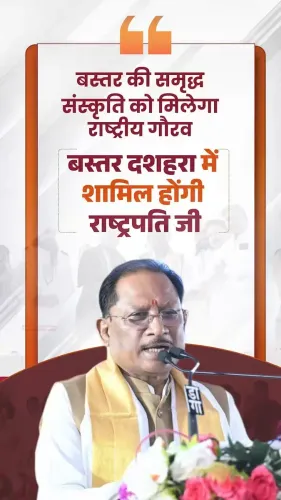
CM Vishnu Deo Sai shared the updates via X, tagging Rashtrapati Bhavan and marking the occasion under #बस्तर_दशहरा_2026 .
India's first tribal President presided over one of the subcontinent's most extraordinary living traditions on Friday, 23 October 2026, as President Draupadi Murmu served as the chief guest at the Muria Darbar — the ancient tribal assembly that forms the ceremonial heart of Bastar Dussehra. Chhattisgarh Chief Minister Vishnu Deo Sai shared updates from the landmark event, tagging the Rashtrapati Bhavan handle on X.
What the Muria Darbar actually is — and why it matters
The Muria Darbar is not a ceremonial photo opportunity. It is a functioning tribal assembly — a centuries-old forum where community elders and leaders of the Bastar region gather to deliberate on customs, resolve disputes, and coordinate the rituals of the larger festival. It represents living governance in a region where the state and tribal tradition have always negotiated space with each other.
The darbar sits inside the larger canvas of Bastar Dussehra, a 75-day annual festival that stands apart from every other Dussehra celebration in India. Where most of the country burns an effigy of Ravana on the tenth day, Bastar's version weaves together animist tribal rites, goddess worship, and community assembly across more than two months — making it one of the longest-running folk festivals on earth.
Why President Murmu's presence carries a distinct weight
President Murmu has been in office since July 2022, making history as the first person from a Scheduled Tribe community to hold India's highest constitutional office. Her attendance at the Muria Darbar is not routine protocol — it is a deliberate convergence of symbol and substance. A tribal President presiding over a tribal assembly in the heartland of Chhattisgarh's Scheduled Tribe population sends a message that is both political and deeply personal for the communities of southern Chhattisgarh.
State governments in central India have periodically elevated Bastar Dussehra by inviting constitutional dignitaries, giving national visibility to a tradition that might otherwise remain a regional story. The BJP-led Chhattisgarh administration under CM Sai has maintained a consistent emphasis on spotlighting indigenous culture as part of its broader outreach to tribal constituencies — communities that make up a significant share of the state's electorate and social fabric.
Bastar at the intersection of culture and consequence
The Bastar region's cultural richness exists alongside a long history of conflict and underdevelopment — which makes a moment like this one genuinely consequential. When India's President sits at the Muria Darbar, the implicit message to the region's tribal communities is one of national recognition: your traditions are not folklore on the margins, they are the centre of the story today.
Whether that symbolism translates into concrete outcomes — welfare schemes, cultural documentation initiatives, infrastructure — is the question the festival's conclusion will leave open. CM Sai's post also references 'other important news' (anya mahatvapurn khabrein) from the day's events, suggesting further announcements may follow from the Bastar Dussehra programme.
A President who carries the identity of her people into every ceremonial hall she enters, sitting at an assembly that has governed by custom for generations — Bastar Dussehra 2026 just wrote one of its most resonant chapters.
Point of View
It is a deliberate alignment of constitutional identity with grassroots cultural legitimacy. For the BJP-led Chhattisgarh government, the event reinforces its tribal outreach narrative in a state where Scheduled Tribe voters are an electoral and moral priority. More broadly, the moment reflects a conscious national effort to reframe India's tribal heritage as central to the republic's self-image rather than peripheral to it. The durability of that reframing depends on whether symbolic presence is followed by substantive policy in welfare, land rights, and cultural preservation.
NationPress
24 Oct 2026
Frequently Asked Questions
What is the Muria Darbar in Bastar Dussehra?
The Muria Darbar is a traditional tribal assembly held during Bastar Dussehra in which community elders and leaders gather to discuss customs, settle disputes, and coordinate the festival's rituals. It is one of the oldest functioning forms of tribal self-governance in the region.
Why is Bastar Dussehra different from other Dussehra festivals?
Bastar Dussehra lasts 75 days and uniquely combines animist tribal rites with elements of Hindu tradition. Unlike the rest of India where Dussehra centres on the burning of Ravana's effigy on the tenth day, Bastar's version is a multi-month community festival rooted in goddess worship and tribal assembly.
Why did President Draupadi Murmu attend Bastar Dussehra 2026?
President Murmu attended as the chief guest of the Muria Darbar. As India's first President from a Scheduled Tribe community, her presence at a major tribal festival carries both constitutional and personal significance for tribal communities across central India.
Who is Vishnu Deo Sai and what is his role in Chhattisgarh?
Vishnu Deo Sai is the Chief Minister of Chhattisgarh and a senior leader of the BJP. He has been in office since December 2023 and has emphasised indigenous culture and tribal welfare as priorities of his administration.
Where is Bastar located in India?
Bastar is a region in southern Chhattisgarh , characterised by a predominantly tribal population and rich indigenous cultural traditions. It is known for its biodiversity, tribal art, and the unique Dussehra festival celebrated there.