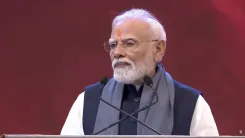
President Murmu graces Bastar Dussehra's Muria Darbar in Jagdalpur
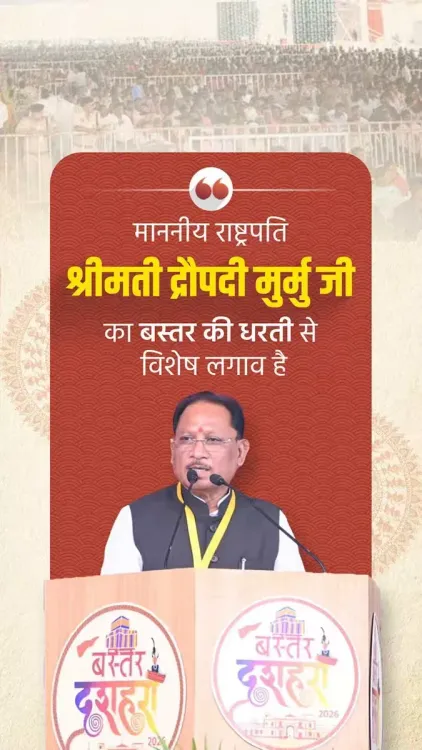
Synopsis
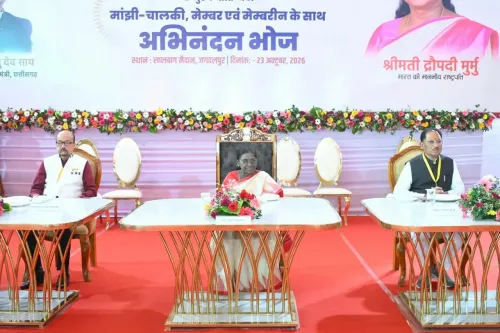
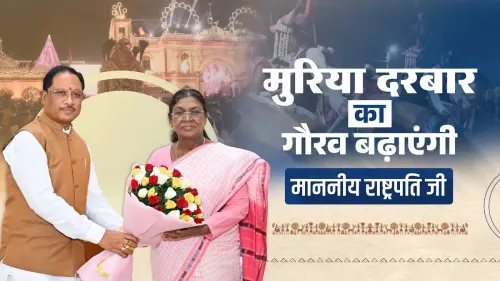
President Draupadi Murmu attended the Muria Darbar assembly at Bastar Dussehra in Jagdalpur on 23 October 2026, with CM Vishnu Dev Sai, lending India's highest constitutional office to one of the country's oldest tribal democratic traditions.
Key Takeaways
President Draupadi Murmu attended the Muria Darbar at Lalbagh Maidan, Jagdalpur on 23 October 2026 .
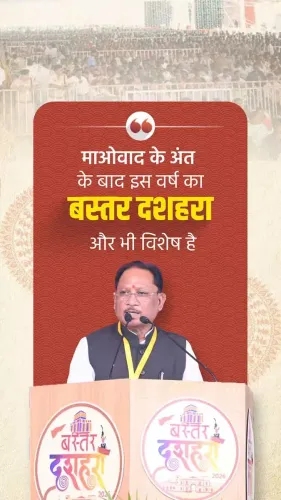
Chief Minister Vishnu Dev Sai of Chhattisgarh was present alongside the President at the Bastar Dussehra event.
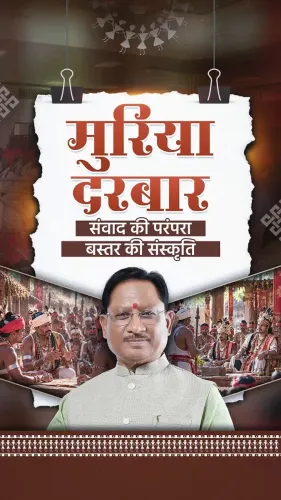
The Muria Darbar is a centuries-old tribal assembly within Bastar Dussehra that embodies customary democratic governance.
President Murmu is India's first President from a Scheduled Tribe community, making her attendance symbolically significant.
The Government of India has observed Janjatiya Gaurav Divas on 15 November each year since 2021 to honour tribal heritage.
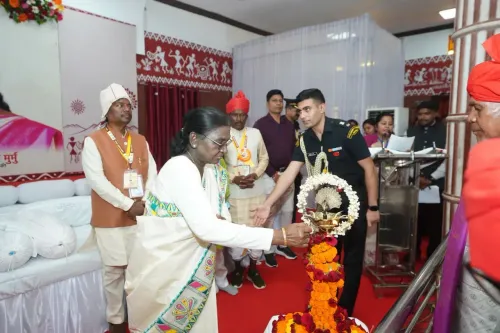
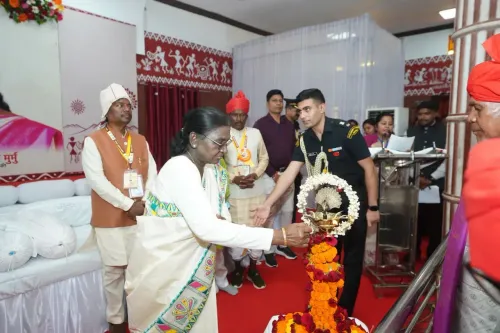
India's first tribal President walked into a living tradition on Friday, 23 October 2026 — and the Bastar Dussehra's ancient Muria Darbar assembly has never carried a higher profile. President Draupadi Murmu joined Chief Minister Vishnu Dev Sai and thousands of tribal community members at Lalbagh Maidan, Jagdalpur, lending what the Chief Minister's Office of Chhattisgarh called a 'dignified presence' to one of India's most distinctive indigenous festivals.
The CMO's post described the moment with warmth: 'Muria Darbar hamaari janjatiya sanskriti aur loktantrik paramparaon ki sundar abhivyakti hai' — 'The Muria Darbar is a beautiful expression of our tribal culture and democratic traditions.' President Murmu's attendance, it said, 'heightened the enthusiasm of all of us and bestowed special honour on this glorious tradition.'
What is the Muria Darbar — and why it matters
The Muria Darbar is a traditional tribal assembly that sits at the heart of Bastar Dussehra, the multi-week festival that distinguishes this region from the rest of the country's Dussehra calendar. Where most of India marks the festival over ten days, Bastar stretches the celebration across several weeks, weaving together ritual processions, community governance practices, and indigenous deity worship rooted in the customs of the Muria Gond tribe.
The assembly functions as a living demonstration of customary democratic governance — a model in which tribal elders and community representatives deliberate collectively, predating modern parliamentary norms by centuries. Scholars and policymakers alike have pointed to it as evidence that participatory democratic traditions run deep in India's tribal heartlands, not just its constitutional history.
President Murmu and the weight of the moment
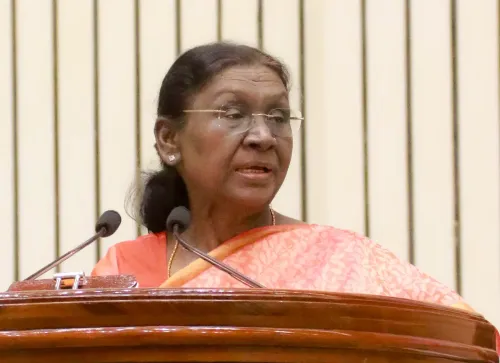
Draupadi Murmu, who took office as India's 15th President and the first person from a Scheduled Tribe community to hold the post, has consistently used her platform to spotlight indigenous heritage. Her presence at Lalbagh Maidan today is, therefore, more than ceremonial. It is a pointed signal: the highest constitutional office in the land actively affirming the dignity and democratic legitimacy of tribal customary institutions.
This aligns with a wider policy posture. Since 2021, the Government of India has observed Janjatiya Gaurav Divas on 15 November — the birth anniversary of tribal icon Birsa Munda — to formally recognise tribal contributions to the national story. High-level participation in events like Bastar Dussehra is part of that same architecture: bringing state and central prestige to local traditions without altering their form.
Bastar's cultural stakes for Chhattisgarh
Bastar, in southern Chhattisgarh, has long existed in national consciousness primarily through a security lens — home to some of India's most complex left-wing extremism challenges. Cultural showcases of this scale, amplified by the President's visit, reframe that narrative deliberately. Chief Minister Vishnu Dev Sai, who has made tribal cultural promotion a visible plank of his administration under the Viksit Chhattisgarh vision, stood alongside Murmu at the event, underscoring the state's institutional investment in the moment.
For the tens of thousands of tribal residents who gather at Lalbagh Maidan each year, the festival is not a performance for outside eyes — it is a living covenant with ancestral custom. Today, for once, the nation's highest office came to witness it on their terms.
Point of View
It helps shift Bastar's national image from a security flashpoint to a cultural landmark — a rebranding that serves both the state administration and the broader 'Viksit Bharat' messaging. The long-term test is whether symbolic high-level visits translate into durable funding and policy infrastructure for tribal cultural preservation.
NationPress
23 Oct 2026
Frequently Asked Questions
What is the Muria Darbar at Bastar Dussehra?
The Muria Darbar is a traditional tribal assembly held as part of the multi-week Bastar Dussehra festival in Jagdalpur, Chhattisgarh, where tribal elders and community representatives gather in a form of customary democratic governance rooted in Muria Gond traditions.
Why did President Draupadi Murmu attend Bastar Dussehra 2026?
President Murmu attended the Muria Darbar as a mark of respect for tribal cultural heritage. As India's first President from a Scheduled Tribe community, she has consistently highlighted indigenous traditions throughout her tenure.
Where is the Bastar Dussehra held?
Bastar Dussehra is held in Jagdalpur , the administrative headquarters of Bastar district in southern Chhattisgarh. The main events take place at Lalbagh Maidan .
What is Janjatiya Gaurav Divas?
Janjatiya Gaurav Divas is observed on 15 November each year, instituted by the Government of India in 2021 to honour the contributions and heritage of tribal communities across the country, coinciding with the birth anniversary of tribal icon Birsa Munda.
Who is the Chief Minister of Chhattisgarh?
Vishnu Dev Sai is the Chief Minister of Chhattisgarh. He was present alongside President Murmu at the Bastar Dussehra Muria Darbar event on 23 October 2026.