Giriraj Singh backs Viksit Bharat 2047 with unity call
Synopsis
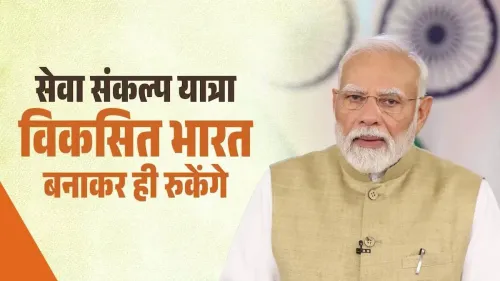
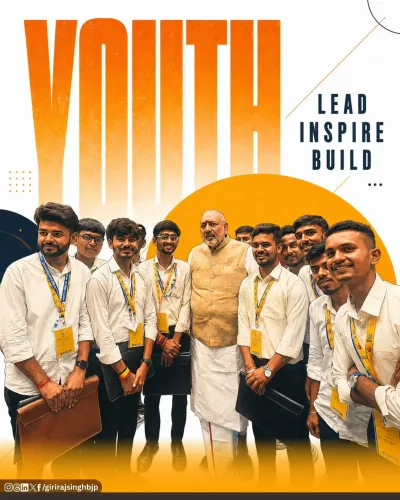
Union Textiles Minister Giriraj Singh on 23 October 2026 called for active citizen participation to achieve a united, self-reliant India and developed-nation status by 2047, reaffirming the government's twin pillars of Atmanirbhar Bharat and Viksit Bharat.
Key Takeaways
Giriraj Singh posted on 23 October 2026 linking social unity, Atmanirbhar Bharat and the Viksit Bharat 2047 vision.
Viksit Bharat 2047 targets developed-nation status by India's centenary of independence, first articulated by PM Modi in Independence Day addresses since 2022 .
Atmanirbhar Bharat Abhiyan was launched in May 2020 to promote domestic manufacturing and reduce import dependence.
The minister called for active participation from all citizens as essential to achieving these national goals.
Singh's textiles portfolio makes him a key figure in the Atmanirbhar Bharat agenda, as textiles is a flagship sector for domestic production and exports.
A united society, a self-reliant economy, and a developed India by 2047 — Union Textiles Minister Giriraj Singh distilled three pillars of national ambition into a single post on Friday, 23 October 2026, calling on every citizen to play an active part in reaching that goal.
In Hindi, the minister wrote: 'एकजुट समाज, आत्मनिर्भर भारत और 2047 तक विकसित राष्ट्र का संकल्प।' — 'A united society, an Atmanirbhar Bharat, and the resolve for a developed nation by 2047. Active participation from all of us is essential to achieve this goal.'
What Viksit Bharat 2047 actually demands
Viksit Bharat 2047 is the government's overarching development vision — a target to elevate India to developed-nation status by the centenary of its independence. Prime Minister Narendra Modi has anchored this goal in Independence Day addresses since 2022, framing it as the defining national project of the current generation. The arithmetic is unforgiving: India must sustain high growth, expand manufacturing, deepen exports, and bring hundreds of millions more citizens into formal economic participation — all within roughly two decades.
Singh's invocation of Atmanirbhar Bharat connects directly to that clock. The self-reliance initiative, launched in May 2020 with a series of economic stimulus packages during the COVID-19 pandemic, was designed to reduce India's dependence on imports and turbocharge domestic production. Six years on, it has evolved from a crisis response into the structural backbone of industrial policy — with textiles, electronics, pharmaceuticals and defence manufacturing among its flagship sectors.
Why a Textiles Minister's voice carries weight here
Singh's portfolio sits at the intersection of both ambitions. India's textiles and apparel sector is one of the country's largest employers and a critical export earner — making it a frontline test case for whether Atmanirbhar Bharat's promises translate into jobs, foreign exchange, and global competitiveness. A minister championing social cohesion alongside economic self-reliance is, in effect, arguing that neither goal is reachable without the other.
The BJP's broader communications strategy has consistently paired these two themes — unity and self-reliance — since 2020, presenting them as mutually reinforcing rather than separate agendas. Singh's post lands squarely in that tradition, reinforcing the message ahead of what analysts expect will be a textiles-heavy push in the next parliamentary budget cycle as the government tries to close the gap between current performance and 2047 targets.
The clock is ticking. Twenty-one years sounds distant — until you map out what needs to happen, and realise the work is already overdue.
Point of View
Economic nationalism and a long-horizon vision into a single, citizen-directed call to action. By invoking both Atmanirbhar Bharat and Viksit Bharat 2047 together, he reinforces the government's framing that the two are inseparable: you cannot build a self-reliant economy in a fractured society, and a fractured society cannot sustain a 25-year development march. For a Textiles Minister specifically, the message carries sectoral weight — the industry is among the most labour-intensive in India and a direct test of self-reliance targets. Watch for this rhetoric to sharpen into specific textile-sector commitments as the next Union Budget approaches.
NationPress
23 Oct 2026
Frequently Asked Questions
What is Viksit Bharat 2047?
Viksit Bharat 2047 is India's national vision to achieve developed-nation status by 2047, coinciding with 100 years of Indian independence. Prime Minister Narendra Modi has championed this goal in Independence Day speeches since 2022.
What is Atmanirbhar Bharat?
Atmanirbhar Bharat, or 'Self-Reliant India,' is an economic initiative launched in May 2020 to promote domestic manufacturing, reduce import dependence, and strengthen local industries through targeted policy support and stimulus packages.
Who is Giriraj Singh?
Giriraj Singh is the Union Minister of Textiles in India's central government, a senior BJP leader and Lok Sabha MP from Begusarai, Bihar, known for vocal support of national development programmes.
What did Giriraj Singh post about Viksit Bharat?
On 23 October 2026, Giriraj Singh posted that achieving a united society, an Atmanirbhar Bharat, and the goal of a developed nation by 2047 requires active participation from every citizen.
How does the textiles sector relate to India's 2047 development goal?
India's textiles and apparel sector is a major employer and export earner, making it a key area for the Atmanirbhar Bharat initiative. Growth in textiles is seen as directly contributing to the economic targets underpinning the Viksit Bharat 2047 vision.