CM Sai Hails Bastar Dussehra as President Murmu Graces Festival
Synopsis
Chhattisgarh CM Vishnu Deo Sai celebrated the 75-day Bastar Dussehra festival on 23 October 2026, calling President Draupadi Murmu's presence at the tribal event a moment of historic national recognition for the region's Adivasi heritage.
Key Takeaways
CM Vishnu Deo Sai posted on 23 October 2026 about the ongoing Bastar Dussehra festival in Chhattisgarh.
Bastar Dussehra is a 75-day festival rooted in tribal traditions, centred on the goddess Danteshwari .
President Draupadi Murmu , India's first tribal head of state, attended the 2026 edition of the festival.
CM Sai referenced the Muriya Darbar , the ceremonial tribal assembly that is a central ritual of the festival.
The post framed the event as occurring in a Bastar that has moved beyond Maoist insurgency, reflecting state government messaging on regional security gains.
Chhattisgarh governments have long promoted Bastar Dussehra as a flagship of tribal heritage and a tourism landmark.
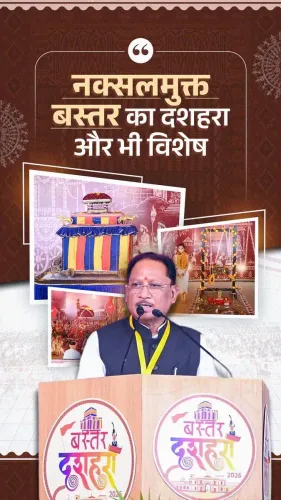
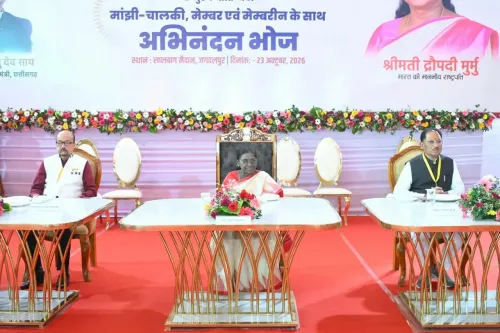
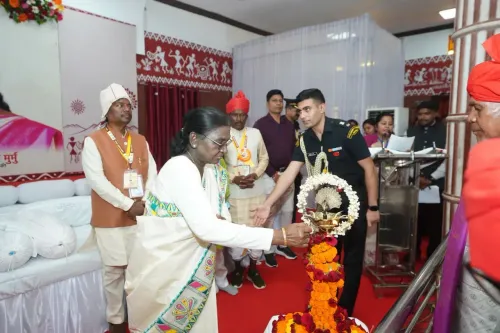
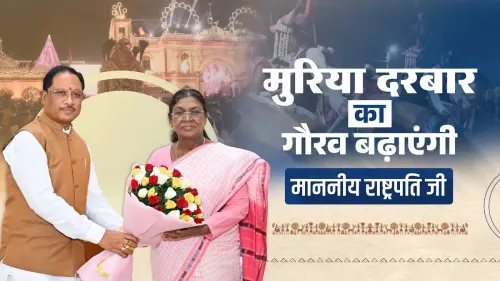
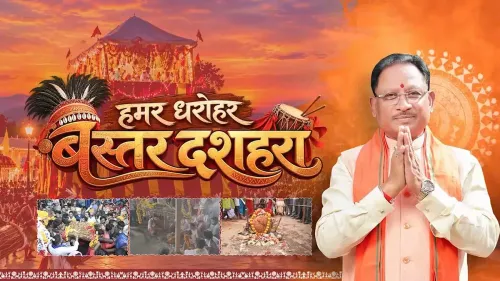
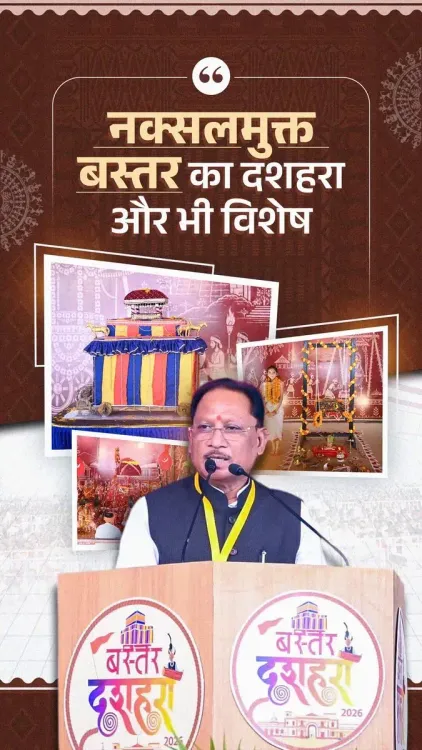
Seventy-five days of tribal pageantry, and this year Bastar's most celebrated festival drew the highest guest the nation can send. Chhattisgarh Chief Minister Vishnu Deo Sai on Friday, 23 October 2026 marked the ongoing Bastar Dussehra with a pointed observation: that the presence of President Draupadi Murmu had elevated the historic festival to an entirely new register of national recognition.
Posting in Hindi, CM Sai described Bastar Dussehra as 'समता और सामूहिक उल्लास का अनूठा पर्व' — 'a unique festival of equality and collective joy' — one that the entire region awaits for the whole year. He also invoked the Muriya Darbar, the ceremonial tribal court that forms one of the festival's most distinctive ritual pillars, and tagged the official handle of the Rashtrapati Bhavan.
A 75-Day Festival Unlike Any Other in India
Bastar Dussehra is not the ten-day Ravana-effigy affair the rest of India observes. Stretching across 75 days, it is rooted in the animist and tribal traditions of the Bastar region in southern Chhattisgarh — a landscape dominated by dense forests and home to Gondi, Halba, Muria and dozens of other Adivasi communities. The festival centres on the goddess Danteshwari, the presiding deity of the Bastar royal house, and unfolds through a tightly sequenced calendar of rituals, processions and community gatherings. The Muriya Darbar — a great tribal assembly modelled on an ancient royal court — draws thousands of participants from across the forest belt and stands as one of the most photographed cultural spectacles in central India.
State governments across political cycles have championed the festival as a flagship of Chhattisgarh's tribal heritage and as a soft-power argument for the region's tourism potential. The scale and antiquity of the event give it a cultural weight that few other state-level festivals can match.
President Murmu's Presence — and What It Signals
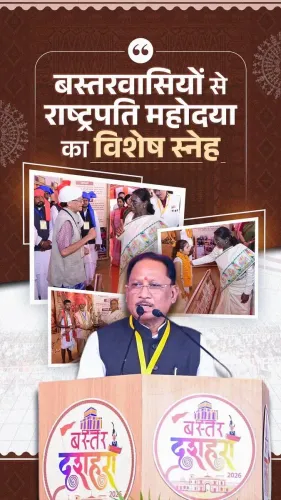
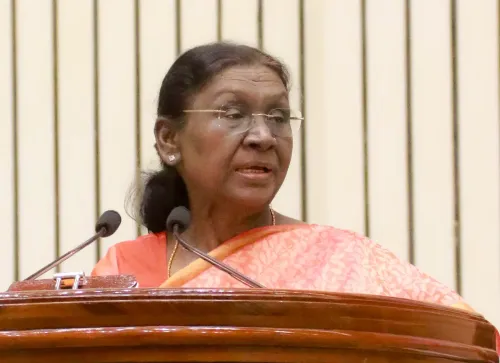
President Draupadi Murmu, who assumed office in 2022 as India's first tribal head of state, carries a symbolic resonance at an event like Bastar Dussehra that no other constitutional authority could replicate. Her participation — highlighted by CM Sai's post — frames the festival not merely as a regional cultural exercise but as a moment of national self-recognition of India's Adivasi traditions.
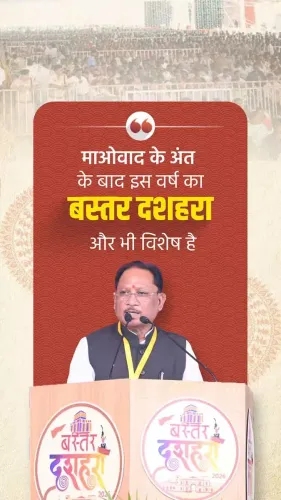
CM Sai's post also carries a political subtext the Chhattisgarh government has been building toward for some time: the reference to 'maovaad se mukt Bastar' — 'Bastar freed from Maoism.' The Bastar division has for decades been the heartland of Left-Wing Extremism in India, and the BJP-led state government has repeatedly cited security gains in the region as a transformative achievement. Presenting the President's cultural visit as taking place in a pacified Bastar is a deliberate, high-visibility framing of those claims.
Bastar's Long Road Through Conflict and Culture
The coexistence of one of India's richest tribal cultural traditions with one of its most protracted insurgencies has defined Bastar's national image for a generation. Successive administrations have struggled to let the festival's warmth outshine the conflict's shadow. A sitting President's attendance, if it holds, marks a symbolic threshold — the kind of visit that security protocols would have made inconceivable at the height of the insurgency.
For the tribal communities of the Bastar belt, the festival's continuity — unbroken even through the worst years of violence — has always been its own statement of resilience. The Muriya Darbar, with its open assembly of forest-dwelling communities, is democracy in its oldest local form. That a President who is herself of Adivasi heritage now sits within that circle closes a loop that many in the region would have once thought impossible.
Bastar's story is still being written — but this festival, this year, may be the most watched chapter yet.
Point of View
A sitting President participating in the Muriya Darbar offers soft-power endorsement of Adivasi governance traditions that official policy has historically bypassed. How the state leverages this visibility — in tourism, in rehabilitation of conflict-affected communities, and in national cultural policy — will be the real measure of whether this moment outlasts the festival's final day.
NationPress
23 Oct 2026
Frequently Asked Questions
What is Bastar Dussehra and why is it 75 days long?
Bastar Dussehra is a 75-day tribal festival in the Bastar region of Chhattisgarh, India. Unlike the mainstream 10-day Dussehra, it is rooted in the animist and Adivasi traditions of the area, centred on the goddess Danteshwari, and involves a complex calendar of community rituals, processions and the Muriya Darbar tribal assembly.
Why did President Draupadi Murmu attend Bastar Dussehra 2026?
President Draupadi Murmu, India's first tribal head of state, attended Bastar Dussehra 2026, lending national prestige to the event. Chhattisgarh CM Vishnu Deo Sai highlighted her presence as elevating the historic festival's dignity.
What is the Muriya Darbar at Bastar Dussehra?
The Muriya Darbar is a ceremonial tribal court or assembly that forms one of the central ritual pillars of Bastar Dussehra. It brings together thousands of participants from tribal communities across the Bastar forest belt in a gathering modelled on an ancient royal court.
Who is Vishnu Deo Sai and what is his role?
Vishnu Deo Sai is the Chief Minister of Chhattisgarh and a BJP leader. He has been vocal about promoting Bastar's tribal cultural heritage and has linked the 2026 Bastar Dussehra celebrations to the state's security narrative regarding reduced Maoist activity.
Is Bastar safe to visit now after years of Maoist conflict?
The Chhattisgarh government under CM Vishnu Deo Sai has claimed significant security gains in Bastar, describing the region as moving beyond Maoist insurgency. President Murmu's attendance at the 2026 festival is being cited as a marker of improved conditions, though the full security situation requires ongoing monitoring.