President Murmu to Grace Bastar's Muria Darbar
Synopsis
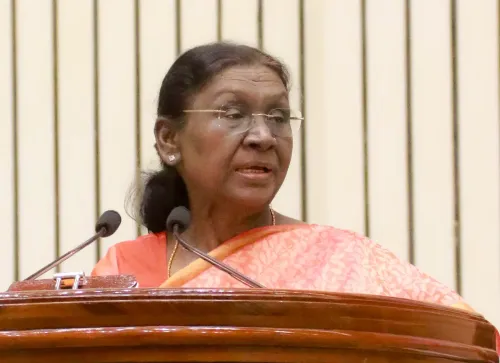
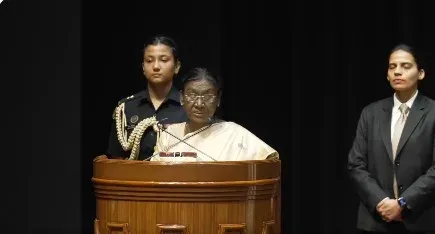
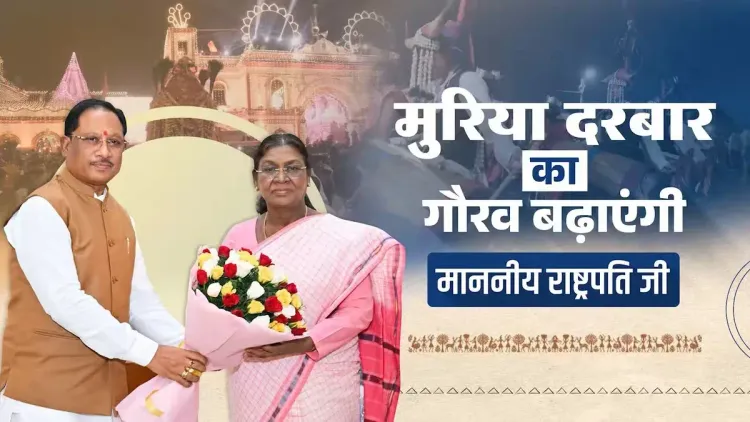
President Droupadi Murmu will attend the Muria Darbar in Bastar, a centuries-old tribal assembly held during Bastar Dussehra. The Chhattisgarh CMO hailed the visit as special honour for this living institution of indigenous collective governance.
Key Takeaways
President Droupadi Murmu will attend the Muria Darbar in Bastar, Chhattisgarh , the CMO announced on October 23, 2026 .
The Muria Darbar is a centuries-old tribal assembly embedded in the Bastar Dussehra festival, symbolising collective decision-making and community participation.
Murmu, elected in 2022 , is India's first tribal President, making her attendance constitutionally and culturally significant.
The Fifth Schedule of the Indian Constitution (1950) recognises traditional institutions and self-governance in scheduled tribal areas like Bastar.
Bastar Dussehra is distinct from mainstream Dussehra, rooted in indigenous cosmology centred on the goddess Danteshwari .
Presidential participation continues a broader pattern of high-level engagement with tribal cultural forums across central and eastern India.
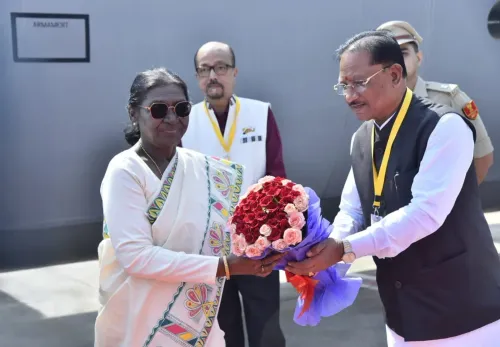
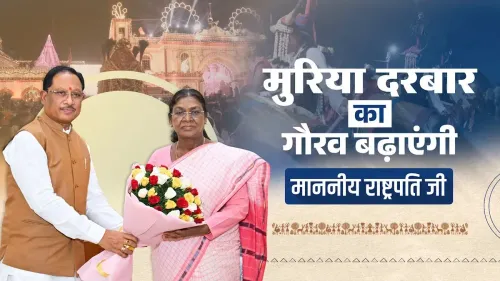
Centuries of tribal wisdom converge in one open-air assembly — and this year, the highest constitutional office in India will be seated at its heart. The Chief Minister's Office of Chhattisgarh announced on Friday, October 23, 2026, that President Droupadi Murmu will attend the Muria Darbar in Bastar, lending the ancient tribal assembly a moment of rare national resonance.
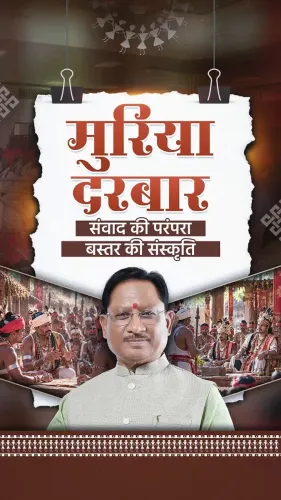
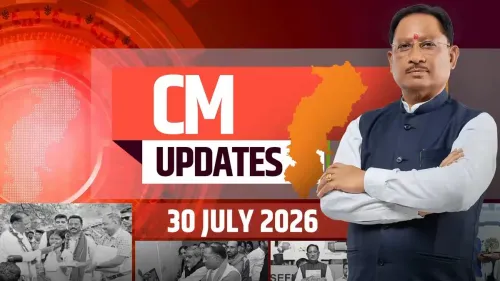
The CMO's post, shared in Hindi, described the Muria Darbar as 'बस्तर की गौरवशाली परंपरा, जनजातीय अस्मिता और जनशक्ति का प्रतीक' — 'a symbol of Bastar's glorious tradition, tribal identity, and people's power' — and said the President's 'dignified presence will bestow special honour upon this historic tradition.'What the Muria Darbar actually is
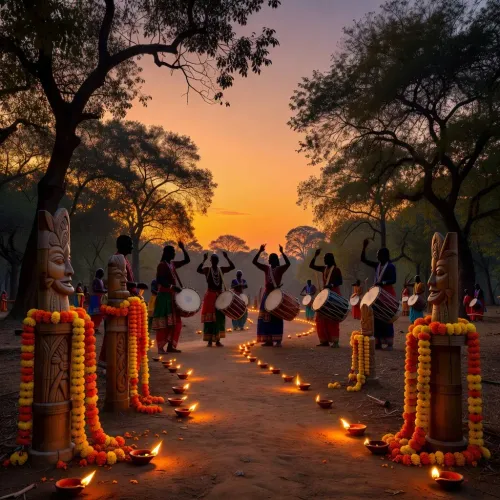
The Muria Darbar is not a government ceremony — it is a living institution. Embedded within the larger Bastar Dussehra festival, it is a traditional tribal assembly where community elders, clan representatives, and residents of the Bastar region gather for collective deliberation, giving voice to customary self-governance that pre-dates modern Indian institutions by centuries. The festival itself stretches across multiple weeks, incorporating tribal rituals, processions, and decisions that still carry weight in daily community life.
Bastar, a region in southern Chhattisgarh with one of the country's highest concentrations of Scheduled Tribe populations, has sustained this tradition even as the rest of the country's governance modernised around it. The Darbar is both cultural spectacle and functional forum — a rare combination.
Why Murmu's presence carries constitutional weight
Droupadi Murmu, elected President in 2022, is India's first Head of State from a Scheduled Tribe community, with roots in Odisha's Santali tribal society and a career built on tribal welfare and education. Her presence at the Muria Darbar is therefore not merely ceremonial. It threads together the Fifth Schedule of the Indian Constitution (1950) — which explicitly recognises traditional institutions and self-governance in scheduled tribal areas — and the contemporary office that is its ultimate guardian.
Presidential engagement with tribal cultural forums has become a visible pattern across central and eastern India in recent years, signalling a high-level acknowledgement that customary governance structures are not relics but living frameworks. At Bastar, that signal will land with particular force.
Bastar Dussehra's singular identity
Chhattisgarh, which holds the Muria Darbar within its cultural calendar, has long positioned the state's Scheduled Tribe heritage as a policy and identity anchor. The Bastar Dussehra is distinct from the mainstream festival of the same name: it is not a celebration of Ram's victory over Ravana but a deeply indigenous observance rooted in the goddess Danteshwari and Bastar's own cosmology, drawing visitors from across the country and abroad each October.
The convergence of this tradition with the office of the President is, as the CMO's post underscores, a moment where centuries-old collective decision-making meets the highest symbol of India's constitutional republic. For Bastar's tribal communities — long at the centre of debates over development, displacement, and cultural preservation — it is also a moment of visible recognition from the nation's top office.
Bastar's assembly speaks, and this year, the President listens.
Point of View
Particularly in states like Chhattisgarh where tribal votes are pivotal. For the state government, hosting the President at this forum elevates Bastar's cultural distinctiveness on a national stage while framing indigenous self-governance as complementary to — rather than in tension with — the constitutional order. The moment also quietly underscores unresolved questions about development, land rights, and Maoist conflict that continue to define life in Bastar beyond the festival calendar.
NationPress
23 Oct 2026
Frequently Asked Questions
What is the Muria Darbar in Bastar?
The Muria Darbar is a traditional tribal assembly held as part of the Bastar Dussehra festival in southern Chhattisgarh. It is a centuries-old forum for collective decision-making and community participation, representing the customary self-governance of Bastar's tribal communities.
Why is President Droupadi Murmu attending the Muria Darbar?
The Chief Minister's Office of Chhattisgarh announced President Murmu's attendance to honour the historic tribal tradition. As India's first tribal President, Murmu's presence at the Muria Darbar carries both cultural and constitutional significance.
What is Bastar Dussehra and how is it different from regular Dussehra?
Bastar Dussehra is a multi-week annual festival in the Bastar region of Chhattisgarh rooted in the indigenous worship of the goddess Danteshwari, not the mainstream narrative of Ram defeating Ravana. It incorporates tribal rituals, processions, and customary governance elements unique to the region.
What is the Fifth Schedule of the Indian Constitution?
The Fifth Schedule of the Indian Constitution (1950) recognises traditional institutions and self-governance mechanisms in scheduled tribal areas across India, providing a constitutional basis for bodies like the Muria Darbar.
Which tribal communities live in Bastar?
Bastar in southern Chhattisgarh is home to a large Scheduled Tribe population, including the Muria, Gond, Halba, and other indigenous communities who maintain distinct cultural practices and governance traditions.