President Murmu's Bastar Visit Puts Tribal Heritage on National Map
Synopsis
President Draupadi Murmu's visit to Bastar, coinciding with Bastar Dussehra 2026, is hailed by the Chhattisgarh Chief Minister's Office as a historic moment of national recognition for the region's tribal culture, linking indigenous pride with the state's development agenda.
Key Takeaways
President Draupadi Murmu , India's first tribal woman President, visited Bastar in October 2026 during the Bastar Dussehra festival period.
The Chhattisgarh Chief Minister's Office framed the visit as a major opportunity to give national recognition to the region's tribal cultural heritage.
Bastar Dussehra is one of India's longest and most distinct tribal festivals, centred on the goddess Danteshwari and spanning approximately 75 days .
The Central Government established Janjatiya Gaurav Divas on 15 November 2021 to honour tribal contributions to India's history and culture.
The state linked the visit to goals of good governance, public participation and tribal self-reliance in Bastar's historically underserved districts.
Bastar has seen improved security conditions in recent years, making high-level visits and development outreach more feasible across the region.
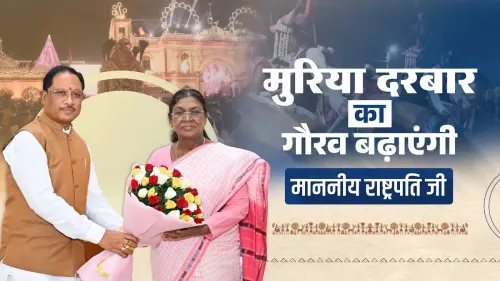
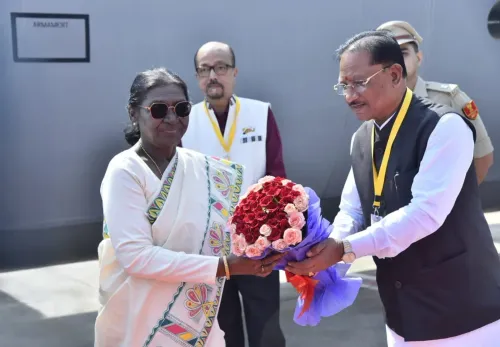
A visit by the nation's highest constitutional authority to one of India's most storied tribal heartlands is more than a ceremonial call — it is a signal. President Draupadi Murmu's visit to Bastar, timed around the region's celebrated Bastar Dussehra 2026 festival, has been framed by the Chief Minister's Office of Chhattisgarh as a landmark moment to bring the region's ancient tribal traditions into sharp national focus.
What the President's visit means for Bastar's cultural identity
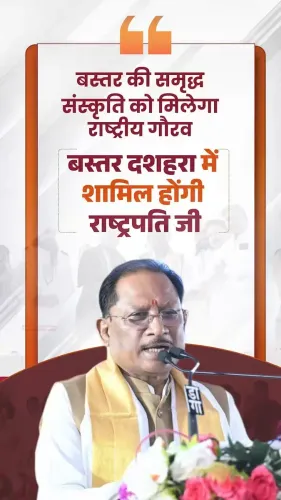
The CMO's post declared: 'जनजातीय गौरव से जुड़कर, विकास के नए क्षितिज की ओर बढ़ता बस्तर!' — 'Bastar moves towards new horizons of development, connected to tribal pride!' — framing President Murmu's presence as 'an important opportunity to give national recognition to the region's rich cultural heritage and tribal traditions.'
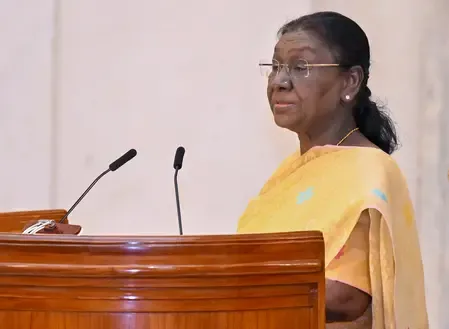
Draupadi Murmu is herself India's first tribal woman President, elected in July 2022, with deep roots in Odisha's indigenous welfare movement. Her visit to Bastar carries a symbolism that no prior Head of State visit quite replicates: she is not just a visitor acknowledging tribal culture — she is, by personal history, part of it. That resonance is not lost on the state government, which has positioned the visit as a moment of both cultural validation and political momentum.
Bastar Dussehra — a festival unlike any other in India
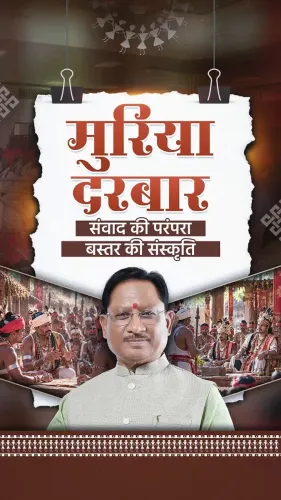
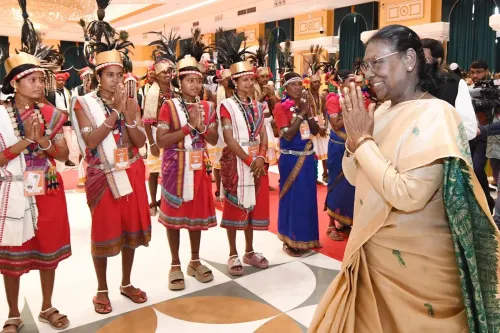
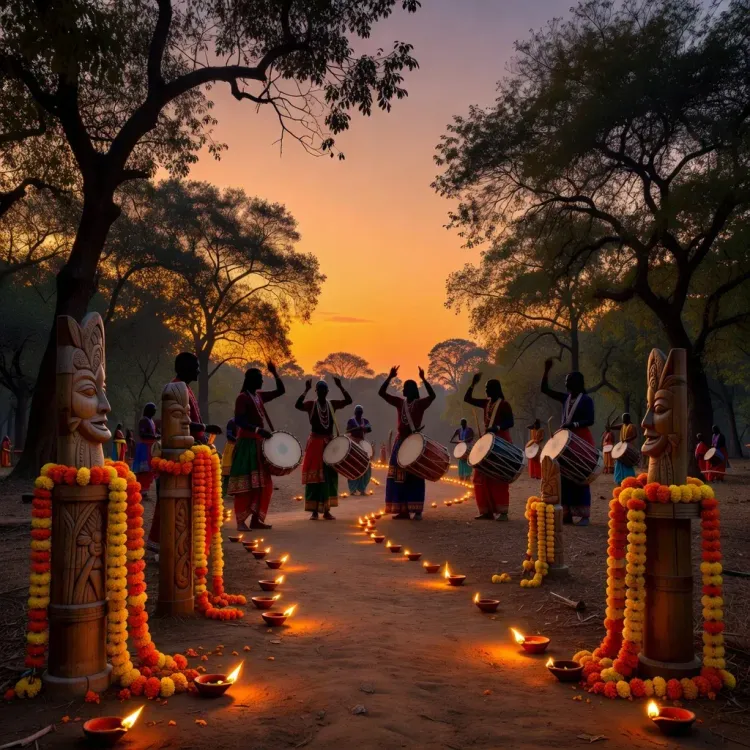
Bastar Dussehra is one of the longest-running tribal festivals in the world, stretching across 75 days by tradition — a living expression of the Gondi and Halbi cultural world that predates modern state boundaries. Unlike the pan-Indian Dussehra marking Ram's victory, the Bastar version centres on the goddess Danteshwari and the participatory rituals of dozens of local clans. A presidential visit during this window places Bastar's tribal calendar directly into India's national narrative.
The broader backdrop matters here. The Central Government in 2021 instituted Janjatiya Gaurav Divas on 15 November — marking the birth anniversary of Birsa Munda — to formally commemorate tribal contributions to India's freedom struggle and living heritage. Chhattisgarh, with one of the country's largest tribal populations, has consistently anchored its development messaging to this national push for indigenous recognition.
Good governance and self-reliance: the development argument
The CMO's statement linked culture explicitly to economics, citing 'सुशासन, जनभागीदारी और विकास का समन्वय' — 'the coordination of good governance, public participation and development' — as the engine opening 'new paths of prosperity, self-reliance and a better future in Bastar.' This framing is deliberate and well-worn in Chhattisgarh's political playbook: high-visibility visits serve dual duty as cultural affirmation and as showcases for state welfare infrastructure targeting tribal belts.
Bastar's districts were, until recently, among the most Naxal-affected in the country. Security improvements in the sub-region have, over the past several years, allowed greater connectivity and the expansion of government schemes. A presidential visit in this context sends a clear message: the region is open, stable, and ready to be part of India's development story on its own cultural terms.
The eyes of tribal communities across Chhattisgarh — and indeed across central India — will be on what specific programme announcements, if any, follow from the visit. Presidential visits to such regions rarely end without some follow-through on central or state scheme expansion. Bastar is watching, and so is New Delhi.
Point of View
Hosting the President during Bastar Dussehra reinforces the ruling dispensation's 'Janjatiya Gaurav' narrative at both state and national levels, linking cultural recognition to its development record in once-insurgency-hit districts. The timing also feeds into the broader national strategy of consolidating tribal electoral support ahead of state and general electoral cycles. Whether the visit produces concrete scheme announcements will determine if it moves beyond symbolism.
NationPress
23 Oct 2026
Frequently Asked Questions
Why is President Murmu visiting Bastar in 2026?
President Draupadi Murmu visited Bastar during the Bastar Dussehra 2026 festival period. The Chhattisgarh Chief Minister's Office stated the visit is an important opportunity to give national recognition to the region's rich tribal cultural heritage and traditions.
What is Bastar Dussehra and why is it significant?
Bastar Dussehra is one of India's most unique and ancient tribal festivals, lasting approximately 75 days . Unlike mainstream Dussehra, it centres on the goddess Danteshwari and the ritual participation of Gondi and Halbi clans, making it a living expression of Bastar's tribal cultural world.
Who is Draupadi Murmu and what is her connection to tribal communities?
Draupadi Murmu is India's 15th President , elected in July 2022 , and the country's first tribal woman to hold the office. She has a background in tribal welfare work in Odisha and has championed indigenous rights throughout her political career.
What is Janjatiya Gaurav Divas?
Janjatiya Gaurav Divas is observed on 15 November every year, a date instituted by the Central Government in 2021 to mark the birth anniversary of tribal icon Birsa Munda and to commemorate the contributions of India's tribal communities to the freedom struggle and national heritage.
How has Bastar changed in terms of security and development?
Bastar's districts were among India's most affected by Left-Wing Extremism for decades. In recent years, improved security conditions have allowed greater government outreach, infrastructure expansion and the promotion of tribal welfare schemes across the region.