CM Sai joins Bastar delegation honour at Rashtrapati Bhavan
Synopsis
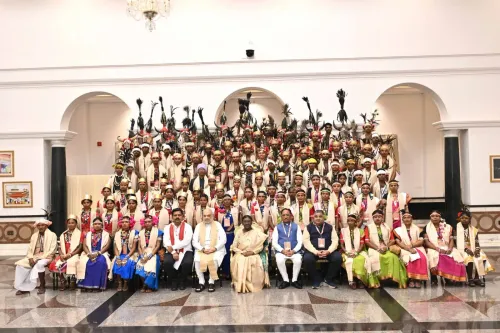
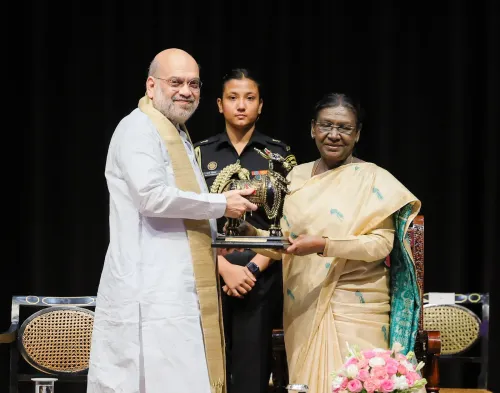
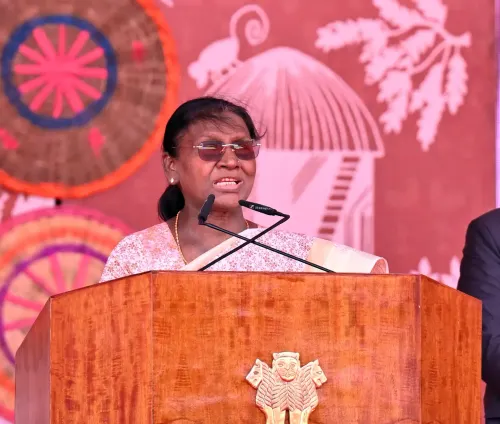
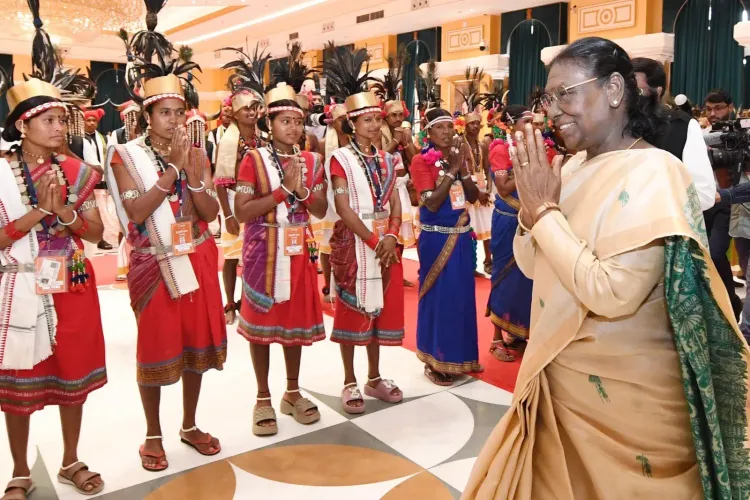
President Draupadi Murmu hosted Bastar's tribal cultural delegation at Rashtrapati Bhavan on 30 July 2026. CM Vishnu Deo Sai and Home Minister Amit Shah attended the honour ceremony for Bastar Pandum 2026 winners, Padma Shri awardees, and Manjhi-Chalki representatives.
Key Takeaways
President Draupadi Murmu hosted a felicitation ceremony at Rashtrapati Bhavan on 30 July 2026 for Bastar's tribal delegation.
Honourees included winners of Bastar Pandum 2026 , Padma Shri awardees, and Manjhi-Chalki traditional village representatives.
CM Vishnu Deo Sai and Union Minister Amit Shah both attended, alongside Deputy CM Vijay Sharma and Culture Minister Rajesh Aggarwal .
CM Sai framed the event as evidence of Bastar's transformation after decades of Naxal conflict, invoking the BJP's 'double engine government' model.
Bastar Pandum is the state's flagship tribal arts and culture festival, now receiving national-level recognition through the Presidential honour.
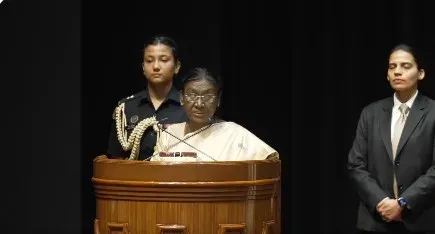
When President Draupadi Murmu — India's first tribal head of state — hosted a ceremonial honour at Rashtrapati Bhavan on Thursday, 30 July 2026, the guests she welcomed were not diplomats or dignitaries in the conventional sense. They were tribal artists, village elders, and cultural torchbearers from Bastar, southern Chhattisgarh — a region that, not long ago, was defined almost entirely by the shadow of Naxal violence.
Chhattisgarh Chief Minister Vishnu Deo Sai attended the event alongside Union Home and Cooperation Minister Amit Shah, marking the occasion with a post that framed the gathering as a symbol of Bastar's transformation. The ceremony honoured winners of Bastar Pandum 2026 (the state's flagship tribal cultural festival), Manjhi-Chalki community representatives — traditional village-level tribal governance figures — and Padma Shri awardees from the region.
What Bastar Pandum represents — and why the venue matters
Bastar Pandum is a state-level cultural festival designed to spotlight the arts, music, dance, and oral traditions of Bastar's tribal communities. Bringing its winners to Rashtrapati Bhavan is a deliberate elevation — from a regional stage to the highest constitutional address in the country. For a region whose identity has long been filtered through the lens of conflict, the symbolism is pointed.
President Murmu's personal connection to this moment adds weight that goes beyond protocol. As a tribal leader from Odisha's Santali community, her hosting of Bastar's tribal representatives carries an affinity that no other occupant of Rashtrapati Bhavan could have brought to the same occasion.
The 'double engine' frame and Bastar's security shift
CM Sai's post explicitly linked the cultural celebration to what he called Naxalwad se mukti — 'freedom from Naxalism' — describing Bastar as now 'writing new chapters of progress while preserving its rich tribal culture and traditions.' The framing is consistent with the BJP's coordinated central-state 'double engine' model, which has paired sustained security operations in Left Wing Extremism-affected districts with infrastructure investment and welfare delivery since 2014.
The presence of Amit Shah — the minister who oversees internal security and has been the political face of the anti-Naxal campaign — alongside the Chief Minister at a cultural ceremony underlines how tightly the BJP government has woven security narrative and cultural promotion into a single story about Bastar.
Chhattisgarh's delegation at the event
Also present were Deputy Chief Minister Vijay Sharma and Tourism and Culture Minister Rajesh Aggarwal, giving the state's attendance a full cabinet character. CM Sai described President Murmu's 'affectionate regard' (aatmiya sneh) for the delegation as 'a matter of pride for all of Chhattisgarh,' adding that her guidance would 'provide new strength to our resolve for a developed, peaceful and self-reliant Bastar.'
A region once synonymous with red-zone bulletins is now sending its folk artists to the President's house. That is the story Bastar's leaders want told — and today, at Rashtrapati Bhavan, they got to tell it at the highest possible volume.
Point of View
With both the Chief Minister and the Home Minister present, signals that the party wants the 'Bastar transformation' framed as a national achievement, not merely a state one. President Murmu's tribal identity amplifies the symbolism considerably, lending constitutional legitimacy to what is also a political message. The pattern — cultural showcase following security operation — is now a recognisable BJP playbook in formerly Left Wing Extremism-affected districts across central India.
NationPress
14 Sept 2026
Frequently Asked Questions
What is Bastar Pandum?
Bastar Pandum is a state-level cultural festival in Chhattisgarh that celebrates the tribal arts, music, dance, and traditions of the Bastar region. The 2026 edition's winners were honoured at Rashtrapati Bhavan by President Draupadi Murmu.
Why were Bastar representatives invited to Rashtrapati Bhavan?
President Draupadi Murmu hosted a felicitation ceremony on 30 July 2026 for winners of Bastar Pandum 2026, Padma Shri awardees, and Manjhi-Chalki traditional representatives to recognise Bastar's tribal cultural heritage at the national level.
Who attended the Rashtrapati Bhavan ceremony from Chhattisgarh?
Chief Minister Vishnu Deo Sai, Deputy Chief Minister Vijay Sharma, and Tourism and Culture Minister Rajesh Aggarwal represented the Chhattisgarh government. Union Home Minister Amit Shah also attended.
What is the 'double engine government' CM Sai referred to?
The 'double engine government' is the BJP's term for aligned BJP governments at both the state and central levels working together — in Bastar's context, coordinating security operations against Naxalism with infrastructure and welfare delivery.
Who are the Manjhi-Chalki representatives honoured at the event?
Manjhi and Chalki are traditional village-level governance roles in Bastar's tribal communities. Their representatives were included in the Rashtrapati Bhavan delegation as custodians of tribal social and cultural order.