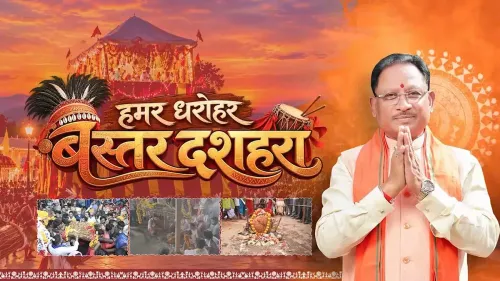
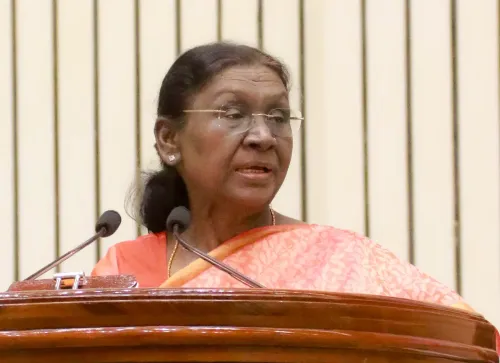
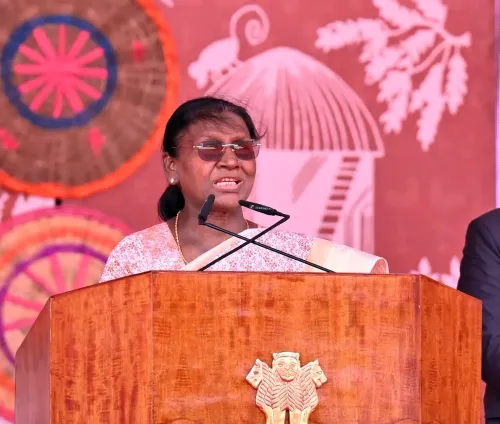
President Murmu graces historic Bastar Dussehra in Jagdalpur
Synopsis
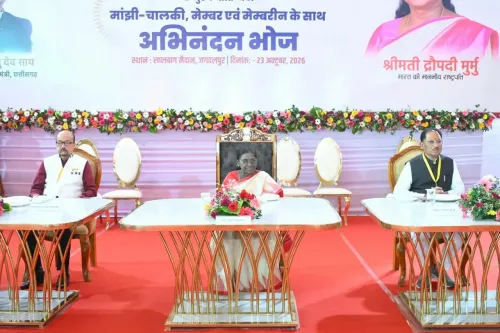
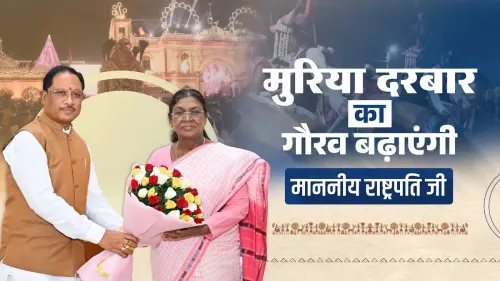
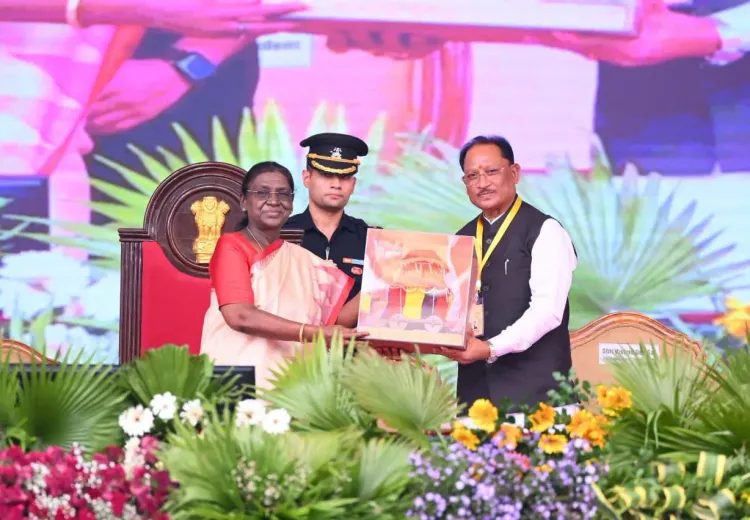
President Draupadi Murmu, India's first tribal President, attended the historic Bastar Dussehra at Lalbagh Maidan, Jagdalpur on October 23, 2026, alongside Chief Minister Vishnu Deo Sai, elevating one of India's oldest indigenous festivals to the national spotlight.
Key Takeaways
President Draupadi Murmu attended the Bastar Dussehra 2026 festival at Lalbagh Maidan, Jagdalpur on October 23, 2026 .
Bastar Dussehra is a 75-day tribal festival rooted in goddess Danteshwari worship — distinct from mainstream Dussehra celebrations across India.
President Murmu, elected in 2022 , is the first person from a tribal community (Santhal tribe, Odisha) to hold India's highest constitutional office.
Chief Minister Vishnu Deo Sai , himself from a tribal community, has championed Bastar Dussehra as a flagship cultural event since taking office in December 2023 .
The Government of India designated November 15 as Janjatiya Gaurav Divas in 2021 , forming a national policy backdrop to this visit.
The visit reinforces a pattern of Presidential participation in regional tribal festivals as part of India's civilisational heritage narrative.
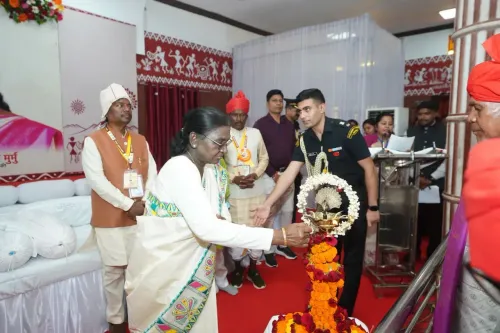
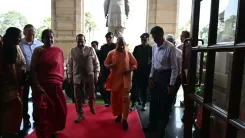
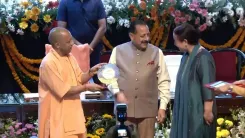
India's first tribal President stepped into the heart of one of the subcontinent's oldest living festivals on Friday, October 23, 2026 — President Draupadi Murmu attended the iconic Bastar Dussehra celebrations at Lalbagh Maidan, Jagdalpur, her presence lending constitutional weight to a tradition that predates modern India by centuries. The Chief Minister's Office of Chhattisgarh announced the visit, sharing images of the garimmayee upasthiti (dignified presence) at the festival grounds.
Not your mainstream Dussehra — what makes Bastar's festival singular
While the rest of India burns effigies of Ravana on Dussehra, Bastar does something entirely different. The Bastar Dussehra is a 75-day tribal festival rooted in the worship of the goddess Danteshwari, driven by elaborate community rituals, ceremonial processions, and the deep participation of Gondi and other indigenous communities of the region. It is not a retelling of the Ramayana — it is a sovereign cultural event in its own right, one that archaeologists and anthropologists have traced back several hundred years.
Jagdalpur, the administrative headquarters of Bastar district in southern Chhattisgarh, transforms into a cultural capital during this period. Lalbagh Maidan serves as the traditional epicentre of the festival's grandest public gatherings, and this year it hosted the nation's highest constitutional authority.
Why President Murmu's attendance carries particular resonance
Draupadi Murmu, elected President in 2022, belongs to the Santhal tribe of Odisha — making her the first person from a tribal community to hold India's highest constitutional office. Her attendance at Bastar Dussehra is therefore layered with symbolism that goes well beyond protocol. A tribal President presiding over a tribal festival signals, at the most visible level, that indigenous cultural heritage occupies the mainstream of national life — not its margins.
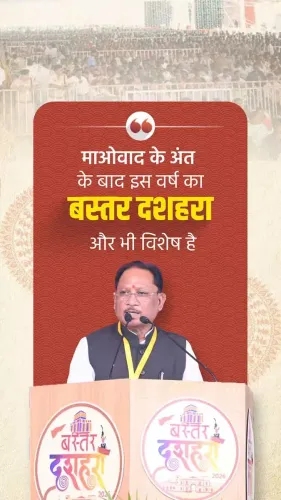
Chief Minister Vishnu Deo Sai, who has led the BJP government in Chhattisgarh since December 2023, was also part of the proceedings. Sai himself hails from the tribal communities of the state, and his government has consistently positioned Bastar Dussehra as a flagship marker of Chhattisgarh's distinct tribal identity.
Janjatiya Gaurav and the national policy backdrop
This high-profile visit fits neatly into a broader national effort to mainstream tribal heritage. The Government of India designated November 15 as Janjatiya Gaurav Divas in 2021 to honour tribal contributions to India's civilisational story — and Presidential participation in regional tribal festivals has since become a consistent pattern at the highest constitutional level. The hashtag #JanJatiyaGaurav accompanying the CMO's post underlines how deliberately the Chhattisgarh government is situating this local festival within that larger national narrative.
The state has long invested in Bastar Dussehra as cultural policy — not merely as tourism or heritage optics, but as an assertion that tribal traditions are living, evolving, and deserving of institutional support. A Presidential visit in 2026 consolidates that position in unmistakable terms.
A tribal President, a tribal Chief Minister, and one of India's oldest indigenous festivals sharing the same ground at Lalbagh Maidan — Bastar's Dussehra just wrote its most historically resonant chapter yet.
Point of View
Not peripheral to it. The confluence of a tribal President, a tribal Chief Minister, and one of India's oldest indigenous festivals creates a potent symbolic moment that the BJP has carefully cultivated since the Janjatiya Gaurav Divas notification in 2021. For Chhattisgarh specifically, Presidential attendance transforms what was already a state-level flagship event into a nationally legible cultural milestone. The critical question going forward is whether this visibility translates into durable institutional investment in tribal cultural infrastructure, or remains primarily in the register of ceremonial affirmation.
NationPress
23 Oct 2026
Frequently Asked Questions
What is Bastar Dussehra and how is it different from regular Dussehra?
Bastar Dussehra is a 75-day tribal festival held in Jagdalpur, Chhattisgarh, centred on the worship of goddess Danteshwari. Unlike mainstream Dussehra, which commemorates Ram's victory over Ravana, Bastar Dussehra follows ancient Gondi tribal rituals and processions, making it one of India's most distinct indigenous cultural celebrations.
Why did President Draupadi Murmu attend Bastar Dussehra 2026?
President Murmu, India's first tribal President and a member of the Santhal tribe of Odisha, attended Bastar Dussehra 2026 at Lalbagh Maidan, Jagdalpur on October 23, 2026, as part of a broader effort to honour and elevate tribal heritage at the highest constitutional level.
Where is Bastar Dussehra celebrated?
Bastar Dussehra is celebrated primarily at Lalbagh Maidan in Jagdalpur, the administrative headquarters of Bastar district in Chhattisgarh, southern India.
Who is the Chief Minister of Chhattisgarh in 2026?
Vishnu Deo Sai has been the Chief Minister of Chhattisgarh since December 2023. He belongs to a tribal community in the state and has actively promoted Bastar Dussehra as a cultural flagship event.
What is Janjatiya Gaurav Divas?
Janjatiya Gaurav Divas is observed on November 15 every year. The Government of India designated this date in 2021 to honour the contributions and heritage of India's tribal communities, coinciding with the birth anniversary of tribal icon Birsa Munda.