Chirag Paswan Vows to Strengthen India's Rice Export Leadership

Synopsis
Union Food Processing Minister Chirag Paswan reaffirmed India's commitment to leading global rice production and exports, with farmer empowerment and sustainable agricultural growth at the core of his ministry's agenda, in an October 23, 2026 post on X.
Key Takeaways
Chirag Paswan , Union Minister of Food Processing Industries, declared strengthening India's global rice export leadership a top ministerial priority on October 23, 2026 .
India is the world's largest rice exporter and second-largest producer, with key markets in Africa, the Middle East, and Asia .
The minister specifically linked rice export leadership with farmer empowerment and sustainable agricultural development .
India's Agricultural Export Policy 2018 had set targets to double agri-exports including rice by 2022; export restrictions were imposed in 2022–2023 to stabilise domestic prices.
The Food Processing Ministry's role centres on value addition and supply-chain infrastructure — moving India beyond bulk rice exports to higher-margin processed products.
The sector is watching for concrete follow-through: new export promotion measures or sustainable cultivation guidelines in an upcoming agricultural budget or ministry announcement.
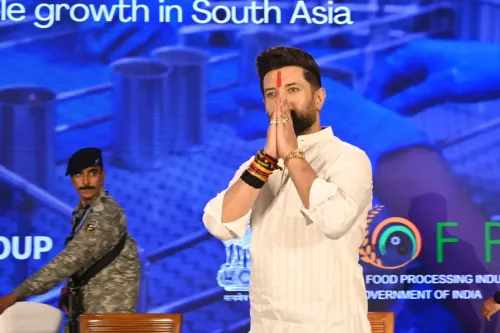
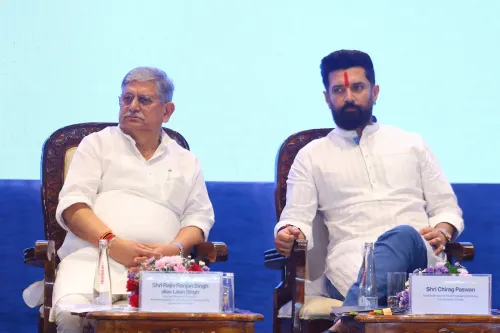
India holds a commanding position as the world's largest rice exporter — and Union Food Processing Minister Chirag Paswan wants to make sure it stays that way. On Friday, October 23, 2026, the minister posted a clear statement of intent on X, framing rice production, exports, farmer empowerment, and sustainable agricultural growth as his ministry's top priorities.
In his post, the minister wrote: 'Bharat ke chawal utpadan evam niryat mein vaishvik netritva ko sashakt banana, kisanon ka sashaktikaran aur satatya krishi vikas hamari prathamikta hai' — 'Strengthening India's global leadership in rice production and exports, empowering farmers, and achieving sustainable agricultural development is our priority.'
India's Rice Dominance — and the Pressure to Sustain It
The stakes are real. India is the world's second-largest rice producer and, critically, its largest exporter, with major shipments flowing to Africa, the Middle East, and Asia. That position wasn't handed over — it was built over decades of policy, and it is not guaranteed. When domestic supplies tightened in 2022–2023, the government imposed export restrictions to stabilise prices at home, a necessary but costly signal to global buyers who depend on Indian supply chains.
The tension at the heart of Paswan's statement is precisely that: how do you protect farmer incomes, keep domestic prices stable, and simultaneously deepen India's grip on global rice markets? It's a three-way tightrope that every government since the Agricultural Export Policy of 2018 has tried to walk — that policy set an ambitious target to double agri-exports, rice included, by 2022.
Where the Food Processing Ministry Fits In
Paswan's ministry is not just about raw commodity exports. Its mandate sits at the value-addition layer — processing infrastructure, supply-chain investment, and reducing post-harvest losses that drain farmer earnings before the product ever reaches a port. Strengthening that layer is how India moves from being a bulk rice shipper to a higher-margin processed-food exporter, a transition that multiplies returns for farmers and exporters alike.
The emphasis on 'satatya krishi vikas' — sustainable agricultural development — also signals awareness of the long-term threat: soil degradation, water stress, and climate variability that disproportionately hit rice-growing belts. Without addressing those, output targets ring hollow.
What Rice Farmers and Exporters Are Waiting For
For the sector, the immediate question is whether this statement precedes concrete action — new export promotion measures, minimum support price revisions, or sustainable cultivation guidelines — potentially in the next agricultural budget or a dedicated ministry announcement. The rice farming community and food processing units have long called for a stable, predictable export policy rather than reactive curbs. Paswan's framing suggests he has heard that message. Whether the policy architecture follows is the test.
India's rice bowl feeds much of the developing world. Keeping it full — for farmers, consumers, and trading partners alike — is not a routine ministry line. It's a geopolitical responsibility. Paswan has put it on the record as his priority. The delivery clock starts now.
Point of View
Then pulled back with restrictions in 2022-2023, sending an uncertain signal to global buyers. Framing farmer empowerment and export leadership as a unified, not competing, goal is a deliberate pivot, positioning the Food Processing Ministry as the connective tissue between agrarian welfare and trade strategy. For the NDA government, keeping rice farmers onside is as much electoral arithmetic as it is economic policy. The real test will be whether the next policy cycle reflects this stated priority in concrete, enforceable measures rather than aspirational framing.
NationPress
23 Oct 2026
Frequently Asked Questions
What did Chirag Paswan say about India's rice exports?
On October 23, 2026, Chirag Paswan stated that strengthening India's global leadership in rice production and exports, empowering farmers, and achieving sustainable agricultural development are his ministry's top priorities.
Is India the largest rice exporter in the world?
Yes. India is the world's largest rice exporter and its second-largest producer, with major shipments to Africa, the Middle East, and Asia.
Why did India impose rice export restrictions in 2022-2023?
India imposed rice export restrictions in 2022-2023 to stabilise domestic prices during a period of tighter domestic supply, even as it sought to preserve its global market share.
What is the role of the Food Processing Ministry in India's rice sector?
The Ministry of Food Processing Industries focuses on value addition, supply-chain infrastructure, and reducing post-harvest losses, helping move India from bulk rice exports toward higher-margin processed agricultural products.
What is the Agricultural Export Policy 2018 and how does it relate to rice?
India's Agricultural Export Policy 2018 set a target to double agri-exports, including rice, by 2022. It forms the foundational framework within which successive rice export promotion and restriction decisions have been made.