CM Sai's Office Celebrates Bastar Dussehra's Tribal Soul
Synopsis
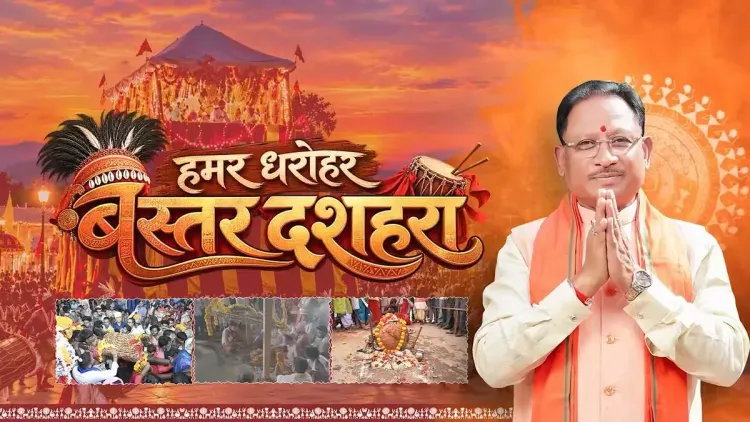
The Chief Minister's Office of Chhattisgarh honoured Bastar Dussehra on 20 October 2026, describing the iconic tribal festival as the cultural soul of the state and a symbol of its centuries-old indigenous traditions.
Key Takeaways
The Chhattisgarh CMO posted on 20 October 2026 celebrating Bastar Dussehra as a symbol of faith, tradition and tribal culture.
Bastar Dussehra is rooted in the worship of Goddess Danteshwari and does not involve an effigy-burning — distinguishing it from mainstream Dussehra celebrations.
The festival features a large wooden chariot ( rath ) procession and spans several weeks, making it one of India's longest tribal festivals.
Chief Minister Vishnu Deo Sai , in office since December 2023 , personally endorsed the post through his hashtag.
Chhattisgarh has one of India's highest Scheduled Tribe population proportions, and the state government consistently uses Bastar Dussehra to project regional cultural identity.
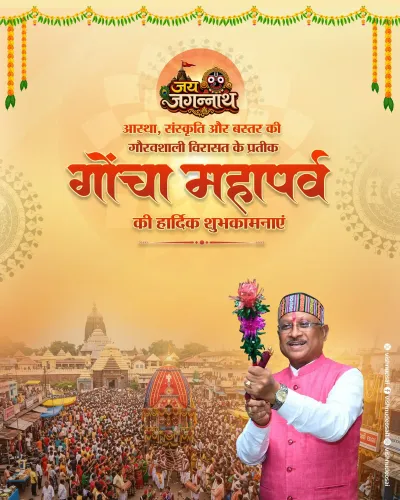
Deep in the forests of southern Chhattisgarh, a festival unlike any other is unfolding — one that has no effigy of Ravana, no victory bonfire, yet carries centuries of living tradition on its shoulders. The Chief Minister's Office of Chhattisgarh took to X on Tuesday, 20 October 2026, to honour Bastar Dussehra, calling it the cultural soul of the state and a confluence of faith, tradition and tribal heritage.
The post, shared from the official CMO handle, described Bastar Dussehra as 'aastha, parampara aur sanskriti ka pratik' — 'a symbol of faith, tradition and culture' — and saluted it as an 'extraordinary confluence of unique tribal splendour and centuries-old customs.' The message was tagged with #BastarDussehra, #TribalCulture and #VishnuDeoSai, signalling the personal endorsement of Chief Minister Vishnu Deo Sai, who has led the BJP government in Chhattisgarh since December 2023.What makes Bastar Dussehra unlike every other Dussehra
Bastar Dussehra is not a retelling of the Ramayana. It is an Adivasi festival rooted in the worship of Goddess Danteshwari, the presiding deity of the region, and it draws together multiple indigenous communities of the Bastar region across several weeks of rituals, processions and community assemblies. There is no burning of Ravana's effigy — instead, an elaborately crafted wooden chariot called the rath becomes the centrepiece of the festivities, pulled through the streets of Bastar by thousands of devotees. The festival's calendar stretches far longer than the mainstream ten-day Navratri cycle, making it one of the longest-running tribal festivals in India.Chhattisgarh's tribal identity and the politics of cultural pride
Chhattisgarh is home to one of the highest proportions of Scheduled Tribe population in India, and successive state governments have used Bastar Dussehra as a marker of regional distinctiveness — a living argument that the state's cultural heritage stands apart from the broader North Indian mainstream. The current administration's public messaging continues that pattern, amplifying tribal festivals on official channels to reinforce both heritage preservation and tourism appeal. For the Sai government, backing Bastar Dussehra is also a signal to Adivasi communities — a constituency that carries significant electoral weight across the state's southern districts.Point of View
The administration positions itself as a custodian of culture rather than a partisan actor — a framing that tends to travel well beyond the party's own base.
NationPress
20 Oct 2026
Frequently Asked Questions
What is Bastar Dussehra and how is it different from regular Dussehra?
Bastar Dussehra is a weeks-long tribal festival in the Bastar region of Chhattisgarh centred on the worship of Goddess Danteshwari. Unlike mainstream Dussehra, it does not involve the burning of Ravana's effigy — instead, a grand wooden chariot procession and a series of Adivasi rituals are its defining features.
When is Bastar Dussehra celebrated?
Bastar Dussehra runs across multiple weeks, typically beginning before the mainstream Navratri period and extending well beyond it, making it one of the longest-running festivals in India.
Who is Vishnu Deo Sai and what is his connection to Bastar Dussehra?
Vishnu Deo Sai is the Chief Minister of Chhattisgarh, in office since December 2023. His office formally celebrated Bastar Dussehra on 20 October 2026, and his name was tagged in the post as a personal endorsement of the festival.
Why is Bastar Dussehra important for Chhattisgarh's identity?
Chhattisgarh has one of India's highest proportions of Scheduled Tribe population, and Bastar Dussehra represents the living cultural traditions of its Adivasi communities. State governments have consistently promoted it as a marker of the state's unique heritage distinct from the North Indian mainstream.
What is the significance of the chariot in Bastar Dussehra?
A large elaborately crafted wooden chariot called the 'rath' is the centrepiece of Bastar Dussehra. Thousands of devotees pull it through the streets as part of the main procession in honour of Goddess Danteshwari.