CM Sai Vows 'Good Governance' to Transform Bastar
Synopsis
Chhattisgarh Chief Minister Vishnu Deo Sai declared on 26 June 2026 that Bastar is undergoing transformation through 'sushasan' (good governance). The statement underscores the BJP government's twin strategy of security operations and welfare delivery in the state's historically underserved tribal division.
Key Takeaways
Chhattisgarh Chief Minister Vishnu Deo Sai posted on 26 June 2026 that Bastar is being transformed through the resolve of 'sushasan' (good governance).
Bastar is a predominantly tribal division in southern Chhattisgarh with a long history of left-wing extremism and underdevelopment.
The BJP government has identified Bastar as a core priority since CM Sai took office in December 2023 .
The state's approach pairs security operations in LWE-affected districts with accelerated welfare delivery and connectivity projects.
Key indicators to watch include district-level infrastructure announcements and state budget allocations for the Bastar division.
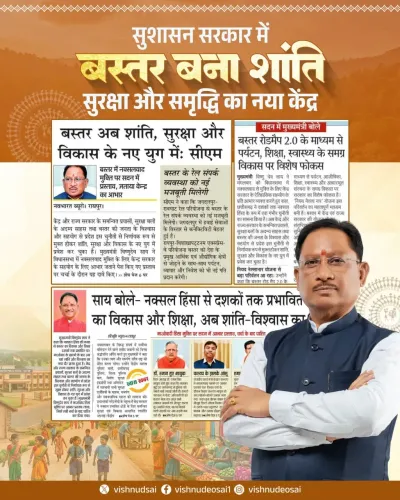
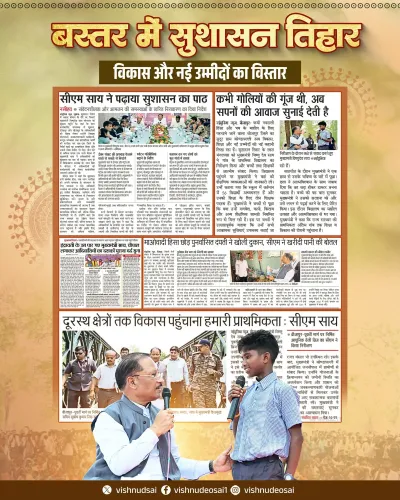
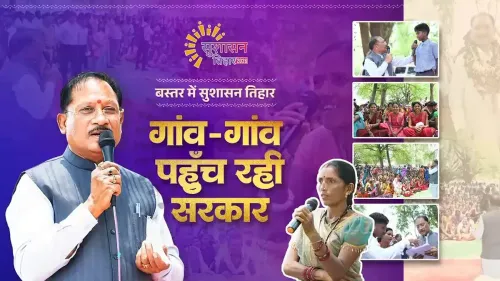
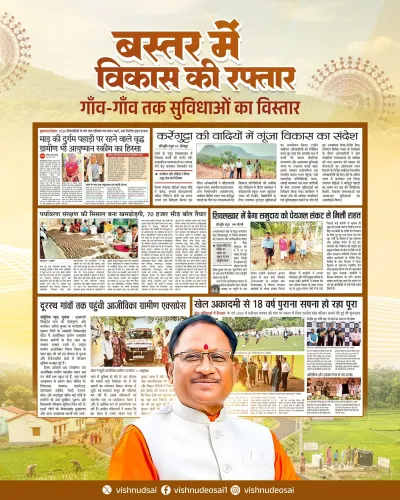
Chhattisgarh Chief Minister Vishnu Deo Sai on Friday, 26 June 2026, declared that the region of Bastar is undergoing a transformation driven by the resolve of 'sushasan' (good governance), signalling the BJP-led state government's continued focus on development and administration in one of India's most historically underserved tribal belts.
Context
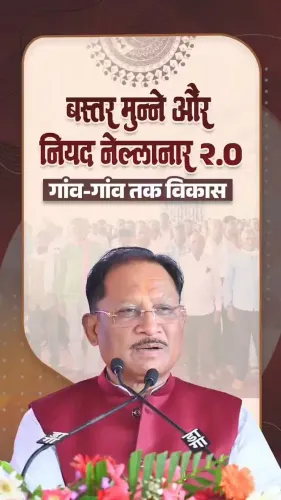
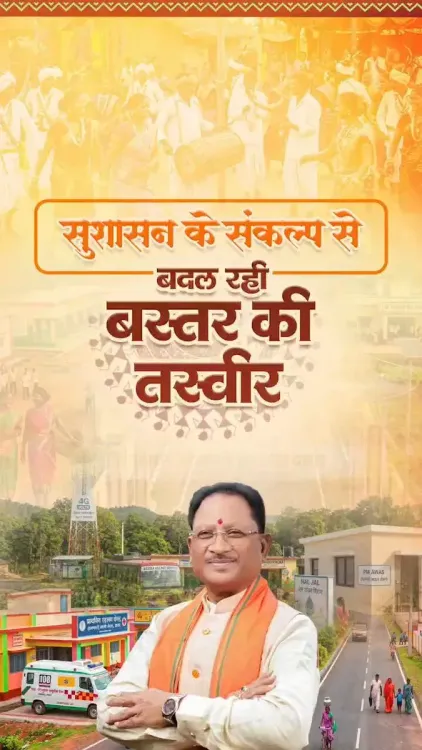
The post, shared on the Chief Minister's official X account, carries the message: 'Sushasan ke sankalp se ho raha Bastar ka kayakalp' — 'Bastar's transformation is happening through the resolve of good governance.' The statement, accompanied by a video, positions Bastar as a flagship marker of the BJP government's governance agenda in Chhattisgarh.
Bastar is an administrative division in southern Chhattisgarh with a predominantly tribal population. For decades, it has faced challenges rooted in left-wing extremism, limited infrastructure, and economic underdevelopment, making it a sensitive and politically significant region for any state government.
Policy Backdrop
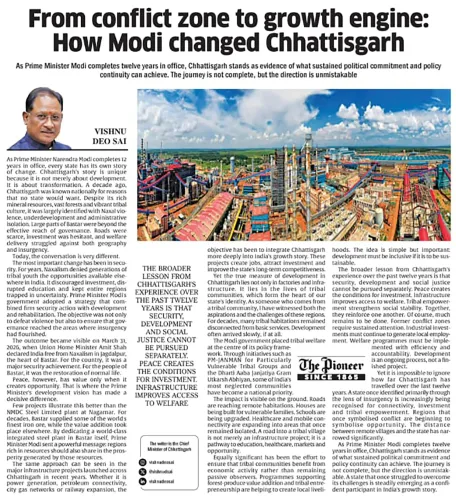
When the BJP returned to power in Chhattisgarh after the November 2023 assembly elections, the new government under Chief Minister Sai — who took charge in December 2023 — identified Bastar as a core priority zone. The administration's approach combines security operations in Left Wing Extremism (LWE)-affected districts with accelerated welfare delivery and connectivity projects.
This dual strategy of pairing development schemes with improved local administration mirrors the broader national framework for LWE-affected districts across central India's tribal belt. The concept of 'sushasan' — good governance — has been a recurring theme in BJP's state-level communication, used to signal accountable, citizen-centric administration as a counter to entrenched underdevelopment.
Stakeholders and Impact
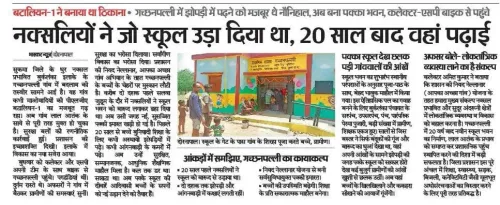
The primary beneficiaries of any governance push in Bastar are its tribal communities, who constitute the majority of the region's population and have historically had limited access to state services, healthcare, education, and economic opportunity. Improved administration at the district level is expected to translate into faster delivery of central and state welfare schemes.
Beyond the immediate residents, the broader stakeholder group includes security agencies, local elected bodies, and civil society organisations operating in the region. A sustained governance dividend in Bastar would also carry significant political weight for the BJP ahead of future electoral cycles in the state.
What's Next
Observers will watch for concrete district-level infrastructure announcements and state budget allocations directed at Bastar in the coming months. Any measurable improvement in public service delivery indices — such as road connectivity, health centre functionality, or school enrolment — will be key indicators of whether the governance resolve translates into ground-level change.
The rollout of new welfare projects and possible security reviews for LWE-affected areas in Bastar are expected to be closely tracked by both policy analysts and political commentators as benchmarks of the Sai government's stated commitment to the region's kayakalp (transformation).
Point of View
Framing governance delivery as the BJP's answer to decades of state absence in a region long defined by conflict and neglect. The post fits into a broader pattern where the party uses development optics in tribal and LWE-affected zones to consolidate electoral ground ahead of future cycles. For the Sai government, Bastar serves as a high-visibility test case: success here would validate the twin-track security-plus-welfare model at the state level. The absence of specific metrics in the post, however, means the claim of 'transformation' remains aspirational until anchored in verifiable ground-level outcomes.
NationPress
25 Sept 2026
Frequently Asked Questions
What did Chhattisgarh CM Vishnu Deo Sai say about Bastar?
CM Vishnu Deo Sai said on 26 June 2026 that Bastar is undergoing a transformation driven by the resolve of 'sushasan', or good governance, under the BJP-led state government.
What is 'sushasan' and why is it significant for Bastar?
'Sushasan' means good governance in Hindi. For Bastar, a region historically affected by left-wing extremism and underdevelopment, it signals the government's intent to improve public service delivery, infrastructure, and local administration.
Who is Vishnu Deo Sai and when did he become CM of Chhattisgarh?
Vishnu Deo Sai is a BJP leader who became Chief Minister of Chhattisgarh in December 2023 following the party's victory in the state assembly elections held that November.
Why is Bastar considered a sensitive region in Chhattisgarh?
Bastar is a predominantly tribal administrative division in southern Chhattisgarh that has faced decades of left-wing extremism, limited infrastructure, and economic underdevelopment, making it a key focus area for security and welfare policy.
What development work is happening in Bastar under the BJP government?
The BJP government's approach in Bastar combines security operations in LWE-affected districts with welfare scheme delivery and connectivity projects, though specific verified outcomes from the June 2026 period are yet to be publicly confirmed.