Giriraj Singh hails 650+ antiquity returns, pilgrimage redevelopment
Synopsis
Union Textiles Minister Giriraj Singh on 23 October 2026 celebrated India's cultural revival, citing the return of over 650 stolen ancient artefacts from abroad in 12 years and the grand redevelopment of major pilgrimage sites as landmark achievements.
Key Takeaways
Giriraj Singh posted on 23 October 2026 highlighting India's cultural heritage restoration efforts.
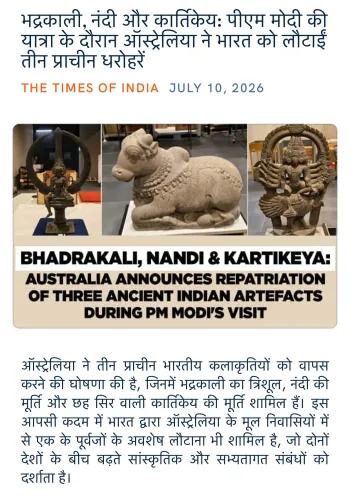
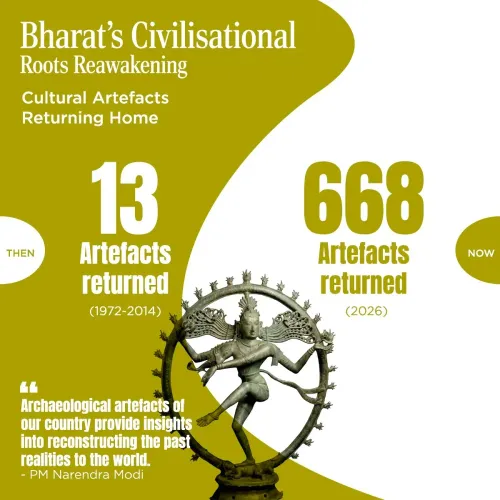
The government claims over 650 stolen ancient artefacts have been repatriated from foreign countries over the past 12 years .
Repatriations have involved countries including the United States and Australia , through bilateral diplomacy and museum negotiations.
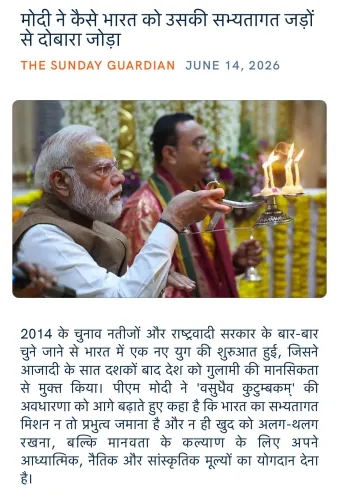
Major pilgrimage-site redevelopment, including the Kashi Vishwanath Dham corridor in Varanasi , forms a parallel strand of the government's heritage agenda since 2014 .
Heritage diplomacy has become a stated pillar of India's cultural foreign policy, involving the Archaeological Survey of India and the Ministry of External Affairs.
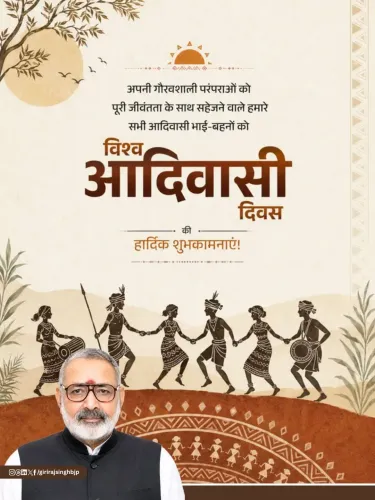
India's ancient idols are coming home — and Union Textiles Minister Giriraj Singh wants the country to know it. On Friday, 23 October 2026, the senior BJP leader took to X to celebrate what he called a defining chapter in India's cultural renaissance, pointing to the grand redevelopment of major pilgrimage sites and the return of more than 650 stolen ancient artefacts from abroad over the past 12 years.
In his post, Singh wrote: 'Bharat ki sanskritik virasat aaj naye gaurav ke saath punarsthaapit ho rahi hai' — 'India's cultural heritage is today being restored with new pride.' He highlighted the 'grand redevelopment of the country's prominent pilgrimage sites' and described the repatriation of over 650 antiquities as 'a significant achievement in the direction of heritage conservation.'
The long road to bringing stolen idols back
The repatriation drive has unfolded through a combination of bilateral diplomatic channels and negotiations with foreign museums and private collectors. Countries including the United States and Australia have been among those involved in returning Indian antiquities — statues, temple icons, and ritual objects smuggled out over decades. Each return has typically been accompanied by formal handover ceremonies, lending the effort a visibility that the government has leveraged as a symbol of restored national dignity.
The scale cited — over 650 pieces in 12 years — contrasts sharply with the handful of returns recorded in the decades before 2014. Heritage diplomacy has since become a stated pillar of India's cultural foreign policy, with dedicated coordination between the Archaeological Survey of India, the Ministry of External Affairs, and Indian missions abroad.
Pilgrimage corridors: stone, steel, and symbolism
Running parallel to the repatriation push is a sweeping infrastructure programme at India's holiest sites. The Kashi Vishwanath Dham corridor in Varanasi — one of the most visible projects since 2014 — transformed a congested neighbourhood into a broad ceremonial approach to the ancient Shiva temple, drawing millions of pilgrims. Similar corridor and beautification projects have been taken up at other major tirths across the country.
For the government and its supporters, these projects carry a dual payoff: improved pilgrim infrastructure and a powerful cultural-nationalist message. For heritage conservationists, the question has always been whether speed of construction preserves or inadvertently displaces the very character such projects seek to honour.
Singh's voice in the cultural conversation
Though Singh's portfolio sits in textiles, senior cabinet ministers regularly amplify the broader government narrative on cultural and civilisational themes — particularly as India's global profile as a 'Vishwaguru' ('world teacher') gains traction in official messaging. His post lands in that register: less a policy announcement, more a proud stocktaking of what the government frames as an ongoing civilisational reclamation.
With diplomatic channels still active and several pilgrimage-site projects still in various stages of completion, the government's heritage agenda is far from its final chapter — and Singh's post signals that more milestones are expected to follow.
Point of View
Presenting both as proof of a government uniquely committed to Hindu cultural restoration. The framing is deliberate: by bundling the physical (corridor construction) with the symbolic (stolen idols returned), it projects a seamless arc from domestic policy to global standing. For the opposition, the challenge is that these are largely tangible achievements difficult to contest head-on, making the cultural terrain politically costly to cede. The sustained drumbeat on heritage diplomacy also signals that as India deepens its 'Vishwaguru' positioning internationally, cultural soft power will remain a live electoral and diplomatic asset well beyond 2026.
NationPress
23 Oct 2026
Frequently Asked Questions
How many stolen Indian artefacts have been returned from abroad?
Union Textiles Minister Giriraj Singh has cited the return of over 650 stolen ancient artefacts from foreign countries over the past 12 years , describing it as a significant heritage conservation achievement. The specific figure has not been independently verified.
Which countries have returned stolen Indian antiquities to India?
Countries including the United States and Australia have been among those involved in returning Indian antiquities through bilateral diplomatic agreements and negotiations with museums and private collectors.
What is the Kashi Vishwanath Dham corridor?
The Kashi Vishwanath Dham corridor is a major redevelopment project in Varanasi that transformed a densely built neighbourhood into a wide ceremonial approach to the ancient Shiva temple, significantly improving the pilgrimage experience since its completion.
What is India's heritage diplomacy policy?
India's heritage diplomacy involves coordinated efforts by the Archaeological Survey of India , the Ministry of External Affairs, and Indian diplomatic missions to negotiate the return of antiquities smuggled out of the country, a drive that has intensified since 2014 .
Why is Giriraj Singh talking about cultural heritage if his portfolio is textiles?
Senior cabinet ministers in India routinely amplify the broader government narrative on cultural and national themes beyond their immediate portfolios. Singh, as a senior BJP leader and Lok Sabha MP from Begusarai , regularly speaks on civilisational and cultural issues central to the party's identity.