Giriraj Singh Hails Australia's Return of 3 Ancient Artefacts to India
Synopsis
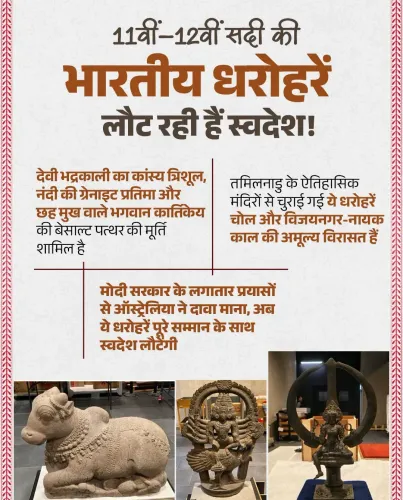
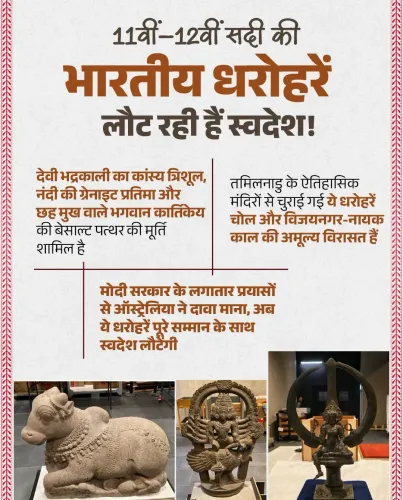
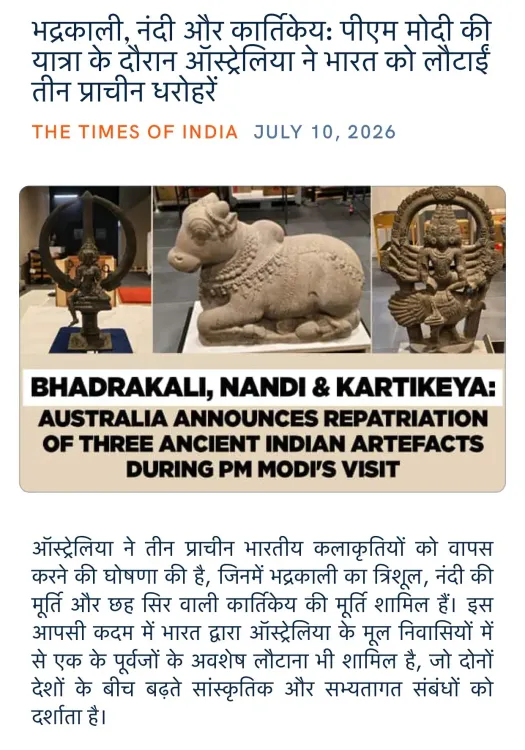
Australia announced the repatriation of three ancient Indian artefacts — Bhadrakali, Nandi and Kartikeya — during PM Modi's visit. Union Textiles Minister Giriraj Singh highlighted the development, underlining India's growing success in recovering cultural heritage through high-level diplomatic engagement.
Key Takeaways
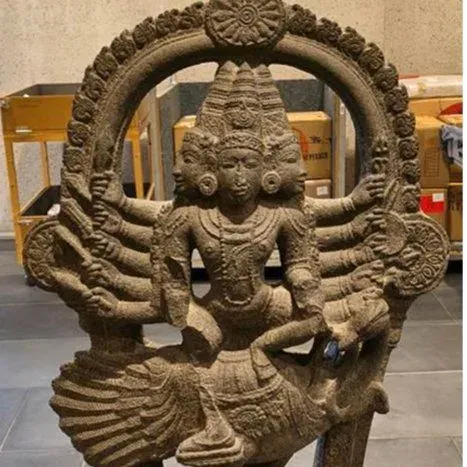
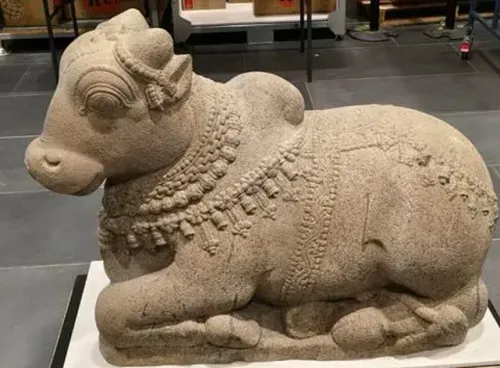
Australia announced the return of three ancient Indian artefacts — Bhadrakali , Nandi , and Kartikeya — to India.
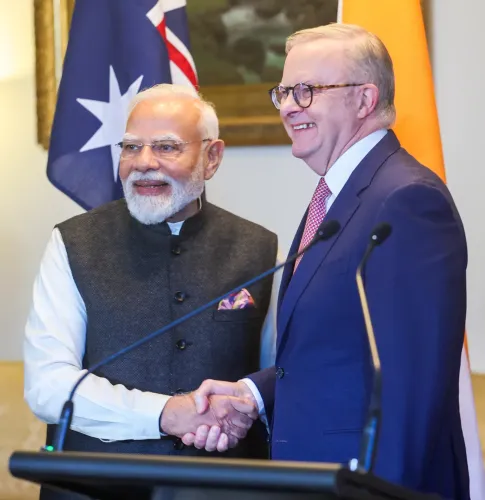
The announcement was made during Prime Minister Narendra Modi 's visit to Australia in July 2026 .
Union Textiles Minister Giriraj Singh amplified the news on his official X account via the NaMo App.
India has been systematically pursuing repatriation of cultural property held abroad since 2014 , with multiple returns secured between 2021 and 2024 .
India and Australia have maintained a Comprehensive Strategic Partnership since 2020 , with cultural diplomacy forming a growing pillar of the relationship.
Decisions on conservation and public display of the returned artefacts will involve the Archaeological Survey of India and the Ministry of Culture .
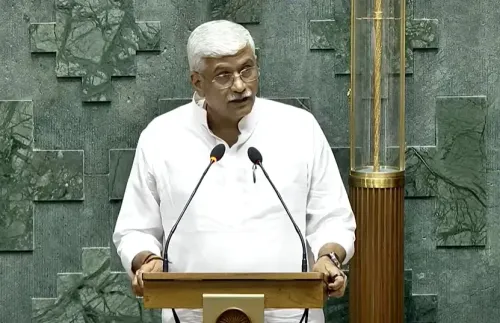
Union Textiles Minister Giriraj Singh on Friday, 10 July 2026 drew attention to a significant cultural diplomacy milestone: Australia announced the repatriation of three ancient Indian artefacts — Bhadrakali, Nandi, and Kartikeya — during Prime Minister Narendra Modi's ongoing visit to the country. The minister shared the development on his official X account, amplifying the announcement to his followers via the NaMo App.
Context
The post, written in Hindi, translates as: 'Bhadrakali, Nandi and Kartikeya: Australia returns three ancient heritage pieces to India during PM Modi's visit.' The three artefacts are religious in nature — Bhadrakali is a fierce manifestation of the goddess Durga, Nandi is the sacred bull associated with Lord Shiva, and Kartikeya is the Hindu god of war. Their return represents both a spiritual and a civilisational homecoming for India's heritage community.
The announcement was made in the context of PM Modi's state-level engagement with Australia, underscoring how high-level diplomatic visits increasingly serve as occasions for cultural restitution alongside security and trade discussions.
Policy Backdrop
India has pursued the systematic recovery of cultural property held abroad since 2014, when the government intensified diplomatic efforts on this front as part of a broader heritage and soft-power policy. Between 2021 and 2024, several significant artefacts were repatriated from the United States and the United Kingdom through bilateral channels, establishing a clear pattern of using summit-level meetings to secure cultural returns.
India and Australia upgraded their relationship to a Comprehensive Strategic Partnership in 2020, deepening cooperation across domains including defence, trade, and people-to-people ties. Cultural repatriation has emerged as a recurring goodwill gesture within this strengthened framework, complementing strategic alignment through the Quad and regular bilateral summits.
Stakeholders and Impact
Indian heritage institutions, museum curators, and conservation experts are among the primary stakeholders awaiting the physical return of the three pieces. The repatriation will require decisions on provenance documentation, conservation protocols, and the selection of a suitable museum or temple for their display — processes that typically involve the Archaeological Survey of India and the Ministry of Culture.
For the broader public, the return of religiously significant sculptures such as Nandi and Kartikeya carries emotional and civilisational weight beyond their material value. Giriraj Singh's decision to amplify the announcement reflects the political salience that heritage repatriation has acquired within the ruling BJP's cultural nationalism discourse.
What's Next
Heritage watchers will look for further repatriation announcements or the signing of cultural memoranda of understanding at upcoming India-Australia ministerial or summit-level meetings. The physical transfer, conservation, and eventual public display of Bhadrakali, Nandi, and Kartikeya will be closely followed by India's museum and archaeology community.
More broadly, this episode reinforces a diplomatic template: as India's bilateral relationships deepen, cultural restitution is becoming a standard deliverable at the summit table — a trend likely to accelerate as New Delhi continues to press heritage claims with partner nations across the world.
Point of View
Nandi and Kartikeya during PM Modi's Australia visit is not an isolated gesture but part of a deliberate diplomatic template India has refined over the past decade. By consistently placing cultural restitution on summit agendas, New Delhi has transformed heritage recovery from a passive aspiration into an active foreign-policy tool. Giriraj Singh's amplification of the announcement signals how cultural nationalism and diplomatic achievement are being woven into a unified political narrative ahead of domestic audiences. The broader arc suggests India will intensify such claims with more partner nations as its global leverage grows.
NationPress
8 Oct 2026
Frequently Asked Questions
Which three artefacts did Australia return to India during PM Modi's visit?
Australia announced the repatriation of three ancient Indian artefacts — Bhadrakali, a fierce form of the goddess Durga; Nandi, the sacred bull of Lord Shiva; and Kartikeya, the Hindu god of war — during PM Modi's visit in July 2026.
Why did Australia return ancient artefacts to India?
The return was announced as a diplomatic goodwill gesture during PM Narendra Modi's state visit to Australia, consistent with the two countries' Comprehensive Strategic Partnership established in 2020 and India's broader push for cultural repatriation through bilateral channels.
What is India's policy on repatriation of ancient artefacts?
India has pursued systematic recovery of cultural property held abroad since 2014, using high-level diplomatic visits and bilateral agreements to secure the return of artefacts from countries including the United States, the United Kingdom, and now Australia.
Who is Giriraj Singh and why did he post about the artefact repatriation?
Giriraj Singh is the Union Textiles Minister and a senior BJP leader and Lok Sabha MP from Begusarai, Bihar. He shared the repatriation news on X to highlight a cultural diplomacy achievement during PM Modi's Australia visit.
Where will the returned artefacts Bhadrakali, Nandi and Kartikeya be displayed?
The specific display locations have not been confirmed. Decisions on conservation and public exhibition will typically involve the Archaeological Survey of India and the Ministry of Culture after the physical transfer is completed.