CM Bhupendra Patel meets citizens at Swarnim Sankul-1
Synopsis
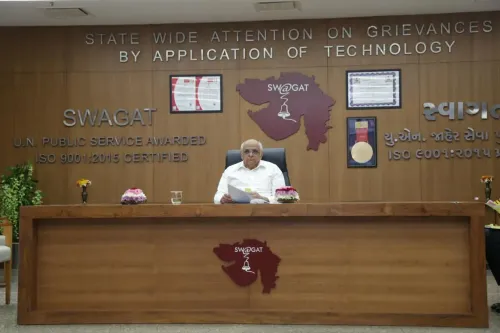
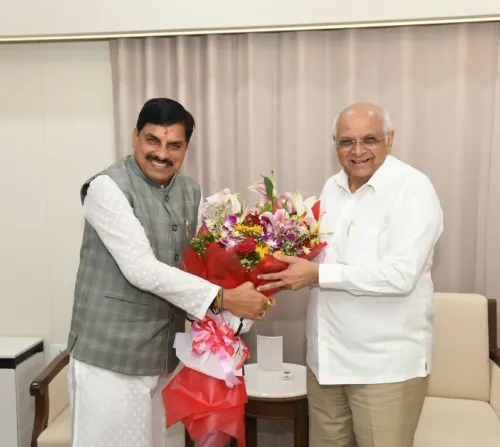
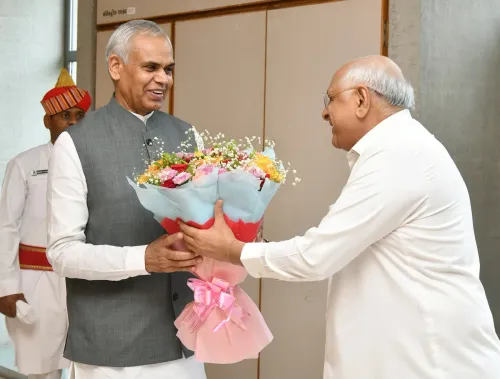
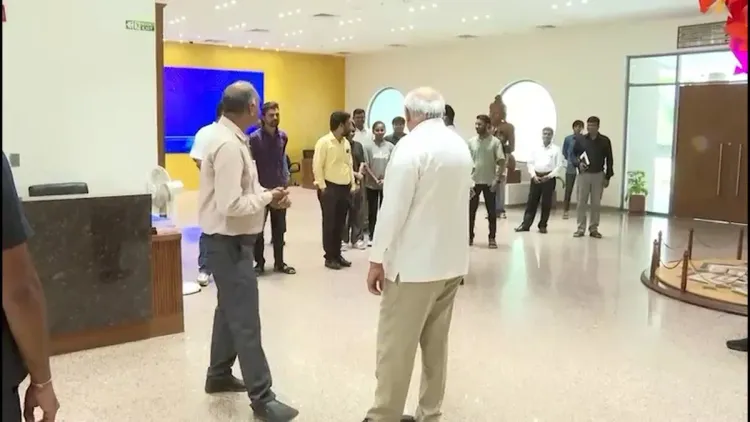
Gujarat Chief Minister Bhupendra Patel walked up to ordinary citizens visiting Swarnim Sankul-1 in Gandhinagar on 10 July 2026, personally hearing their representations in an informal exchange that the CMO described as reflecting his simple, approachable personality.
Key Takeaways
CM Bhupendra Patel personally approached citizens at Swarnim Sankul-1 in Gandhinagar on 10 July 2026 .
The interaction took place at the Chief Minister's Office complex, not at a separate public event.
He listened to citizens' representations directly, without intermediaries, in an informal walkabout.
The Gujarat CMO described his conduct as reflecting a sahaj, saral ane salas — natural, simple and gentle — personality.
This style of visible public engagement is a recurring feature of the Gujarat CMO's communication under Patel , who has served as Chief Minister since September 2021 .
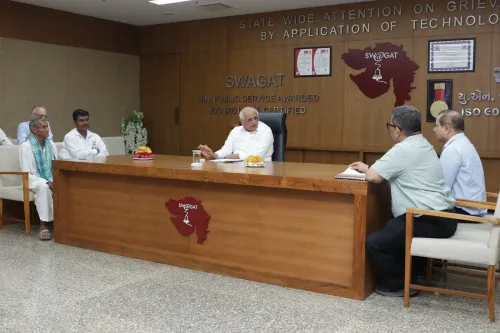
Gujarat Chief Minister Bhupendra Patel stepped out of his office at Swarnim Sankul-1 in Gandhinagar on Friday, 10 July 2026, to personally meet ordinary citizens who had come to the Chief Minister's Office, listening to their representations in an informal, one-on-one exchange that drew widespread appreciation.
Context
The Chief Minister's Office shared a video of the interaction, describing it as a demonstration of CM Patel's characteristic simplicity and approachability. The Gujarati-language post noted that he walked up to citizens on his own initiative — સામે ચાલીને (came forward himself) — and engaged with them warmly, learning the details of their grievances and requests. The gesture was described as reflecting his સહજ, સરળ અને સાલસ ('natural, simple and gentle') personality.
Policy Backdrop
Bhupendra Patel has served as Gujarat's Chief Minister since September 2021, when he succeeded Vijay Rupani. Before assuming the top post, he held portfolios covering panchayat, rural housing and development — experience that shaped his stated emphasis on grassroots administrative responsiveness. Swarnim Sankul-1, located in Gandhinagar, houses the Chief Minister's Office and serves as the administrative nerve centre of the state government. Posts from the Gujarat CMO have consistently highlighted direct, informal interactions between the Chief Minister and members of the public at these official premises, forming a recurring strand of the state's governance communication.
Stakeholders and Impact
For ordinary citizens who visit the Chief Minister's Office with petitions or grievances, direct access to the Chief Minister — rather than an intermediary — carries both symbolic and practical weight. Such interactions signal that representations are being heard at the highest level, even if formal redressal follows through established administrative channels. The broader public, particularly in rural Gujarat, tends to view visible accessibility by senior leaders as a marker of responsive governance.
What's Next
The key question following such public outreach moments is whether the representations received translate into concrete follow-up through the state's grievance redressal mechanisms or scheduled public contact programmes. The Gujarat government's communication machinery is expected to provide updates on any specific outcomes arising from today's citizen interactions at Swarnim Sankul-1. Observers will watch for announcements of structured public outreach initiatives that build on this informal engagement model.
Point of View
Low-key administrator — a contrast to the more high-profile image of his predecessors. In a state where the ruling party has long emphasised administrative delivery over political theatrics, such imagery serves as soft political capital ahead of any future electoral cycle. The emphasis on the Chief Minister personally receiving citizen petitions also subtly reinforces the message that the state's grievance machinery is responsive at its apex. Whether routine public outreach of this kind translates into measurable improvements in grievance redressal remains the harder, less photographable test.
NationPress
9 Oct 2026
Frequently Asked Questions
Who is Bhupendra Patel and when did he become Gujarat's Chief Minister?
Bhupendra Patel is the Chief Minister of Gujarat , a post he has held since September 2021 when he succeeded Vijay Rupani as the BJP's choice for the top state office.
What is Swarnim Sankul-1 in Gandhinagar?
Swarnim Sankul-1 is a building in the Swarnim Sankul complex in Gandhinagar that houses the Gujarat Chief Minister's Office and serves as a key centre of the state government's administration.
What did CM Bhupendra Patel do at Swarnim Sankul-1 on 10 July 2026?
On 10 July 2026 , CM Bhupendra Patel walked up to ordinary citizens present at Swarnim Sankul-1 on his own initiative, engaging with them warmly and personally listening to their grievances and representations.
How can citizens submit grievances to the Gujarat Chief Minister's Office?
Citizens can visit the Chief Minister's Office at Swarnim Sankul-1 , Gandhinagar , to submit representations. The state government also operates formal grievance redressal mechanisms for follow-up on such petitions.
Is this kind of public outreach common for Gujarat's Chief Minister?
Yes — direct, informal interactions between CM Bhupendra Patel and members of the public at official premises have been a recurring feature of the Gujarat CMO's communication, reflecting the state's stated emphasis on administrative accessibility.