CM Bhupendra Patel Chairs SWAGAT Grievance Session in Gandhinagar
Synopsis
Chief Minister Bhupendra Patel on 30 May 2026 chaired Gujarat's state-level SWAGAT Online grievance session in Gandhinagar, hearing farmer and citizen petitions and directing district administrations to resolve cases justly within defined time limits to strengthen public trust.
Key Takeaways
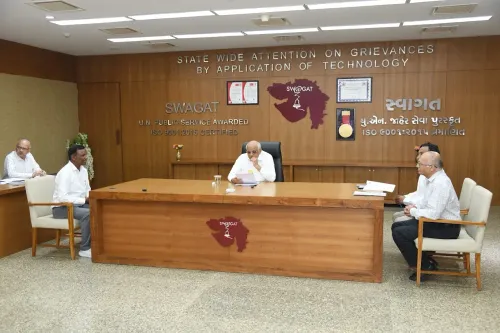
CM Bhupendra Patel personally presided over the state-level SWAGAT Online Janfariyad Nivaran programme in Gandhinagar on 30 May 2026 .
The session focused on grievances from farmers and ordinary citizens, heard directly by the Chief Minister.
CM Patel directed district administrations to resolve petitions in a just, simple, and time-bound manner.
The SWAGAT platform was originally launched in 2003 under then-CM Narendra Modi as one of India's first structured e-governance grievance systems.
The directive aims to deepen public trust in the state government through accountable, citizen-responsive administration.
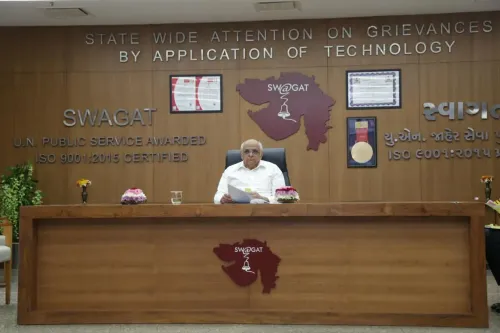
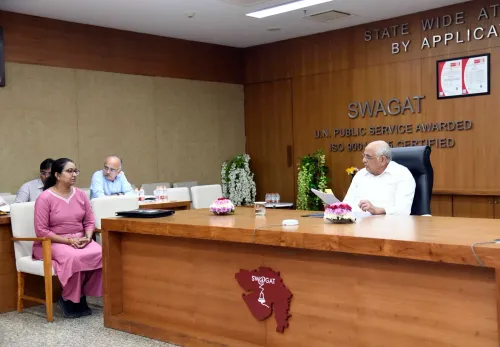
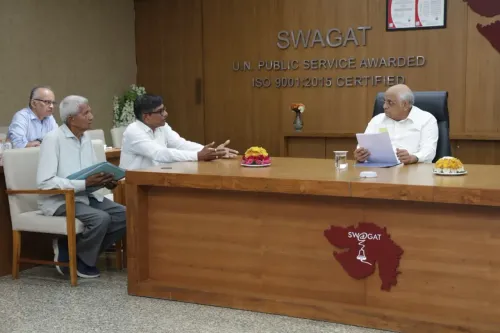
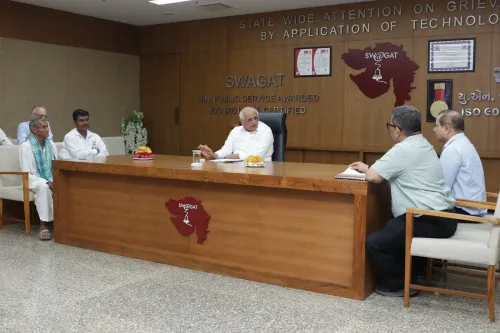
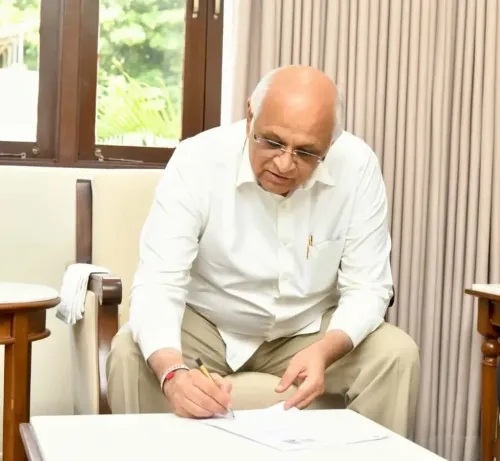
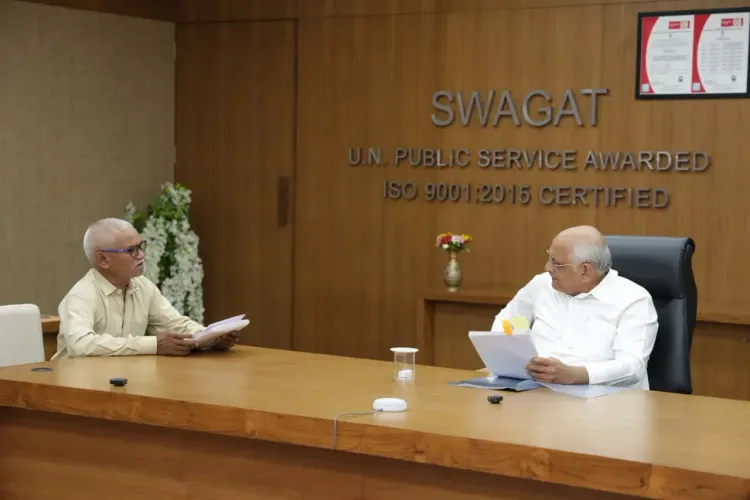
The Chief Minister's Office of Gujarat announced on Saturday, 30 May 2026 that Chief Minister Bhupendra Patel personally presided over the state-level SWAGAT Online Janfariyad Nivaran (public grievance redressal) programme held at Gandhinagar, listening to representations from farmers and ordinary citizens with attentiveness and sensitivity.
What Happened
At the session, CM Bhupendra Patel heard grievances from petitioners — particularly farmers and members of the general public — who presented their concerns directly to the state administration. The Chief Minister's Office described his engagement as sanvedanapurvak (sensitively and empathetically), underscoring the government's stated commitment to citizen-centred governance.
Following the hearings, CM Patel directed district administrations across Gujarat to resolve applicants' issues in a just and simple manner within a defined time limit, with the explicit aim of deepening public trust in the government.
Context: The SWAGAT System
The SWAGAT (State-Wide Attention on Grievances by Application of Technology) platform was first launched in 2003 by then Chief Minister Narendra Modi as a structured digital mechanism for registering and tracking citizen complaints at both state and district levels. It was among India's earliest e-governance initiatives for direct executive-citizen interface.
Over more than two decades, successive Gujarat governments have expanded the platform's reach to cover sectors including revenue, agriculture, and local governance. The system enables citizens — including those in remote rural areas — to submit grievances online and track resolution without requiring physical visits to government offices.
Policy Backdrop
Gujarat has consistently positioned itself as a front-runner in e-governance, using digital tools to reduce administrative response times and limit the need for litigation. The emphasis on time-bound resolution — a phrase repeated in the Chief Minister's directives to district officials — reflects a deliberate policy choice to set accountability benchmarks for bureaucratic performance.
The state-level SWAGAT sessions, held periodically, are designed to surface grievances that have not been resolved at the district level, bringing them directly before the Chief Minister's attention. This tiered architecture is intended to prevent cases from stagnating in lower administrative tiers.
Stakeholders and Impact
Farmers featured prominently among the petitioners at the 30 May 2026 session, reflecting the persistent volume of agricultural grievances — including land revenue disputes, irrigation access, and crop-loss compensation — that flow through the SWAGAT system. Rural citizens and small-scale applicants without the resources to navigate formal legal channels are the primary beneficiaries of such direct-access programmes.
District administrations have been placed on notice by the Chief Minister's directives to process pending applications within stipulated deadlines. The instruction to resolve matters in a 'judicial and simple manner' signals an expectation of both procedural fairness and administrative efficiency from district-level officials.
What's Next
The performance of district administrations in implementing CM Patel's directives will be the immediate indicator to watch. Periodic reviews of the SWAGAT portal's resolution rates, along with any state budget provisions for upgrading grievance redressal infrastructure, will indicate how seriously the administration intends to institutionalise these benchmarks. Sustained follow-through on time-bound resolution could further cement Gujarat's standing as a model for citizen-responsive governance in India.
Point of View
Patel is invoking the same accountability framework that made the SWAGAT platform a reference point for e-governance nationally when it was first introduced in 2003. The prominence of farmers in the petitioner pool is politically significant: agrarian distress remains a pressure point for the ruling dispensation, and direct-access grievance forums serve as a pressure-release valve. Whether the directives translate into measurable improvements in resolution rates — rather than remaining symbolic gestures — will determine the programme's long-term credibility.
NationPress
19 Oct 2026
Frequently Asked Questions
What is the SWAGAT Online Janfariyad Nivaran programme in Gujarat?
SWAGAT (State-Wide Attention on Grievances by Application of Technology) is Gujarat's digital grievance redressal platform, first launched in 2003, that allows citizens to register and track complaints at district and state levels, including direct sessions with the Chief Minister.
What did CM Bhupendra Patel do at the SWAGAT session on 30 May 2026?
CM Bhupendra Patel listened to grievances from farmers and ordinary citizens at the state-level SWAGAT session in Gandhinagar and directed district administrations to resolve petitions in a just, simple, and time-bound manner.
When was the SWAGAT grievance system started in Gujarat?
The SWAGAT programme was launched in 2003 by then Chief Minister Narendra Modi as one of India's earliest e-governance initiatives for structured citizen grievance redressal.
Who benefits from the SWAGAT Online programme in Gujarat?
Farmers, rural citizens, and ordinary members of the public — particularly those without the resources to navigate formal legal processes — are the primary beneficiaries of the SWAGAT system.
What did CM Patel direct district officials to do after the SWAGAT session?
CM Patel directed district administrations across Gujarat to resolve applicants' grievances within a defined time limit in a fair and simple manner, with the goal of strengthening public trust in the state government.