Gujarat's 36 Sakhi Centres Reach 53,000-Plus Women in Distress
Synopsis
Gujarat's 36 Sakhi One Stop Centres, active round-the-clock across all 34 districts under CM Bhupendra Patel, have aided over 53,000 women in distress with integrated shelter, health, legal and counselling services under the nationally-funded Sakhi scheme.
Key Takeaways
Over 53,000 women in Gujarat have been served by the Sakhi One Stop Centres as of October 2026 .
36 Sakhi One Stop Centres operate 24x7 across all 34 districts of Gujarat.
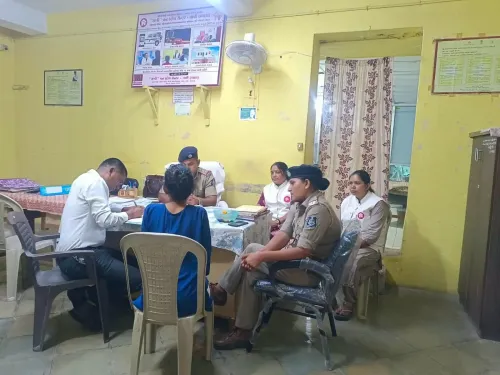
Services include shelter, emergency health care, legal aid, police facilitation, video-conferencing support, rescue operations, and psychological counselling — all under one roof.
The national One Stop Centre (Sakhi) scheme was launched in 2015 by the Ministry of Women and Child Development using Nirbhaya Fund resources.
The initiative operates under the leadership of Chief Minister Bhupendra Patel , who has held office since 2021 .
The model emphasises full-arc support — from crisis rescue to reintegration into a 'respectable life'.
More than 53,000 women across Gujarat have walked through a crisis and found a single door that opened onto shelter, medicine, a lawyer, and a counsellor — all at once. The Chief Minister's Office of Gujarat announced on Monday, 19 October 2026 that the state's 36 Sakhi One Stop Centres, operating 24x7 across all 34 districts, have collectively served that milestone number of women in distress under the leadership of Chief Minister Bhupendra Patel.
The Gujarati-language post captures the scale of the effort: 'અબળાને સબળા બનાવતી આ પહેલ' — 'this initiative that turns the vulnerable into the strong' — offering services from video-conferencing support and rescue operations to legal aid and psychological counselling, all under one roof.
What a Sakhi Centre Actually Does
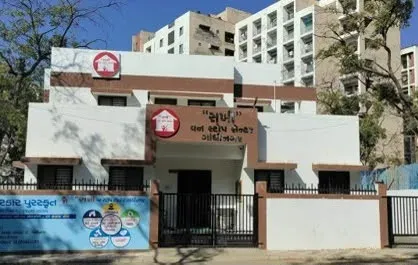
The One Stop Centre (Sakhi) scheme was launched nationally in 2015 by the Ministry of Women and Child Development, funded through the Nirbhaya Fund. The model is deliberately integrated: a woman arriving in crisis — whether from domestic violence, trafficking, or another emergency — does not have to navigate five different government offices. She gets immediate shelter, emergency medical care, first-response legal guidance, police facilitation, and counselling from a single coordinated facility. Gujarat's state-level delivery has scaled this architecture to cover every one of its 34 districts. The centres are also equipped with video-conferencing infrastructure and rescue-response capability — meaning the reach extends beyond the physical walk-in, into remote areas where women may not be able to travel safely to a centre.Gujarat's Numbers Inside the National Picture
With 36 centres serving upwards of 53,000 beneficiaries, Gujarat's rollout represents a significant state-level deployment of the national single-window women-safety model. The programme sits within a broader architecture where central funding — channelled through the Nirbhaya Fund — underwrites infrastructure, while state governments handle staffing, district-level integration, and outreach. Chief Minister Bhupendra Patel, who has held office since 2021, has positioned women-centric welfare as a consistent policy thread of his administration. The CMO's framing — 'સખીનો સહારો', 'the support of Sakhi' — reflects an emphasis on dignity and resettlement, not just emergency response. The announcement stresses that beneficiaries received help rebuilding a 'respectable life', signalling that the centres function across the full arc from crisis to reintegration. Every district covered. Every hour of the day and night. Fifty-three thousand women and counting — that is the metric Gujarat is now putting on the record.Point of View
Which is rare. The milestone of 53,000-plus beneficiaries positions the state as a high-utilisation model within the national Sakhi network, giving the Bhupendra Patel administration a concrete welfare data point ahead of any future electoral cycle. The 'single-window' design continues to be the scheme's most politically durable feature: it collapses bureaucratic fragmentation into a number any voter can understand. The emphasis on dignity and reintegration, not just emergency response, also signals a policy maturation beyond first-generation crisis intervention.
NationPress
19 Oct 2026
Frequently Asked Questions
What is the Sakhi One Stop Centre scheme in Gujarat?
The Sakhi One Stop Centre scheme provides 24x7 integrated support to women in distress — including shelter, health care, legal aid, police assistance, and counselling — from a single facility. Gujarat operates 36 such centres across all 34 districts of the state.
How many women have benefited from Sakhi centres in Gujarat?
More than 53,000 women across Gujarat have received services through the Sakhi One Stop Centres, according to the announcement made by the Chief Minister's Office on 19 October 2026 .
Who launched the Sakhi One Stop Centre scheme in India?
The One Stop Centre (Sakhi) scheme was launched nationally in 2015 by the Ministry of Women and Child Development , funded through the Nirbhaya Fund , to provide single-window support to women affected by violence.
How many Sakhi centres are there in Gujarat and where are they located?
There are 36 Sakhi One Stop Centres in Gujarat, spread across all 34 districts of the state, ensuring district-level access for women in crisis situations.
What services does a Sakhi One Stop Centre provide?
A Sakhi One Stop Centre offers emergency shelter, medical assistance, legal counselling, police facilitation, psychological support, video-conferencing facilities, and rescue services — all coordinated from a single location to avoid multiple-agency navigation for women in distress.