CM Sukhu backs Shahpur anti-chitta rally, hails Pathania
Synopsis
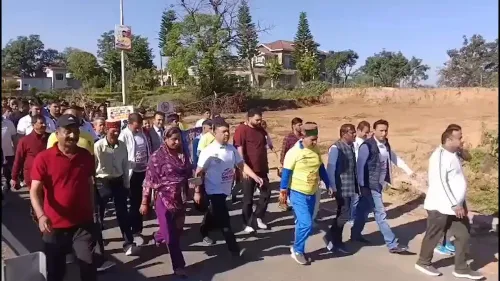
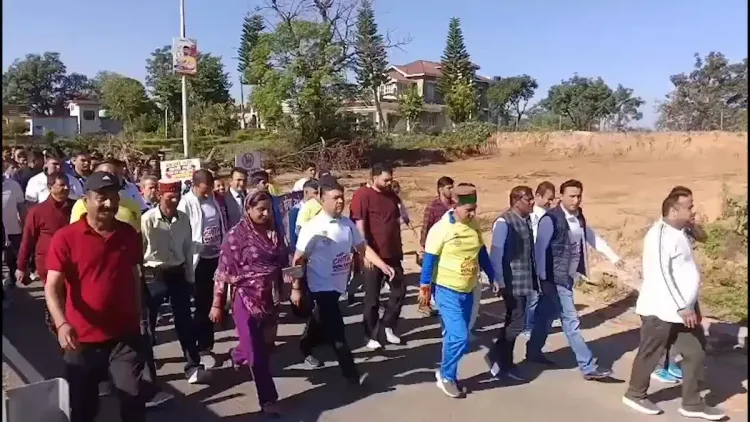
Himachal Pradesh CM Sukhvinder Singh Sukhu endorsed a mass anti-chitta rally in Shahpur on 19 October 2026, calling the youth participation proof that the entire constituency stands united against the synthetic drug menace, and praised organiser Deputy Chief Whip Kewal Singh Pathania.
Key Takeaways
CM Sukhvinder Singh Sukhu publicly endorsed an anti-chitta rally held in Shahpur constituency on 19 October 2026 . 'Chitta' refers to heroin and white synthetic opioids that have severely affected Himachal Pradesh and neighbouring Punjab .
Deputy Chief Whip Kewal Singh Pathania organised the rally and received the Chief Minister's congratulations.
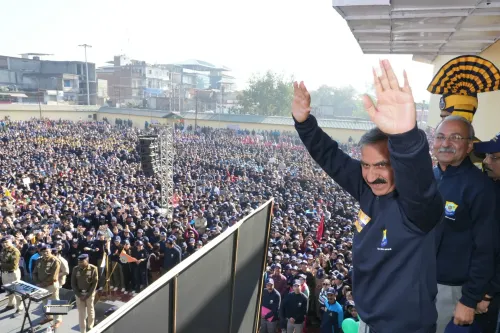
CM Sukhu cited visible participation of youth and ordinary residents as evidence of community-wide consensus against the drug.
India's NDPS Act (amended 2014) strengthened penalties for trafficking, but community-level drives remain a key complement to legal enforcement.
Follow-up actions — such as new de-addiction centres or extended rallies to other districts — will determine whether the momentum translates into sustained policy.
When an entire constituency mobilises against a drug — not by government order but by community will — that is a signal worth amplifying. Himachal Pradesh Chief Minister Sukhvinder Singh Sukhu on Monday, 19 October 2026, publicly praised a mass anti-chitta rally held in Shahpur, saying the visible participation of youth and ordinary residents proved that 'the whole of Shahpur is united against chitta.'
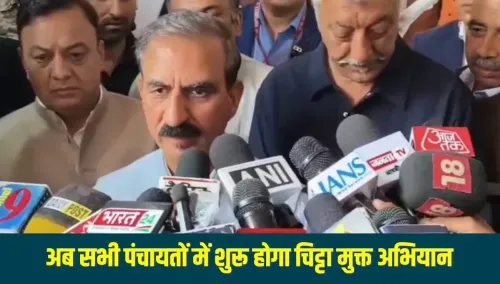
Posting in Hindi on X, CM Sukhu declared: 'युवाओं का भविष्य बचेगा, तभी समाज का भविष्य उज्ज्वल होगा' — 'The future of youth will be saved, only then will society's future be bright.' He reserved special praise for Deputy Chief Whip Kewal Singh Pathania, congratulating him for organising what the Chief Minister called a 'commendable campaign.'
Chitta's grip on Himachal — and why Shahpur matters
'Chitta' is the colloquial name for heroin and synthetic opioids that have cut a destructive path through Himachal Pradesh and neighbouring Punjab over the past decade. The drug, typically white in colour — hence the name — has disproportionately claimed young lives in the hill state's towns and semi-urban constituencies. Shahpur, an assembly segment in Himachal Pradesh, now joins a growing list of constituencies where residents have decided to confront the crisis publicly rather than quietly.
North Indian anti-narcotics drives have become a recurring feature of state politics, combining community events with political messaging to underline the stakes for young people. What distinguishes the Shahpur rally — at least as CM Sukhu frames it — is the ground-up energy: the Chief Minister specifically points to the presence of 'youth and common people,' not just party workers, as proof of genuine social consensus.
Pathania's campaign and the Congress messaging play
Kewal Singh Pathania, who serves as Deputy Chief Whip in the Himachal Pradesh Legislative Assembly, organised the Shahpur rally and drew the Chief Minister's endorsement. For the ruling Indian National Congress, public anti-drug demonstrations at the constituency level serve a dual purpose: they signal administrative concern on a voter-sensitive issue and keep local legislators visible on the ground between elections.
India's Narcotic Drugs and Psychotropic Substances Act was strengthened in 2014 with tougher penalties for trafficking and improved rehabilitation provisions. Yet enforcement alone has repeatedly proved insufficient against the supply chains feeding synthetic drugs into hill communities. Community rallies, de-addiction camps, and awareness drives have increasingly been positioned by state governments as the necessary social complement to legal action.
What comes next for Himachal's anti-drug push
The Chief Minister's post signals political momentum, but the test will be in follow-through: whether the Shahpur rally translates into new de-addiction infrastructure, intensified enforcement, or simply stops at the rally itself. Similar drives in neighbouring districts could accelerate if the state government chooses to replicate Pathania's model constituency by constituency — a playbook Punjab's state apparatus has experimented with at varying levels of success.
For now, Shahpur's youth showed up. The government has noticed. The next move is theirs to make.
Point of View
The party is projecting grassroots ownership of the anti-drug agenda. The political calculus is clear: in a state where youth unemployment and substance abuse intersect acutely, being seen as the party that mobilises communities — not merely announces schemes — carries tangible electoral weight. Whether this translates into measurable outcomes will depend on sustained state investment in de-addiction infrastructure beyond rally-season optics.
NationPress
19 Oct 2026
Frequently Asked Questions
What is chitta drug in Himachal Pradesh?
'Chitta' is the local term for heroin and white synthetic opioids that have become a major substance abuse crisis in Himachal Pradesh and Punjab, disproportionately affecting young people in towns and semi-urban areas.
Who organised the anti-chitta rally in Shahpur?
Deputy Chief Whip Kewal Singh Pathania organised the anti-chitta rally in Shahpur constituency, earning public praise from Chief Minister Sukhvinder Singh Sukhu.
What did CM Sukhu say about the Shahpur anti-drug rally?
CM Sukhu said the participation of youth and ordinary people proved 'the whole of Shahpur is united against chitta,' adding that saving the future of youth is the key to a bright future for society.
What is India's law against chitta and synthetic drugs?
India's Narcotic Drugs and Psychotropic Substances (NDPS) Act , amended in 2014 , provides enhanced penalties for drug trafficking and improved provisions for rehabilitation of drug users.
Where is Shahpur constituency located?
Shahpur is an assembly constituency in Himachal Pradesh , where the anti-chitta rally took place with significant participation from local youth and residents.