CM Fadnavis receives ₹51,000 cheque for drought relief fund in Nagpur

Synopsis
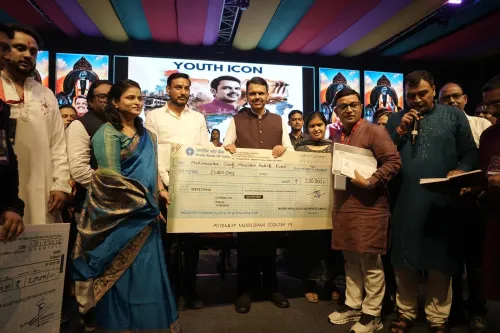
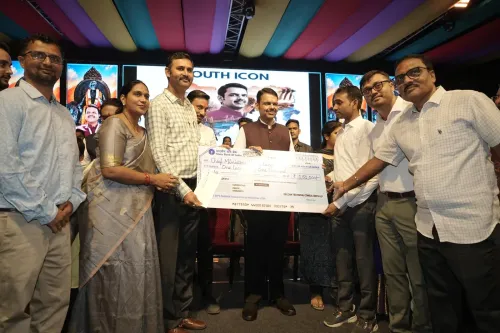
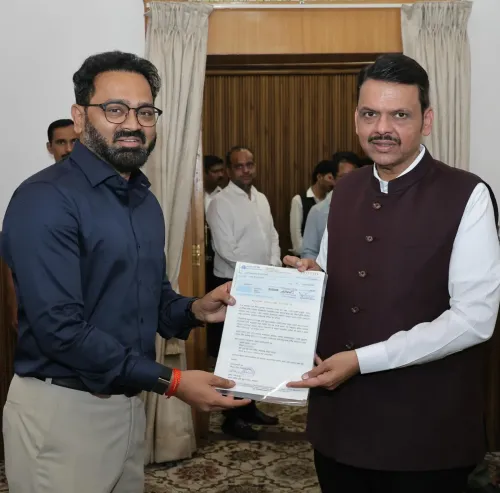
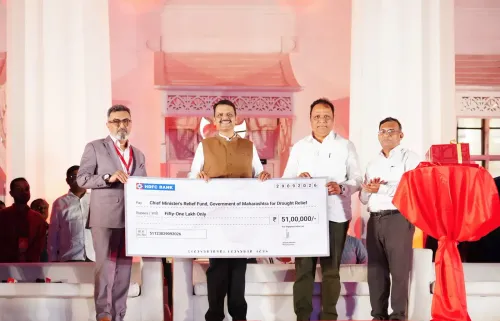
Median Infra LLP representatives Aditya Thakur and Sumedh Kulkarni presented Chief Minister Devendra Fadnavis with a ₹51,000 cheque in Nagpur for the Chief Minister's Relief Fund, directed at drought-hit farmers across Maharashtra.
Key Takeaways
Median Infra LLP donated ₹51,000 to the Chief Minister's Relief Fund for drought-affected farmers in Maharashtra.
The cheque was handed over in Nagpur by Aditya Thakur and Sumedh Kulkarni on 19 October 2026 .
Chief Minister Devendra Fadnavis personally received the donation and thanked the donors.
The CM Relief Fund serves as Maharashtra's rapid-response financial instrument for natural calamity victims, including drought-hit farmers in Vidarbha and Marathwada.
Private contributions supplement state budgetary allocations, allowing faster disbursement without waiting for formal calamity declarations.
A private firm stepped forward in Nagpur on Monday, 19 October 2026, handing Chief Minister Devendra Fadnavis a cheque of ₹51,000 for the Chief Minister's Relief Fund — earmarked specifically for drought-stricken farmers across Maharashtra.
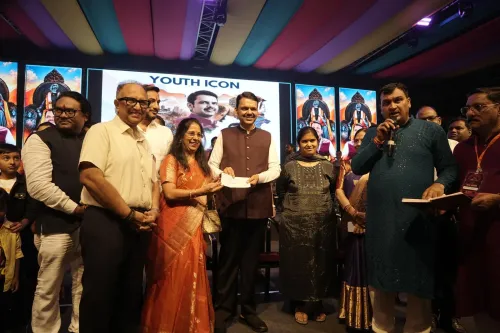
Aditya Thakur and Sumedh Kulkarni, representing Median Infra LLP, presented the donation to the Chief Minister's Office of Maharashtra, which shared the moment on X. CM Fadnavis acknowledged the gesture and thanked the donors.
Why Nagpur and why now
Nagpur sits at the heart of the Vidarbha region — Maharashtra's most drought-prone belt, where erratic monsoons and water-scarce soils have battered farming communities for decades. The city also serves as the state's winter capital, making it a natural venue for official interactions during the legislative season. Contributions to the Chief Minister's Relief Fund allow the government to move quickly — bypassing the lag of new budgetary allocations — and channel cash directly toward immediate farmer assistance.
The Relief Fund's role in cyclical drought response
Maharashtra governments have leaned on the CM Relief Fund as a first-response tool for drought and natural-calamity relief since at least the early 2010s. Both Vidarbha and Marathwada have been repeat beneficiaries, with private donors — corporates, trusts, and individuals — supplementing state expenditure between official relief packages. The fund's value lies in its flexibility: money flows in continuously and can be deployed without waiting for a formal calamity declaration.
A ₹51,000 donation is a modest but symbolically visible act, the kind governments actively publicise to encourage a broader culture of voluntary contribution. For Median Infra LLP, the gesture doubles as civic participation in a state where the rural-urban economic divide remains a live political fault line.
With the next agricultural season approaching and the utilisation of such donations yet to be publicly reported, the real test will be how efficiently accumulated contributions translate into aid that reaches the farmers who need it most.
Point of View
Particularly in Vidarbha and Marathwada. By publicly acknowledging private contributions, the Fadnavis government reinforces a narrative of broad societal solidarity with distressed farmers — a constituency central to Maharashtra's political arithmetic. The CM Relief Fund model, used across successive administrations, reflects a structural gap in India's disaster-response architecture: states routinely depend on ad hoc donations to bridge the lag between calamity onset and formal government relief. How these funds are eventually audited and disbursed will determine whether the goodwill translates into genuine agrarian relief.
NationPress
19 Oct 2026
Frequently Asked Questions
What is the Chief Minister's Relief Fund in Maharashtra?
The Chief Minister's Relief Fund is a state-level fund in Maharashtra that provides immediate financial assistance to victims of natural calamities — including droughts, floods, and cyclones — allowing faster disbursement than formal budgetary relief packages.
Who donated ₹51,000 to the CM Relief Fund for drought farmers?
Aditya Thakur and Sumedh Kulkarni of Median Infra LLP presented a cheque of ₹51,000 to Chief Minister Devendra Fadnavis in Nagpur on 19 October 2026.
Why is Vidarbha frequently affected by drought in Maharashtra?
Vidarbha, in eastern Maharashtra, has erratic monsoon patterns and water-scarce soils, making it one of the most drought-prone agricultural belts in India. The region has been a recurring focus of state drought-relief efforts since the early 2010s.
How can I donate to the Maharashtra Chief Minister's Relief Fund?
Individuals and organisations can donate to the Maharashtra Chief Minister's Relief Fund through the official Maharashtra government portal or by presenting a cheque directly to the Chief Minister's Office.
What is Devendra Fadnavis's role in Maharashtra?
Devendra Fadnavis is the Chief Minister of Maharashtra, with a track record spanning multiple terms and a stated focus on rural development, infrastructure, and calamity-relief measures.