India-New Zealand FTA Takes Effect, Unlocking STEM Work Visas

Synopsis
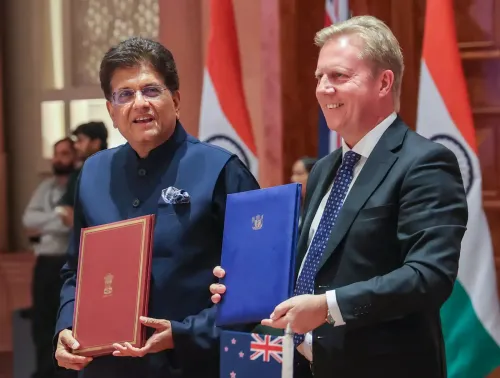
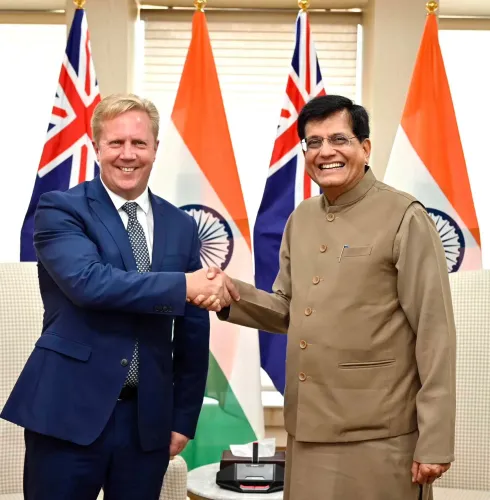
The India–New Zealand Free Trade Agreement enters force on 20 October 2026, granting STEM bachelor's and master's graduates three-year post-study work visas and doctoral graduates four-year visas in New Zealand, Union Minister Pralhad Joshi announced.
Key Takeaways
The India–New Zealand FTA officially enters force on 20 October 2026 .
STEM bachelor's and master's graduates are eligible for post-study work visas of up to 3 years in New Zealand.
Doctoral graduates qualify for post-study work visas of up to 4 years .
The deal follows India's pattern of embedding education-mobility chapters in FTAs, as seen in the India–Australia ECTA (2022) .
Minister Pralhad Joshi framed the agreement as advancing PM Modi 's vision of empowering Indian youth through global opportunities.
Utilisation rates of the new visa categories and joint FTA review meetings will be the key metrics to watch going forward.
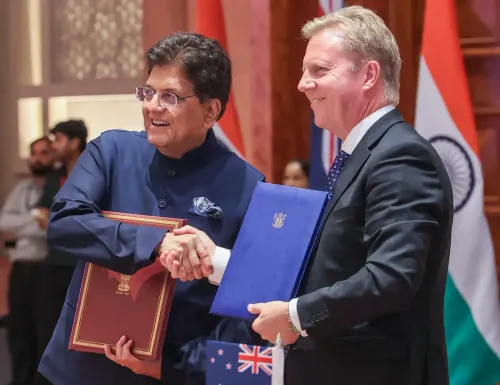
A new door swings open for Indian graduates on Tuesday, 20 October 2026 — the day the India–New Zealand Free Trade Agreement officially enters into force. Union Consumer Affairs Minister Pralhad Joshi announced the milestone on Monday evening, highlighting visa provisions that could reshape the post-study calculus for thousands of Indian STEM students each year.
What the visa windows actually mean for Indian graduates
Under the agreement's temporary entry provisions, STEM bachelor's and master's graduates become eligible for post-study work visas of up to three years in New Zealand. Doctoral graduates receive an even longer runway — up to four years — to gain international work experience before returning or choosing their next destination.
These are not merely symbolic concessions. For an Indian engineering or data-science graduate weighing Auckland against other destinations, a guaranteed multi-year work window — backed by treaty, not administrative discretion — materially lowers the risk of a high-cost overseas degree.
India's FTA playbook: education mobility as a trade chip
The India–New Zealand deal follows a pattern India has deliberately embedded in its recent trade agreements with developed economies. The India–Australia Economic Cooperation and Trade Agreement (ECTA), signed in 2022, included comparable post-study work rights for Indian graduates in select fields. Negotiations with the United Kingdom have featured similar mobility chapters.
The logic is consistent: tariff liberalisation alone rarely moves the political needle at home. Attaching youth mobility provisions — concrete, nameable, personally felt — gives a government something tangible to point to. Minister Joshi framed Tuesday's entry into force explicitly around Prime Minister Narendra Modi's vision of 'empowering youth through global education and employment opportunities,' anchoring the FTA's benefits to a broader electoral and policy narrative.
New Zealand's education sector enters a new competitive frame
For New Zealand, a Pacific economy whose universities have long recruited aggressively in South Asia, the FTA locks in Indian student flows at a moment when several competing destinations — Australia, Canada, the UK — have tightened immigration settings. A treaty-backed work-visa guarantee is a powerful marketing proposition for Kiwi institutions targeting Indian applicants.
The real measure of success will come in utilisation data: how many Indian graduates actually activate these visa categories, and whether the numbers show up in New Zealand's skilled-workforce statistics. Joint review mechanisms under the FTA will be the first official checkpoint on that question.
Point of View
Not just tariff reduction. By securing guaranteed post-study work windows — enforceable under treaty — India's negotiators are responding to a domestic demand that scholarship and study-abroad schemes alone cannot satisfy. The explicit invocation of PM Modi's youth-empowerment vision by a senior minister signals the government intends to make FTA-linked mobility a recurring political asset. Watch whether Parliament or the finance ministry begins tracking these visa uptake numbers as a formal outcome metric of trade diplomacy.
NationPress
19 Oct 2026
Frequently Asked Questions
When does the India–New Zealand FTA come into effect?
The India–New Zealand Free Trade Agreement enters into force on 20 October 2026 , as announced by Union Minister Pralhad Joshi.
How long is the post-study work visa for Indian STEM graduates in New Zealand under the FTA?
STEM bachelor's and master's graduates are eligible for post-study work visas of up to 3 years , while doctoral graduates qualify for up to 4 years under the FTA.
Which Indian students benefit from the India–New Zealand FTA?
Indian students who complete STEM bachelor's, master's, or doctoral degrees in New Zealand are the primary beneficiaries of the FTA's post-study work visa provisions.
Is the India–New Zealand FTA similar to the India–Australia trade deal?
Yes — like the India–Australia ECTA signed in 2022 , the India–New Zealand FTA includes education-mobility provisions granting post-study work rights to Indian graduates in select fields.
What is Pralhad Joshi's role in the India–New Zealand FTA announcement?
Pralhad Joshi , Union Minister of Consumer Affairs, Food and Public Distribution, and New and Renewable Energy, announced the FTA's entry into force on his official X account on 19 October 2026.