India-New Zealand FTA to take effect on October 20, Vijay Dashami: Piyush Goyal

Synopsis
India and New Zealand's FTA hits a milestone date: 20 October 2026, Vijay Dashami. With 100% duty-free access for Indian exports secured and $20 billion in investment facilitation on the table, Commerce Minister Piyush Goyal's announcement signals one of India's most comprehensive trade pacts moving from paper to practice — a potential windfall for Indian textiles, pharma, and engineering goods.
Key Takeaways
The India-New Zealand FTA will come into force on 20 October 2026 , coinciding with Vijay Dashami .
New Zealand's Parliament approved the pact with 93 votes in favour and 26 against , reflecting strong bipartisan support.
The agreement grants duty-free access for 100% of Indian exports to New Zealand from the date of entry into force.
Key Indian sectors set to benefit include textiles, leather, engineering goods, pharmaceuticals, and processed food .
The FTA is designed to facilitate $20 billion in investment into India and opens enhanced pathways for Indian professionals and students in New Zealand.
Commerce Minister Piyush Goyal announced the date in a post on social media platform X on 21 September 2026 .
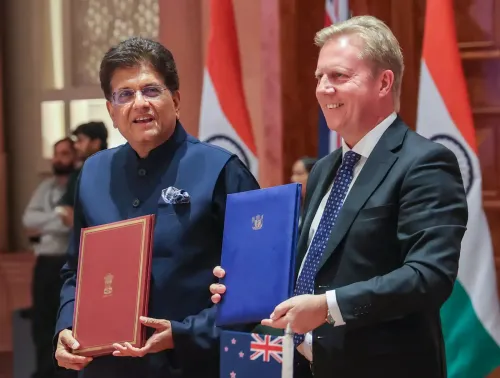
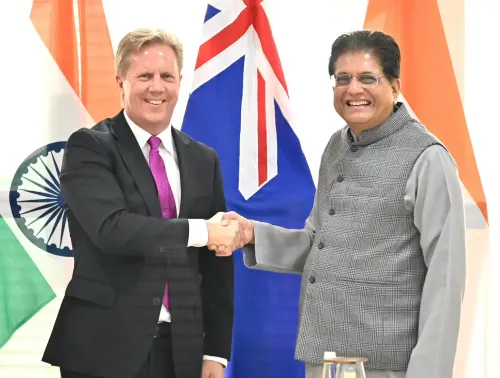
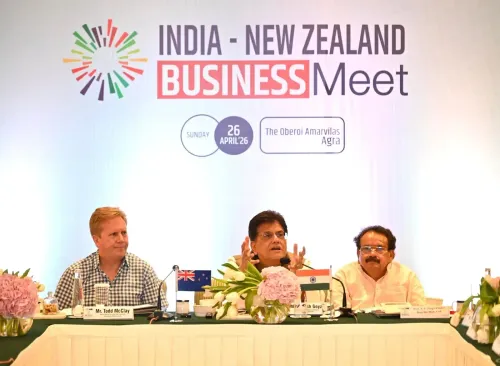
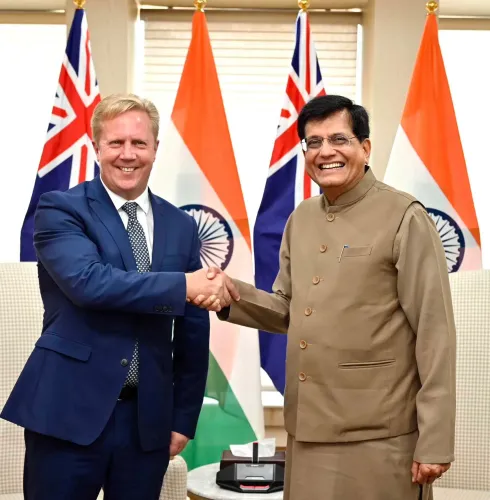
The free trade agreement (FTA) between India and New Zealand will officially come into force on 20 October 2026, coinciding with the festival of Vijay Dashami, Commerce and Industry Minister Piyush Goyal announced on Monday, 21 September. The landmark pact, signed in New Delhi on 27 April, had recently cleared New Zealand's Parliament with strong bipartisan backing.
Parliament Vote and Diplomatic Momentum
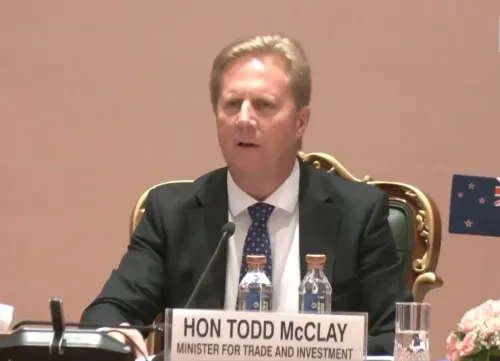
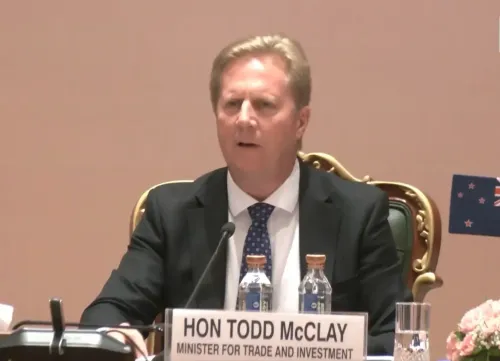
New Zealand's legislature approved the FTA with a decisive margin — 93 lawmakers voted in favour against 26 opposed — signalling broad cross-party confidence in the agreement. New Zealand's Minister for Trade and Investment, Todd McClay, had indicated last week that the pact would enter into force within a month once both sides signed it into law and exchanged diplomatic notes. 'The next stage is that we will sign it into law and exchange diplomatic notes with India when they are able to do the same. Then the clock starts ticking for the agreement to enter into force,' McClay said, adding, 'I think we can expect that within the next month.'
What Indian Exporters Gain
The agreement delivers duty-free access for 100 per cent of Indian exports to New Zealand from the date of entry into force. Sectors set to benefit include textiles and apparel, leather and footwear, engineering goods, pharmaceuticals, agriculture, and processed food products. This opens a direct, tariff-free corridor for Indian manufacturers competing in the New Zealand market.
Concessions for New Zealand Exports
In return, the FTA provides enhanced and preferential access to the Indian market for key New Zealand export categories including wood, wool, sheep meat, and leather raw hides. The agreement is framed as a reciprocal arrangement designed to balance gains across both economies rather than a one-sided liberalisation.
Services, Investment and People Mobility
Beyond goods, the FTA creates structured pathways in services, investment, and professional and student mobility. According to the Ministry of Commerce, it is designed to facilitate $20 billion worth of investment into India and strengthens bilateral cooperation across agricultural productivity, pharmaceuticals and medical devices, traditional medicine and AYUSH, and technology and trade facilitation. Enhanced pathways for Indian professionals and students in New Zealand are also embedded in the pact.
Broader Bilateral Context
India and New Zealand share longstanding ties anchored in strong people-to-people connections and expanding cooperation in trade, education, sports, and technology. This FTA marks a structural upgrade to that relationship — moving bilateral commerce from preferential arrangement to a rules-based, comprehensive framework. Goyal's framing of the date as a 'Vijay' — a Sanskrit word for victory — on the occasion of Vijay Dashami underscores the diplomatic symbolism attached to the timing. The coming weeks will determine how swiftly industry bodies and exporters mobilise to capitalise on the zero-duty window that opens on 20 October 2026.
Point of View
But the substance warrants attention: 100% duty-free access for Indian exports is a meaningful headline outcome that most previous Indian FTAs did not achieve at entry into force. The $20 billion investment facilitation figure, however, lacks a binding mechanism — it is a projection, not a commitment, and that distinction will matter as the pact beds down. What is genuinely noteworthy is the services and mobility chapter, which could do more for Indian professionals and students than the goods chapter does for exporters. Whether India's trade machinery can help SME exporters — particularly in textiles and processed food — realise the zero-duty window before larger competitors do is the execution question mainstream coverage has so far underplayed.
NationPress
21 Sept 2026
Frequently Asked Questions
When does the India-New Zealand FTA come into force?
The India-New Zealand Free Trade Agreement comes into force on 20 October 2026, the occasion of Vijay Dashami. Commerce and Industry Minister Piyush Goyal confirmed the date on 21 September 2026.
What does the India-New Zealand FTA mean for Indian exporters?
The FTA provides duty-free access for 100 per cent of Indian exports to New Zealand from the date of entry into force. Key beneficiary sectors include textiles and apparel, leather and footwear, engineering goods, pharmaceuticals, and processed food products.
How did New Zealand's Parliament vote on the FTA?
New Zealand's Parliament approved the FTA with strong bipartisan support — 93 lawmakers voted in favour and 26 against. The decisive margin signals broad cross-party confidence in the agreement.
What does New Zealand gain from the FTA?
New Zealand receives enhanced and preferential access to the Indian market for exports including wood, wool, sheep meat, and leather raw hides. The pact is structured as a reciprocal arrangement balancing gains on both sides.
What investment and mobility benefits does the FTA include?
According to the Ministry of Commerce, the FTA is designed to facilitate $20 billion worth of investment into India. It also creates enhanced pathways for Indian professionals, students, and youth mobility to New Zealand, alongside cooperation in pharmaceuticals, AYUSH, and technology.