Historic India-NZ FTA: Piyush Goyal, Todd McClay Meet Agra Exporters
Synopsis
India and New Zealand are set to sign a landmark FTA on April 28 that grants 100% duty-free access to Indian exports, a $20 billion investment pledge, 5,000 skilled worker visas, and a first-ever student mobility annex — all sealed with a high-profile exporter meeting in Agra between Ministers Piyush Goyal and Todd McClay.
Key Takeaways
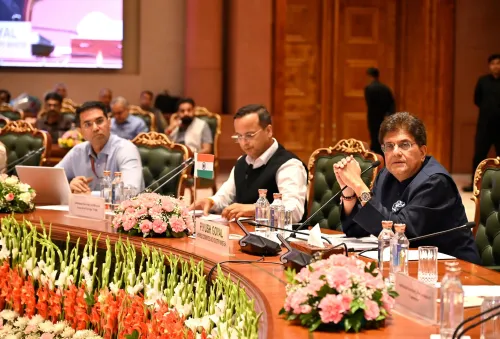
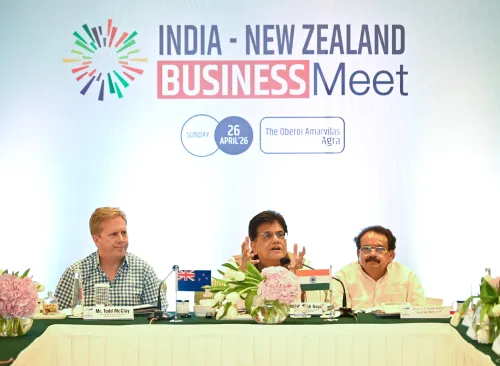
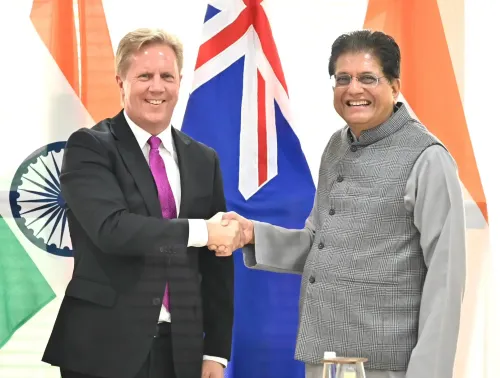
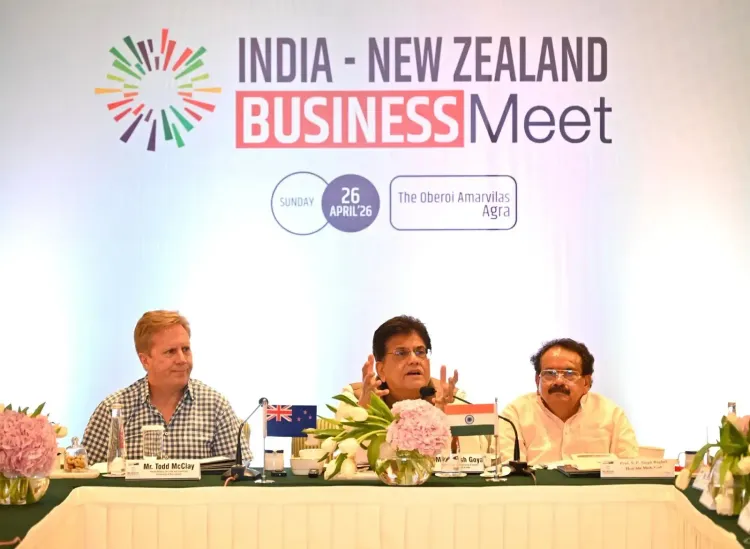
Commerce Minister Piyush Goyal and New Zealand Trade Minister Todd McClay met Agra exporters from leather, AYUSH, pharma, and other sectors on April 27, 2025 , ahead of the FTA signing.
The India-New Zealand FTA , to be signed on April 28 , will grant India 100% duty-free access on all tariff lines to New Zealand, up from a current average 10% tariff on ~450 lines.
All dairy products and farm goods have been kept out of the FTA — a major win for India's agricultural lobby.
New Zealand has committed a $20 billion investment in India over 15 years as part of the agreement.
A quota of 5,000 visas for skilled Indians in sectors including AYUSH, IT, healthcare, and construction has been included, along with 1,000 annual Working Holiday Visas .
The 'Agra: World Capital of Footwear' brand campaign was launched by Goyal to position Agra as a global sourcing and export destination.
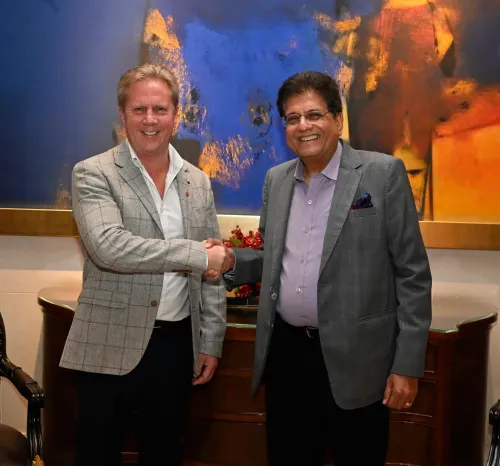
Commerce and Industry Minister Piyush Goyal and New Zealand's Minister for Trade and Investment Todd McClay held a landmark joint meeting with exporters across key sectors in Agra on Sunday, April 27, ahead of the formal signing of the India-New Zealand Free Trade Agreement (FTA) scheduled for Monday. The bilateral trade deal is set to eliminate tariffs on 100 per cent of India's exports to New Zealand, marking one of the most comprehensive trade agreements India has concluded in recent years.
Agra Exporters Get Front-Row Seat at Historic Trade Dialogue
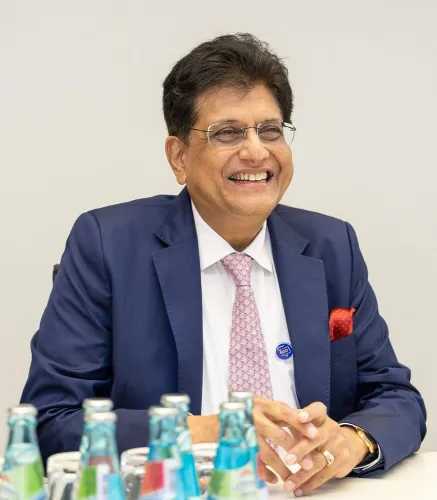
The meeting brought together industry leaders from leather and footwear, AYUSH, pharmaceuticals, medical devices, light engineering, and sports goods — all sectors where Agra holds significant production and export clout. Minister Goyal described the engagement on X (formerly Twitter) as "enriching," noting that McClay's presence underscored New Zealand's deepening strategic interest in India.
In a significant branding moment, Goyal also launched the 'Agra: World Capital of Footwear' campaign, designed to position the city as a premier global sourcing hub, spotlight its skilled artisans and women entrepreneurs, and amplify its role as an employment engine and export powerhouse. The campaign aligns with the broader Make in India and Vocal for Local narratives championed by the Narendra Modi government.
Key Provisions of the India-New Zealand FTA
The India-New Zealand FTA delivers immediate duty-free access for India on 100 per cent of tariff lines — a sharp improvement from the current scenario where New Zealand levies an average 10 per cent tariff on approximately 450 tariff lines covering Indian exports such as textiles and apparel, leather goods, headgear, ceramics, carpets, automobiles, and auto components.
On the import side, India will either sharply reduce or eliminate tariffs on 95 per cent of its imports from New Zealand. Critically, India has successfully ring-fenced its sensitive agricultural sector, keeping all dairy products — including milk, cream, whey, yoghurt, and cheese — as well as other farm products entirely outside the scope of the agreement. This is a significant win for India's politically sensitive farming community.
The FTA also includes a $20 billion investment commitment from New Zealand into India over the next 15 years — a provision structurally similar to the $100 billion investment pledge made by the European Free Trade Association (EFTA) in its own FTA with India, though analysts note that such investment commitments are aspirational targets rather than legally binding guarantees.
Mobility Provisions: A Milestone for Indian Students and Professionals
Beyond trade in goods, the India-New Zealand FTA breaks new ground in people-to-people connectivity. For the first time with any country, New Zealand has signed a dedicated Student Mobility Annex, allowing Indian students to work up to 20 hours per week while studying, along with extended post-study work visas.
A dedicated quota of 5,000 visas for skilled Indian professionals has been carved out, covering sectors including AYUSH practitioners, yoga instructors, chefs, music teachers, IT professionals, engineers, healthcare workers, educators, and construction workers, with stays of up to three years. Additionally, under the Working Holiday Visa (WHV) programme, 1,000 young Indians annually will be eligible for multi-entry access to New Zealand for up to 12 months.
Strategic Significance: Why This FTA Matters Now
Minister McClay publicly reaffirmed that India is a strategic priority for New Zealand and actively encouraged businesses on both sides to pursue joint ventures and cross-border investments. Goyal framed the agreement as consistent with Prime Minister Modi's vision of building "deeper, more enduring, and people-centred" international partnerships.
This FTA comes at a moment when India is aggressively expanding its trade treaty network — having already concluded agreements with the UAE, Australia (interim), and EFTA — as it seeks to reduce dependence on any single trading partner and diversify export destinations for its MSMEs, artisans, and manufacturers. The timing is also notable given global trade disruptions triggered by US tariff policy shifts under the Trump administration, which have pushed both India and smaller economies like New Zealand to deepen bilateral ties.
Notably, India's trade deficit with New Zealand has historically been modest, making this a relatively low-risk agreement for domestic industry — a contrast to more contentious negotiations with the EU or UK where sensitive sectors face greater competitive pressure.
What Comes Next
The formal signing of the India-New Zealand FTA is scheduled for Monday, April 28, which will set the clock ticking on ratification and implementation timelines in both countries. Indian exporters — particularly in Agra's leather and footwear cluster, one of the world's largest — stand to gain immediately from zero-tariff access, potentially accelerating export volumes and creating thousands of additional jobs. Stakeholders will now watch closely for the parliamentary ratification process in New Zealand and the notification of rules of origin and sector-specific implementation schedules on the Indian side.
Point of View
A negotiating outcome that eluded it in far larger trade talks. However, the $20 billion investment 'commitment' deserves scrutiny: similar pledges from EFTA remain largely aspirational, and New Zealand's relatively small economy raises legitimate questions about the capital's actual mobilisation timeline. What's genuinely significant is the student mobility annex — a first globally for New Zealand — which signals that India is increasingly leveraging trade deals as instruments of diaspora policy and soft power, not just goods and services. If implemented robustly, this FTA could become a template for how India negotiates with mid-sized, high-income economies going forward.
NationPress
9 Oct 2026
Frequently Asked Questions
What is the India-New Zealand FTA and when will it be signed?
The India-New Zealand Free Trade Agreement (FTA) is a bilateral trade deal that eliminates tariffs on 100% of India's exports to New Zealand and reduces or removes tariffs on 95% of India's imports from New Zealand. It is scheduled to be formally signed on Monday, April 28, 2025.
What did Piyush Goyal do in Agra ahead of the India-NZ FTA signing?
Commerce Minister Piyush Goyal met with exporters from leather, footwear, AYUSH, pharma, medical devices, and sports goods sectors in Agra on April 27, alongside New Zealand's Trade Minister Todd McClay. He also launched the 'Agra: World Capital of Footwear' brand campaign at the event.
Will dairy products be included in the India-New Zealand FTA?
No. India has successfully excluded all dairy products — including milk, cream, whey, yoghurt, and cheese — as well as other farm products from the scope of the FTA. This was a key demand from India's agricultural sector.
What visa benefits will Indians get under the India-New Zealand FTA?
The FTA provides a quota of 5,000 visas for skilled Indian professionals in sectors like AYUSH, IT, healthcare, engineering, and education for stays of up to three years. Additionally, 1,000 young Indians annually can access New Zealand under the Working Holiday Visa programme for up to 12 months.
How much will New Zealand invest in India under the FTA?
New Zealand has committed to investing $20 billion in India over 15 years as part of the FTA framework. This is structured similarly to the $100 billion investment commitment made by the European Free Trade Association in its FTA with India, though such pledges are generally aspirational targets.