India-New Zealand FTA: Duty-free access to boost MSMEs, farmers from Vijayadashami
Synopsis
India's FTA with New Zealand enters force on Vijayadashami, delivering duty-free access for all Indian exports and a $20 billion investment commitment — a rare win-win that protects dairy farmers at home while opening agricultural and professional markets abroad. Concluded in roughly 18 months, it is among India's fastest recent trade deal closures.
Key Takeaways
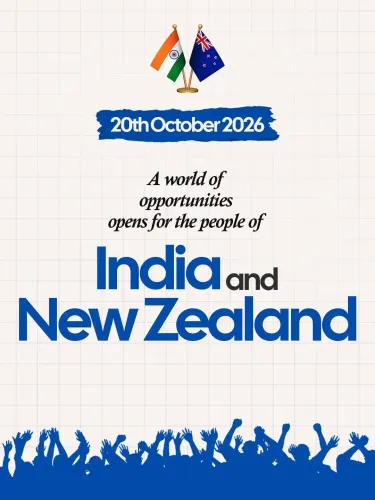
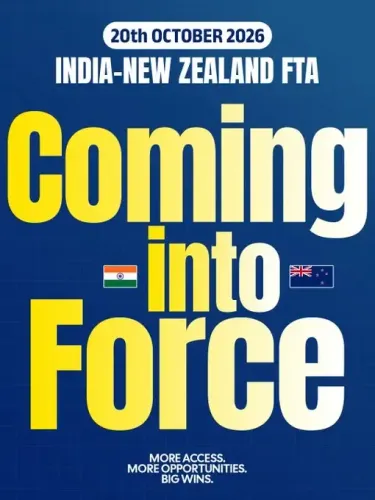
The India-New Zealand FTA enters into force on Vijayadashami 2025 , announced by Commerce Minister Piyush Goyal .
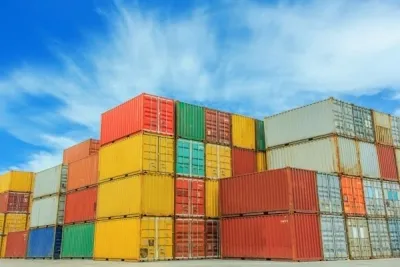
The agreement grants duty-free access for 100 per cent of Indian exports to New Zealand.
MSMEs , farmers, women, youth, and labour-intensive sectors are identified as primary beneficiaries.
Sensitive sectors, including dairy , remain protected under the agreement.
New Zealand has committed to facilitating $20 billion in investment into India across manufacturing, infrastructure, and services.
Negotiations were launched in March 2024 , making this one of India's faster bilateral FTA conclusions.
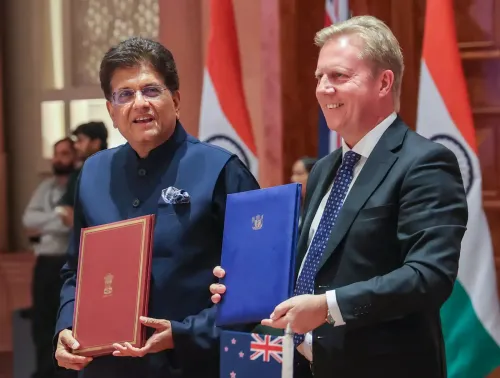
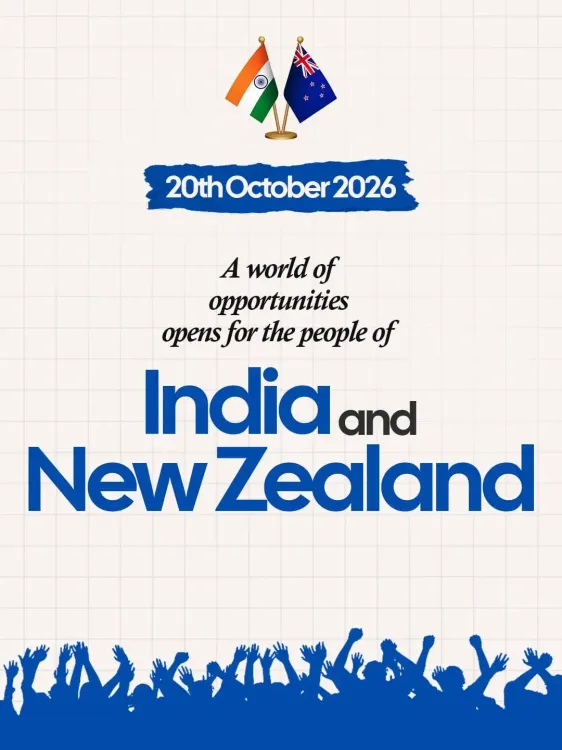
Commerce Minister Piyush Goyal on Monday, 19 October 2025, announced that the India-New Zealand Free Trade Agreement (FTA) will come into force on Vijayadashami, opening duty-free access for 100 per cent of Indian exports to New Zealand and unlocking significant opportunities for MSMEs, farmers, women, youth, and labour-intensive sectors. The minister made the announcement in a post on his X handle, calling the development a Vijay for both nations.
What the FTA Delivers for India
The agreement grants Indian exporters complete duty-free access to the New Zealand market, a landmark that trade observers note is rare in bilateral FTAs of this scale. India's farmers stand to gain wider market access for fruits, vegetables, spices, and other agricultural produce, supported by cooperation mechanisms aimed at improving productivity and raising farm incomes.
Critically, the minister pointed out that sensitive sectors, including dairy, remain protected — a provision that addresses long-standing concerns among Indian farming communities about import competition from New Zealand's dairy industry, one of the world's most competitive.
New Zealand's $20 Billion Investment Commitment
Beyond trade in goods, New Zealand has committed to facilitating $20 billion in investment into India, targeting manufacturing, infrastructure, services, and innovation. Goyal described this as holding immense potential
to support enterprise and employment across the country. The agreement also opens new pathways for Indian professionals seeking opportunities in New Zealand, expanding the services and mobility dimension of the partnership.
Political Attribution and Leadership Credit
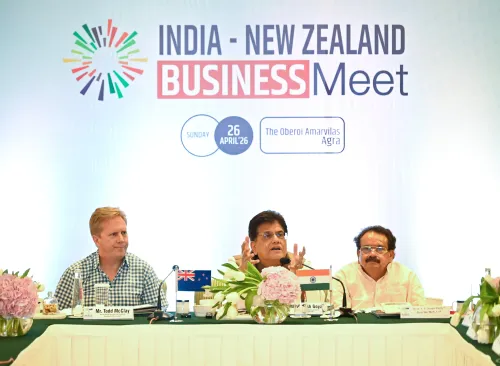
The minister credited the agreement to the vision of Prime Minister Narendra Modi and New Zealand Prime Minister Chris Luxon, describing it as a historic milestone built on strong bilateral leadership. He also formally thanked New Zealand Trade Minister Todd McClay and the negotiating teams of both countries for their sustained efforts. According to Goyal, the journey from the launch of negotiations in March last year to entry into force on Vijayadashami reflects mutual trust and a commitment to delivering a balanced, mutually beneficial outcome.
Timeline and What Comes Next
Negotiations were launched in March 2024, making this one of the faster FTA conclusions in India's recent trade diplomacy. The agreement enters into force on Vijayadashami 2025, giving exporters, businesses, and MSMEs an immediate green light to leverage its provisions. Goyal urged Indian businesses to make full use of this agreement, build lasting partnerships and translate its potential into tangible gains.
Industry bodies are expected to issue sector-specific guidance in the weeks ahead as enterprises begin mapping tariff schedules and investment pathways under the new framework.
Point of View
However, is a commitment to 'facilitate' rather than a guaranteed inflow, and past bilateral investment pledges to India have had patchy conversion rates. The dairy carve-out is politically astute but also a reminder that India's FTA architecture continues to prioritise domestic agricultural sensitivities over full liberalisation — a pattern that limits the depth of market integration even when headlines look ambitious. Whether MSMEs, the stated primary beneficiaries, have the export infrastructure to actually capture duty-free access at scale remains the real test.
NationPress
19 Oct 2026
Frequently Asked Questions
What is the India-New Zealand FTA and when does it come into force?
The India-New Zealand Free Trade Agreement is a bilateral trade deal granting duty-free access for 100 per cent of Indian exports to New Zealand, along with a $20 billion investment facilitation commitment from New Zealand. It comes into force on Vijayadashami 2025, following the launch of negotiations in March 2024.
Who benefits most from the India-New Zealand FTA?
Commerce Minister Piyush Goyal identified MSMEs, farmers, women, youth, and workers in labour-intensive sectors as the primary beneficiaries. Indian farmers gain wider market access for fruits, vegetables, and spices, while Indian professionals gain new pathways to work in New Zealand.
Is India's dairy sector protected under the FTA?
Yes. Sensitive sectors, including dairy, remain protected under the agreement. This was a key domestic concern given New Zealand's globally competitive dairy industry, and the government has preserved import safeguards for Indian dairy farmers.
What is New Zealand's investment commitment under the FTA?
New Zealand has committed to facilitating $20 billion in investment into India, targeting manufacturing, infrastructure, services, and innovation. The minister described this as holding immense potential to support enterprise and employment across India.
How quickly was the India-New Zealand FTA negotiated?
Negotiations were launched in March 2024, and the agreement enters into force in October 2025 — a span of roughly 18 months. Commerce Minister Piyush Goyal credited this pace to mutual trust and the sustained efforts of negotiating teams on both sides.