CM Saini Inaugurates Rakhigarhi Mahotsav 2026
Synopsis
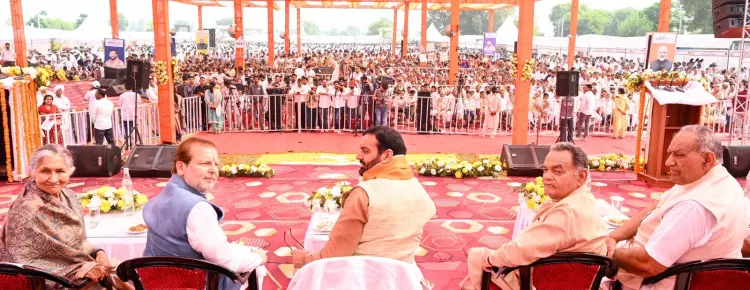
Haryana Chief Minister Nayab Singh Saini inaugurated the Rakhigarhi Mahotsav 2026 at one of the Indus Valley Civilization's largest known sites near Hansi, pledging continued conservation efforts and calling on youth to carry the site's authentic story to the world.
Key Takeaways
Nayab Singh Saini inaugurated the Rakhigarhi Mahotsav 2026 on 19 October 2026 at the Indus Valley site near Hansi, Hisar district, Haryana .
Rakhigarhi is among the largest known sites of the Indus Valley Civilization , with evidence of urban planning, craft, agriculture, and community systems dating back roughly 5,000 years.
CM Saini called on Haryana's youth to spread the 'authentic story' of Rakhigarhi nationally and internationally.
The festival highlights the Saraswati-Indus Civilization narrative, a framing the Haryana government has emphasised in its heritage programming.
The state government reaffirmed continuous conservation and tourism development efforts at the site, building on initiatives pursued since the 2010s.
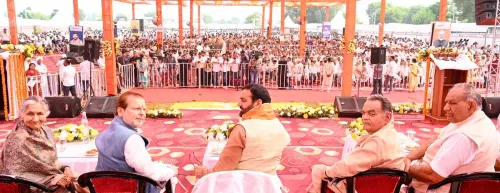
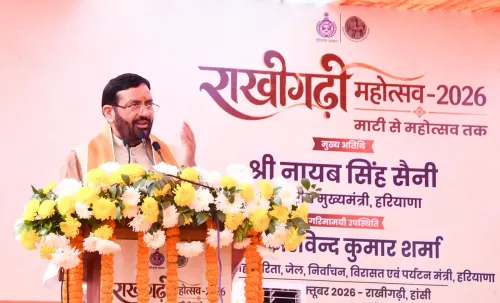
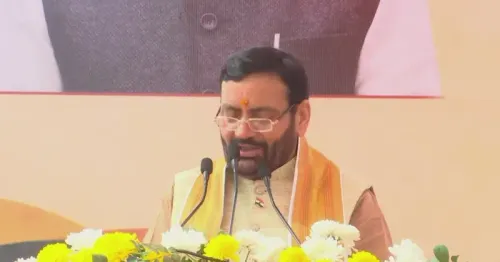
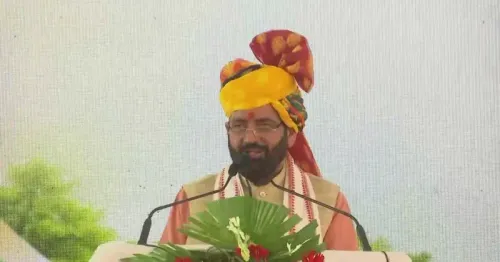
At one of the oldest urban settlements on earth, Haryana Chief Minister Nayab Singh Saini on Monday, 19 October 2026 inaugurated the Rakhigarhi Mahotsav 2026 — a cultural festival anchored at the sprawling Indus Valley Civilization site near Hansi in Hisar district — and called it an occasion to 'recognise one's own roots.'
A 5,000-Year-Old Stage for a Modern Festival
Rakhigarhi is not simply another heritage address. Spread across multiple mounds near Hansi, it is among the largest known sites of the Indus Valley — or Harappan — Civilization, predating Rome, and its excavated remains have yielded evidence of sophisticated town-planning, craft production, agricultural systems, and communal organisation stretching back roughly five millennia. In his post on X, Saini described the land as carrying 'the priceless story of the evolution of human life, craft, art, agriculture, and community systems.'
The Mahotsav is designed to translate that buried story into a living public experience — connecting the site's archaeology to contemporary Haryana's identity and economy.
Youth as Storytellers of Rakhigarhi
A notable emphasis in the Chief Minister's message was on young people. 'Our effort is that youth carry the authentic story of Rakhigarhi to the country and the world,' Saini wrote — framing the festival not just as a tourism event but as a cultural-education mission. The explicit word 'authentic' is pointed: Rakhigarhi sits at the centre of ongoing scholarly and political debates about the relationship between the Indus Civilization and the ancient Saraswati river system, a narrative the Haryana government has long sought to foreground, as reflected in the festival's hashtags #IndusValleyCivilization and #SaraswatiIndusCivilization.
Conservation Push Alongside the Celebration
Beyond the festival, Saini underlined that his government is making 'continuous efforts for the conservation and development of this historical site alongside promoting tourism.' Haryana has pursued site-development initiatives at Rakhigarhi since the 2010s, including proposals for interpretation centres and a dedicated site museum. State-organised heritage festivals at Indus Valley locations have become a wider pattern across northwest India, used simultaneously to animate domestic tourism and bring younger audiences into conversations about deep civilizational history. Rakhigarhi, given its scale, sits at the apex of that strategy for Haryana.
With the Mahotsav now launched, the focus turns to whether the announced conservation and development works translate into tangible progress — and whether the festival builds the kind of international footprint the Chief Minister is signalling as the goal.
Five thousand years of urban civilisation as a backdrop; the question now is how much of that inheritance the festival infrastructure can actually open to the world.
Point of View
The Haryana government is making a civilizational argument that links modern Haryanvi identity directly to one of history's great urban cultures. The emphasis on youth as storytellers signals an intent to build a long-term constituency for this narrative, not just a one-off event. Whether the conservation infrastructure keeps pace with the festival's ambitions will be the real test of the state's commitment.
NationPress
19 Oct 2026
Frequently Asked Questions
What is the Rakhigarhi Mahotsav 2026?
The Rakhigarhi Mahotsav 2026 is a cultural festival inaugurated by Haryana Chief Minister Nayab Singh Saini on 19 October 2026 at the Rakhigarhi archaeological site near Hansi in Hisar district, aimed at promoting the history, crafts, and heritage of the Indus Valley Civilization site.
Where is Rakhigarhi located and why is it significant?
Rakhigarhi is located near Hansi in Hisar district, Haryana. It is one of the largest known sites of the Indus Valley Civilization, with excavated remains showing advanced town planning, craft production, agricultural practices, and community organisation dating back approximately 5,000 years.
What did CM Nayab Singh Saini say at the Rakhigarhi Mahotsav inauguration?
CM Saini described the festival as an occasion to 'recognise one's own roots' and called on Haryana's youth to carry the 'authentic story' of Rakhigarhi to the country and the world. He also reaffirmed his government's commitment to the conservation and tourism development of the site.
What is the Haryana government doing to preserve Rakhigarhi?
The Haryana government has been pursuing conservation and development initiatives at Rakhigarhi since the 2010s, including proposals for a site museum and interpretation centres. CM Saini reiterated at the 2026 Mahotsav that these efforts are ongoing.
What is the Saraswati-Indus Civilization connection to Rakhigarhi?
Rakhigarhi is situated in a region the Haryana government associates with the ancient Saraswati river system, linking the Indus Valley Civilization to this river's cultural legacy. This narrative, reflected in the festival's hashtags, is central to how the state frames Rakhigarhi's historical significance.