Giriraj Singh: DBT transfers ₹53.79 lakh crore since 2014

Synopsis
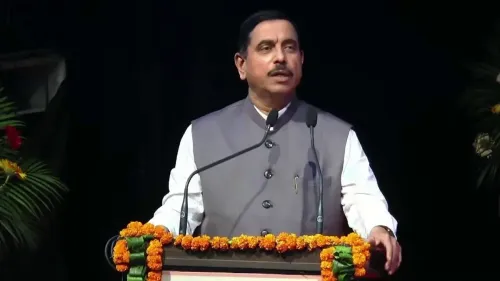
Union Textiles Minister Giriraj Singh highlighted that India's Direct Benefit Transfer system has routed ₹53.79 lakh crore directly to beneficiaries since 2014, crediting the mechanism with eliminating middlemen and boosting transparency in welfare delivery.
Key Takeaways
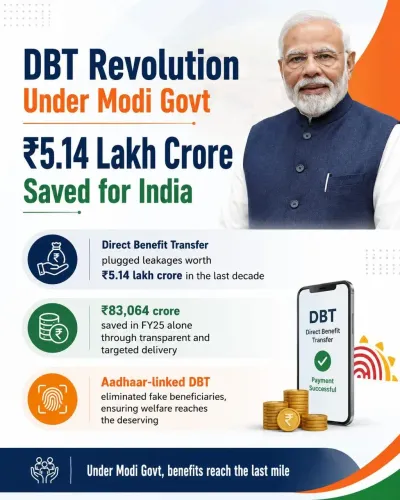
₹53.79 lakh crore has been transferred directly to beneficiaries via DBT since 2014 , according to Minister Giriraj Singh.
The DBT mechanism links Aadhaar , Jan Dhan bank accounts and mobile platforms — the so-called JAM trinity — to route welfare payments without intermediaries.
Singh specifically cited the elimination of middlemen ( bichauliyon ki bhumika samapt ) as a key transparency gain.
DBT covers a wide range of schemes including farm income support, LPG subsidies, scholarships and wage payments.
Independent verification of the cumulative figure through CAG audits and upcoming Finance Ministry disclosures remains a key watchpoint.
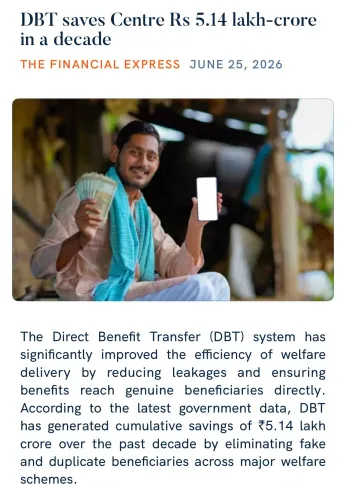
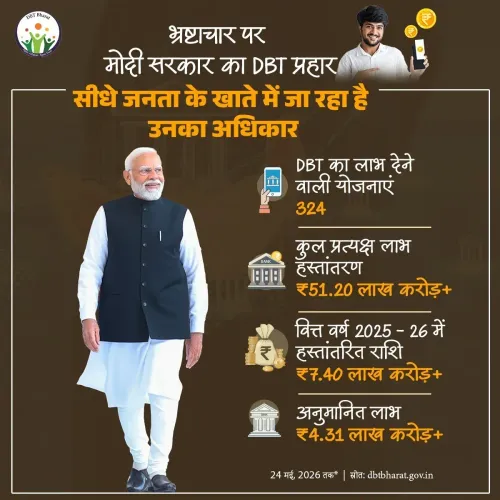
Twelve years of bypassing the middleman, and the numbers are now staggering. Union Textiles Minister Giriraj Singh on Monday, 19 October 2026 highlighted that the Direct Benefit Transfer (DBT) mechanism has channelled ₹53.79 lakh crore directly into beneficiaries' bank accounts since 2014 — a figure that underscores how comprehensively India rewired its welfare architecture.
Posting in Hindi on X, Singh wrote that DBT is delivering the benefits of government schemes straight to beneficiaries' accounts, that the system has increased transparency, and that the role of middlemen has been eliminated — 'बिचौलियों की भूमिका समाप्त हुई है' ('the role of intermediaries has been ended').
The JAM trinity that made ₹53.79 lakh crore possible
DBT's scale did not emerge from a single policy order — it was built on the convergence of three pillars. The Jan Dhan financial inclusion drive opened bank accounts for hundreds of millions of previously unbanked Indians. Aadhaar gave each account a biometric identity anchor. Mobile connectivity closed the last mile. Together, the JAM trinity transformed DBT from a pilot into the backbone of welfare delivery across dozens of central ministries.
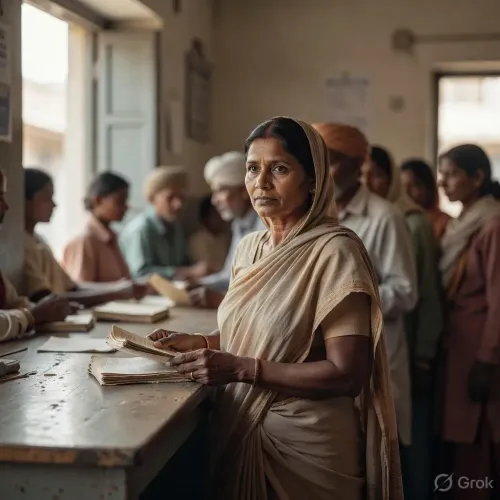
Before this architecture existed, subsidy money passed through layers of state agencies, local bodies, and individual distributors — each layer a potential point of leakage, diversion, or delay. The government's consistent argument since 2014 has been that every rupee arriving directly in a beneficiary's account is a rupee that cannot be skimmed.
Why ₹53.79 lakh crore is a governance argument, not just a statistic
The figure — roughly ₹53.79 lakh crore, or approximately $6.4 trillion at current exchange rates — spans everything from PM-KISAN farm support and LPG subsidy transfers to scholarship payments and MGNREGS wages. Each category once ran its own paper trail, its own roster of intermediaries. Collapsing them into a single digital pipeline is the administrative achievement the government is foregrounding.
Singh's post arrives as fiscal efficiency remains a live debate: with welfare spending under constant scrutiny from both economists and opposition benches, the DBT record is the BJP's sharpest answer to questions about whether spending reaches the intended beneficiary.
What independent scrutiny will look for next
The cumulative transfer number is drawn from the government's own DBT portal, and independent audits — including Comptroller and Auditor General (CAG) reports — periodically examine whether all transactions flagged as DBT actually reached verified beneficiaries without duplication or ghost accounts. Upcoming Ministry of Finance disclosures and the next budget cycle's DBT expansion announcements will test whether the headline figure holds up under detailed scrutiny.
Twelve years in, DBT is no longer a pilot programme or an ambition — it is India's default welfare plumbing. The question now is not whether the pipe exists, but how much of what flows through it lands where it is meant to.
Point of View
Invoked across ministries precisely because it converts the intangible promise of 'less corruption' into a trackable number. The ₹53.79 lakh crore headline will circulate widely, but its political potency depends on whether audit institutions confirm the leakage-reduction story in granular detail — a test the government has so far navigated by controlling the primary data. As India heads into the next budget cycle, expect DBT expansion announcements to front-load the fiscal efficiency argument again.
NationPress
19 Oct 2026
Frequently Asked Questions
What is DBT (Direct Benefit Transfer) in India?
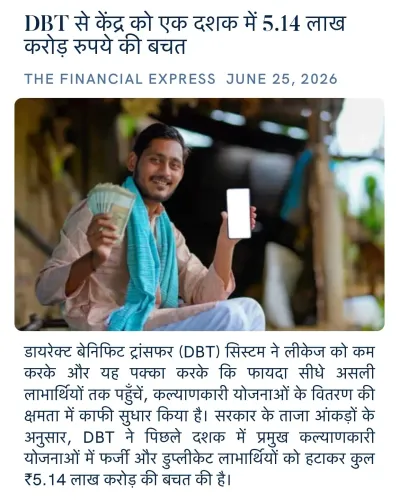
DBT is a government system that routes welfare subsidies and payments directly into beneficiaries' Aadhaar-linked bank accounts, bypassing intermediaries to reduce leakages and improve targeting.
How much money has been transferred through DBT since 2014?
According to Union Textiles Minister Giriraj Singh, ₹53.79 lakh crore has been transferred directly to beneficiaries via DBT since 2014 .
What is the JAM trinity and how does it relate to DBT?
The JAM trinity refers to Jan Dhan bank accounts, Aadhaar biometric identity, and Mobile connectivity. Together they form the infrastructure that makes large-scale DBT delivery possible.
Which schemes use Direct Benefit Transfer in India?
DBT covers dozens of central schemes including PM-KISAN farm income support, LPG cooking-gas subsidies, MGNREGS wage payments, and scholarship disbursements, among others.
Does the CAG audit DBT transfers?
Yes, the Comptroller and Auditor General (CAG) periodically examines DBT transactions to check for duplicate beneficiaries, ghost accounts, and whether funds reached verified recipients.