Rijiju Backs DBT as Modi Govt's Anti-Corruption Shield
Synopsis
Union Minister Kiren Rijiju on 25 May 2026 hailed Direct Benefit Transfer as the Modi government's hallmark of transparency, saying DBT has eliminated middlemen and ensures welfare scheme benefits reach citizens' bank accounts directly.
Key Takeaways
Kiren Rijiju , Union Parliamentary Affairs Minister, publicly championed DBT as a symbol of the Modi government's transparency on 25 May 2026 .
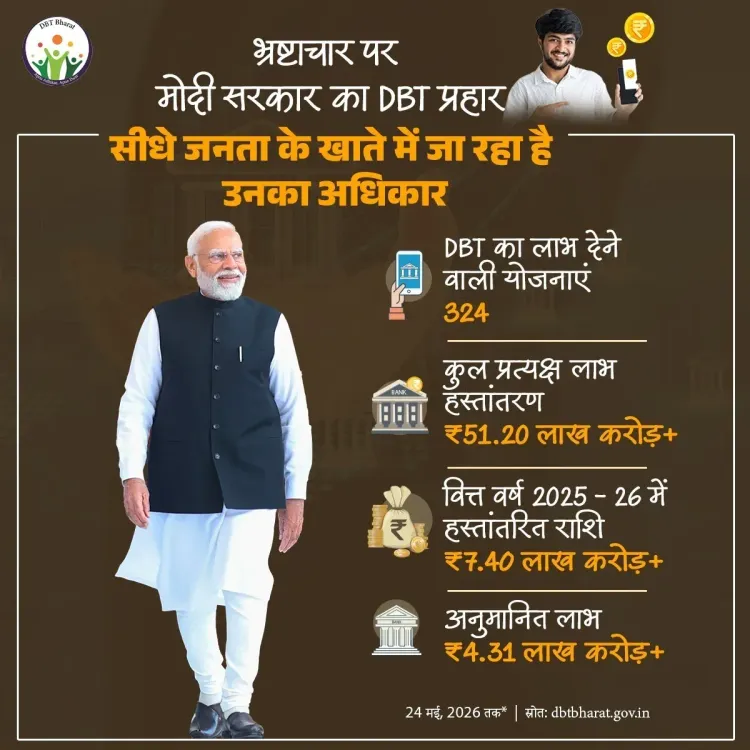
Direct Benefit Transfer was launched in 2013 with pilots in 20 districts and has since been extended to over 300 central schemes .
The JAM Trinity — Jan Dhan, Aadhaar, Mobile — underpins DBT's authentication and last-mile delivery infrastructure.
Rijiju framed DBT as a direct strike against corruption and the elimination of intermediaries from welfare distribution.
Parliamentary scrutiny of DBT coverage data and new scheme notifications is expected in the upcoming monsoon session .
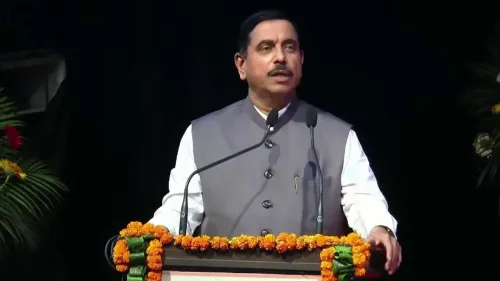
Union Parliamentary Affairs Minister Kiren Rijiju on Monday, 25 May 2026, championed the Direct Benefit Transfer (DBT) scheme as a defining symbol of transparency under the Modi government, asserting that it has eliminated middlemen and directly delivered welfare entitlements into the bank accounts of ordinary citizens.
Posting in Hindi on X, Rijiju wrote: 'DBT: मोदी सरकार की पारदर्शिता का पर्याय' ('DBT: a synonym for the Modi government's transparency'), adding that the mechanism represents 'a strike against corruption and freedom from middlemen.' He stated that government scheme benefits and entitlements are now reaching people's accounts directly through DBT.
Context
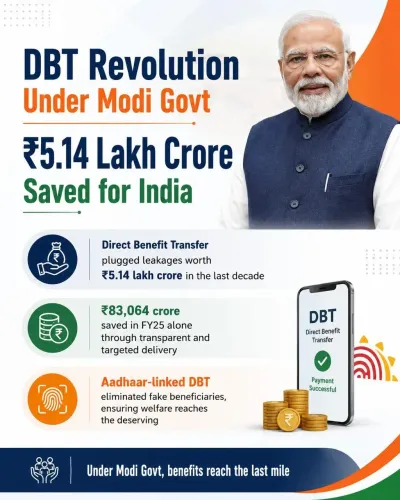
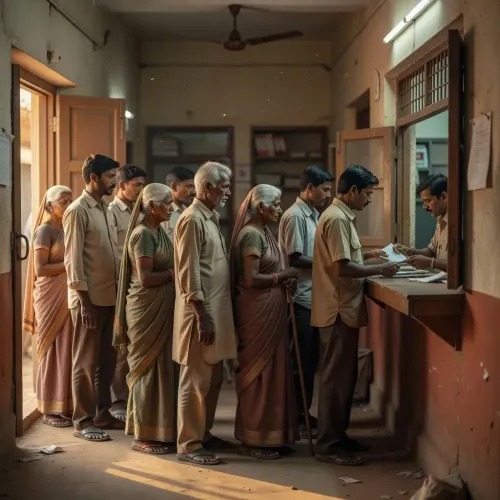
Direct Benefit Transfer was formally launched in 2013 with pilots across 20 districts before a nationwide rollout. The programme uses Aadhaar-linked bank accounts to route subsidies and cash transfers, bypassing the intermediary chains that historically siphoned off a significant share of welfare funds.
The JAM Trinity — Jan Dhan, Aadhaar, and Mobile — introduced in 2014–15, became the backbone of this delivery architecture, enabling authentication and last-mile disbursal at scale across food, fuel, fertiliser, and direct cash-transfer programmes.
Policy Backdrop
Since 2014, successive Union Budgets have progressively expanded DBT coverage to over 300 central schemes, making it one of the most extensive digital-governance interventions in the world. The stated objective has consistently been to improve targeting, reduce leakages, and ensure that benefits reach the intended beneficiary without diversion.
Financial inclusion through Jan Dhan accounts — which crossed 50 crore enrolments — gave DBT the last-mile banking infrastructure it required. Together, these reforms positioned India's welfare delivery system as a model of Aadhaar-linked, technology-driven governance.
Stakeholders and Impact
The primary beneficiaries of DBT are subsidy recipients and welfare-scheme enrollees across rural and urban India, spanning programmes in agriculture, health, education, and social security. By removing intermediaries, the government has argued that each rupee allocated reaches its intended destination rather than being absorbed in administrative or corrupt channels.
Critics and independent researchers have over the years flagged implementation gaps — including exclusion errors linked to Aadhaar authentication failures — but the broad political consensus across the spectrum acknowledges DBT's role in modernising subsidy delivery. Rijiju's post reinforces the ruling party's narrative that digital governance is central to its anti-corruption credentials ahead of the upcoming monsoon session of Parliament.
What's Next
Parliamentary questions on DBT coverage figures, cumulative transfer amounts, and fresh scheme notifications are expected to feature prominently in the monsoon session. The government is likely to use updated DBT data as a performance benchmark, and Rijiju — as Union Parliamentary Affairs Minister — will be central to managing the legislative calendar through which such accountability debates are scheduled.
As the Modi government continues to frame DBT as both a governance achievement and a political differentiator, the scheme's expansion and audit outcomes will remain a key metric for evaluating welfare delivery credibility in the years ahead.
Point of View
Reinforcing the BJP's long-standing narrative that DBT is the most tangible proof of its anti-corruption credentials. By invoking transparency and the elimination of middlemen, the minister is pre-positioning the party ahead of the monsoon session, where opposition benches are likely to press on welfare delivery gaps. The framing also signals that DBT will continue to be a centrepiece of the government's political communication rather than merely an administrative tool. In a broader arc, this reflects the ruling coalition's consistent strategy of converting digital-governance metrics into electoral and parliamentary capital.
NationPress
15 Sept 2026
Frequently Asked Questions
What is Direct Benefit Transfer (DBT) in India?
Direct Benefit Transfer is a central government mechanism that transfers subsidies and welfare scheme benefits directly into beneficiaries' Aadhaar-linked bank accounts, bypassing intermediaries. It was formally launched in 2013 and now covers over 300 central schemes.
What did Kiren Rijiju say about DBT?
On 25 May 2026, Union Minister Kiren Rijiju posted on X calling DBT 'a synonym for the Modi government's transparency' and said it represents a strike against corruption by eliminating middlemen and routing benefits directly to citizens' accounts.
How does DBT reduce corruption in welfare schemes?
DBT removes human intermediaries from the subsidy chain by using Aadhaar authentication and direct bank transfers, which reduces opportunities for diversion or siphoning of funds before they reach the intended beneficiary.
What is the JAM Trinity and how does it relate to DBT?
The JAM Trinity — Jan Dhan bank accounts, Aadhaar biometric identity, and Mobile connectivity — was introduced in 2014-15 and forms the technological backbone that enables DBT authentication and last-mile delivery across welfare programmes.
Which schemes use Direct Benefit Transfer in India?
DBT covers over 300 central government schemes spanning food subsidies, fertiliser subsidies, fuel (LPG), agricultural support, health, education, and social-security cash transfers, making it one of the world's largest digital welfare-delivery systems.