Kishan Reddy: DBT saved ₹5.14 lakh crore in a decade
Synopsis
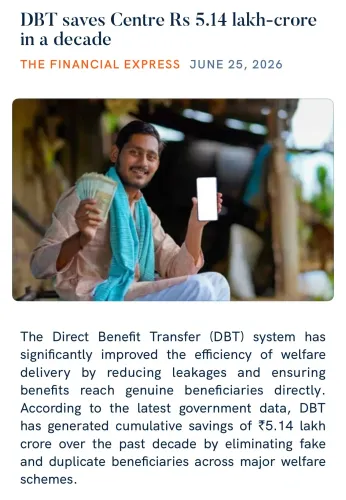
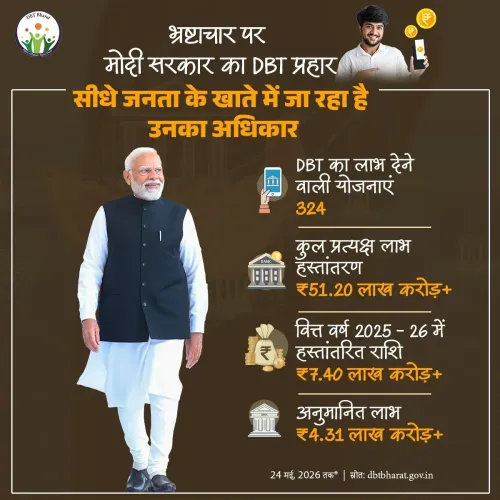
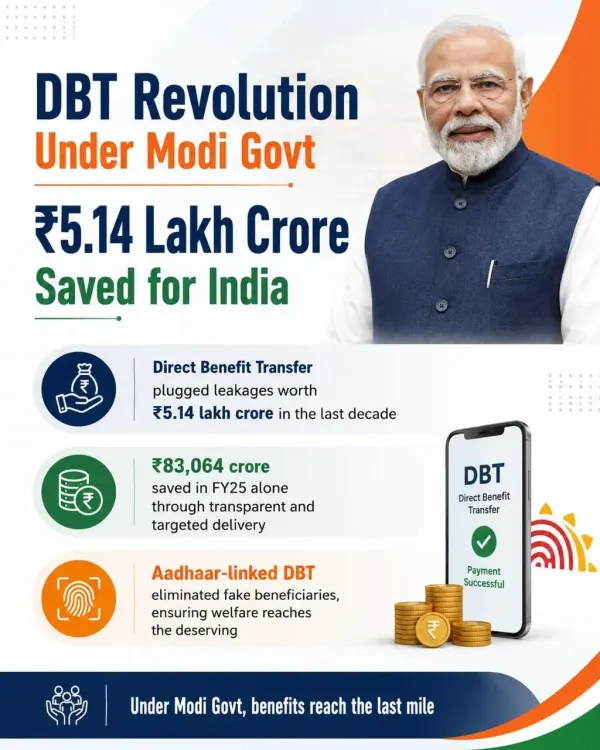
Union Minister G. Kishan Reddy has highlighted that India's Direct Benefit Transfer programme, backed by Aadhaar integration and the JAM trinity, has saved ₹5.14 lakh crore over the last decade by cutting out middlemen and plugging welfare leakages under PM Modi's government.
Key Takeaways
Kishan Reddy credited DBT with saving ₹5.14 lakh crore for India over the last decade.
DBT pilots began in 2013 for LPG subsidies and were scaled nationally after 2014 using the JAM trinity .
Aadhaar biometric integration enabled deduplication, removing ghost beneficiaries from welfare rolls across hundreds of central schemes.
The Digital India programme launched in 2015 provided the e-governance backbone for DBT's nationwide expansion.
DBT now covers schemes spanning food, fuel, scholarships, pensions, and rural employment, making it one of the world's largest direct-transfer systems.
An independent CAG audit of DBT leakage reduction across schemes is flagged as a key accountability benchmark going forward.
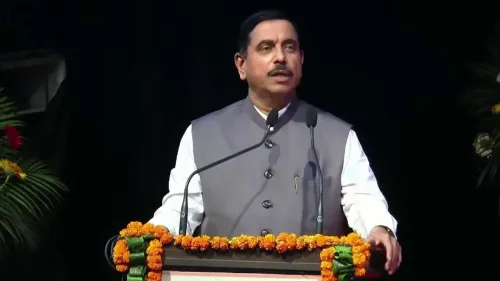
Union Coal and Mines Minister and BJP Telangana president G. Kishan Reddy on Sunday, 5 July 2026, credited the Direct Benefit Transfer (DBT) programme under Prime Minister Narendra Modi with eliminating welfare leakages and saving the nation ₹5.14 lakh crore over the last decade through technology-driven, middleman-free delivery.
Context
In his post, Reddy described DBT as a 'transformational shift' in India's welfare delivery system, stating that the combination of Aadhaar integration, direct bank transfers, and digital infrastructure has ensured 'every rupee reaches the rightful beneficiary without middlemen, without delays.' He framed the programme as the cornerstone of what he called 'New India's model of accountability and empowerment.'
The minister's remarks come as part of a broader BJP communication push highlighting governance achievements ahead of the next electoral cycle. The ₹5.14 lakh crore savings figure, cited by the government as cumulative leakage prevention over roughly ten years, has been referenced in successive union budgets and economic surveys as a marker of fiscal efficiency.
Policy Backdrop
DBT pilots were first launched in 2013 for LPG subsidies and select central schemes before being scaled nationally after 2014. The programme was anchored to the JAM trinity — Jan Dhan bank accounts, Aadhaar biometric IDs, and Mobile connectivity — which the Modi government promoted from 2014–15 to create a seamless pipeline from treasury to beneficiary.
Aadhaar's legal standing was reinforced by a Supreme Court ruling and subsequent legislation, accelerating its integration with welfare databases across ministries. The Digital India programme, launched in 2015, provided the broader e-governance architecture within which DBT expanded from food and fuel subsidies to scholarships, pensions, and rural employment payments.
Today, DBT spans hundreds of central schemes across ministries, making it one of the largest direct-transfer architectures in the world by volume of transactions.
Stakeholders and Impact
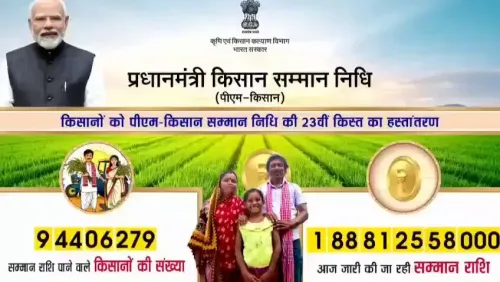
The primary beneficiaries are hundreds of millions of Indians enrolled in central welfare schemes — from LPG subsidy recipients and MGNREGS workers to students receiving scholarships and farmers under PM-KISAN. By removing intermediaries, the system is designed to reduce both administrative corruption and the time lag between fund release and receipt.
Subsidy administrators and state governments have had to align their databases with Aadhaar-seeded bank accounts, a process that initially generated controversy over exclusions but is now largely standardised. Civil society groups have noted that while deduplication removed ghost beneficiaries, some genuine beneficiaries were also initially excluded due to biometric mismatches — an implementation challenge the government has addressed through grievance redressal mechanisms.
What's Next
The government's own DBT Mission under the Cabinet Secretariat is expected to release updated annual performance data that will either corroborate or revise the ₹5.14 lakh crore cumulative savings estimate. A performance audit by the Comptroller and Auditor General (CAG) examining leakage reduction across additional schemes would provide an independent benchmark for the claims being made.
As digital public infrastructure matures, the next frontier for DBT is likely to involve real-time grievance resolution, enhanced last-mile connectivity in remote areas, and potential extension to urban welfare programmes — areas that will test whether the efficiency gains seen in flagship schemes can be replicated at scale across a wider beneficiary base.
Point of View
Deploying a large rupee figure to anchor a narrative of technocratic accountability ahead of electoral cycles. The ₹5.14 lakh crore savings claim, while sourced from government estimates, awaits independent verification through a CAG audit, which gives the Opposition a ready counter-argument about self-reported metrics. More broadly, the DBT framing positions the Modi government's digital infrastructure investments — JAM trinity, Aadhaar, Digital India — as a unified legacy rather than discrete programmes, reinforcing a 'New India' brand of governance. The political salience of this message is highest in states like Telangana, where Reddy leads the BJP, and where welfare delivery credibility directly contests the ruling party's social-scheme narrative.
NationPress
5 Oct 2026
Frequently Asked Questions
What is Direct Benefit Transfer (DBT) in India?
Direct Benefit Transfer is a central government mechanism that routes subsidies and welfare payments directly into the bank accounts of verified beneficiaries using Aadhaar-linked data, bypassing intermediaries to reduce leakages and delays.
How much money has DBT saved India?
The government claims DBT has saved approximately ₹5.14 lakh crore over the last decade by eliminating ghost beneficiaries and middlemen; this figure is sourced from government estimates and has not yet been independently verified by a CAG audit.
What is the JAM trinity?
The JAM trinity stands for Jan Dhan bank accounts, Aadhaar biometric identification, and Mobile connectivity — the three pillars promoted from 2014–15 to enable seamless direct transfer of welfare benefits to citizens.
When did DBT start in India?
DBT pilots began in 2013 under the LPG subsidy programme and select central schemes, before being significantly expanded and institutionalised after 2014 under the Modi government.
What is G. Kishan Reddy's current role?
G. Kishan Reddy is the Union Minister of Coal and Mines in the Government of India and also serves as the BJP's Telangana state president.