Kishan Reddy highlights DBT saving Centre Rs 5.14 lakh crore
Synopsis
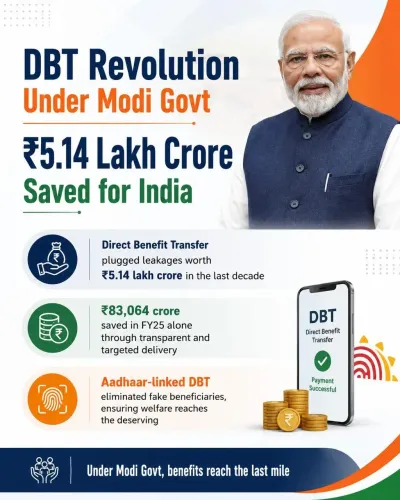
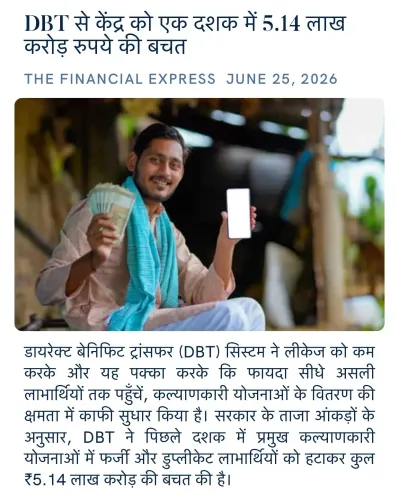
Union Coal and Mines Minister G. Kishan Reddy has highlighted government data claiming the Direct Benefit Transfer scheme saved the Centre Rs 5.14 lakh crore over a decade by routing welfare payments directly to beneficiaries via Aadhaar, cutting intermediary leakages across LPG, fertiliser, and rural wage programmes.
Key Takeaways
Kishan Reddy shared the DBT savings figure of Rs 5.14 lakh crore on June 25, 2026 via the NaMo App.
Direct Benefit Transfer was launched in 2013 with the PAHAL LPG subsidy scheme and has since expanded across dozens of central welfare programmes.
The JAM Trinity — Jan Dhan, Aadhaar, Mobile — forms the technological backbone enabling DBT's deduplication and direct-transfer capabilities.
Savings are attributed to elimination of ghost beneficiaries and reduced diversion across schemes covering LPG, fertilisers, foodgrains , and rural wages.
Critics have flagged exclusion errors where genuine beneficiaries face authentication failures, an issue that remains under policy review.
The DBT Mission under the Cabinet Secretariat is expected to release updated savings data in upcoming progress reports and the next Economic Survey.
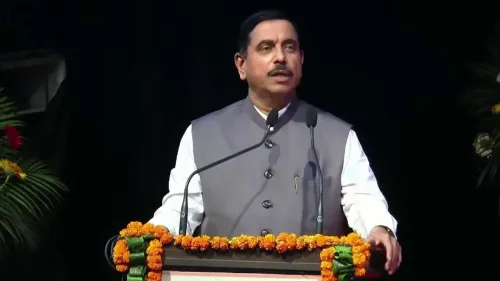
Union Coal and Mines Minister G. Kishan Reddy on Thursday, June 25, 2026, shared data claiming that the Direct Benefit Transfer (DBT) scheme has saved the central government Rs 5.14 lakh crore over a decade, amplifying the figure as evidence of the Modi government's digital welfare delivery model.
Context
The post, shared via the NaMo App, highlights cumulative savings attributed to DBT — a mechanism that routes government subsidies and welfare payments directly into beneficiaries' bank accounts using Aadhaar-based authentication, bypassing intermediaries. The figure cited spans roughly a decade of DBT operations, underscoring the scale of the programme's fiscal impact as claimed by the government.
DBT was formally launched in 2013 with the PAHAL LPG subsidy scheme, initially targeting cooking-gas subsidies before expanding across dozens of central welfare programmes. Kishan Reddy's post frames the savings as a direct outcome of reduced leakage and diversion in public expenditure.
Policy Backdrop
The JAM Trinity — Jan Dhan bank accounts, Aadhaar biometric identity, and Mobile connectivity — was formalised as a policy framework in the 2014-15 Union Budget to accelerate DBT rollout across ministries. The architecture links welfare beneficiaries to verified identities and bank accounts, enabling real-time fund transfers while deduplicating ghost and duplicate entries from beneficiary rolls.
Since then, successive government reports have cited annual and cumulative DBT savings as a core metric of fiscal efficiency, covering schemes related to LPG, fertilisers, foodgrains, and rural wages under programmes such as MGNREGS. Prime Minister Narendra Modi's administration has consistently presented DBT expansion as a pillar of its 'minimum government, maximum governance' agenda.
Stakeholders and Impact
The central exchequer is the primary beneficiary of the savings cited, with reduced fund diversion freeing up resources that would otherwise be lost to leakages in the subsidy chain. For the crores of beneficiaries enrolled across DBT-linked schemes, direct transfers have reduced dependence on local intermediaries and improved payment certainty.
Civil society assessments of DBT have been mixed: proponents credit the system with dramatically cutting ghost beneficiaries, while critics have raised concerns about exclusion errors — genuine beneficiaries denied transfers due to Aadhaar authentication failures or bank account mismatches. Both dimensions remain active areas of policy scrutiny.
What's Next
The DBT Mission, housed under the Cabinet Secretariat, periodically publishes updated progress reports, and the next Economic Survey is expected to carry fresh savings aggregates. Policymakers are also examining the expansion of DBT architecture to additional state-level welfare schemes, which could push cumulative savings figures higher in the years ahead.
As India's digital public infrastructure matures, the government's ability to demonstrate verifiable fiscal outcomes from programmes like DBT will be central to building the case for further technology-led welfare reform — a narrative Kishan Reddy's post actively reinforces ahead of what are likely to be continued budget and governance debates.
Point of View
Using a decade-long savings figure to validate the Modi government's flagship digital-welfare architecture. The Rs 5.14 lakh crore claim, if substantiated in full, would represent one of the largest documented fiscal efficiency gains in India's post-liberalisation history — a fact that makes independent verification critical. The DBT narrative also serves a dual political purpose: it reinforces the JAM Trinity as a legacy achievement while implicitly contrasting the current administration's record with pre-2014 subsidy delivery. As opposition parties continue to question the adequacy of welfare spending, the government's pivot to 'savings from leakage reduction' reframes the debate from 'how much is spent' to 'how efficiently it reaches the poor.'
NationPress
24 Sept 2026
Frequently Asked Questions
What is Direct Benefit Transfer (DBT) and how does it work?
Direct Benefit Transfer is a central government mechanism that routes subsidies and welfare payments directly into beneficiaries' bank accounts using Aadhaar-based authentication, eliminating intermediaries and reducing fund diversion. It was launched in 2013 with the PAHAL LPG subsidy scheme.
How much has DBT saved the Indian government?
Union Minister G. Kishan Reddy cited a figure of Rs 5.14 lakh crore in savings over a decade, attributed to reduced leakages and elimination of ghost beneficiaries across welfare schemes. This figure has not been independently verified by NationPress.
What is the JAM Trinity and what role does it play in DBT?
The JAM Trinity stands for Jan Dhan bank accounts, Aadhaar biometric identity, and Mobile connectivity. Formalised in the 2014-15 Union Budget, it forms the technological backbone that enables DBT to authenticate beneficiaries, deduplicate records, and transfer funds in real time.
Which schemes are covered under DBT in India?
DBT covers a wide range of central welfare programmes including LPG subsidies under PAHAL, fertiliser subsidies, foodgrain distribution, and rural wage payments under MGNREGS, among dozens of other schemes across multiple ministries.
What are the criticisms of the DBT scheme?
While DBT is credited with cutting ghost beneficiaries and reducing diversion, critics have raised concerns about exclusion errors — cases where genuine beneficiaries are denied transfers due to Aadhaar authentication failures or bank account mismatches. This remains an active area of policy and civil society scrutiny.