Yadav Backs 100% DBT Delivery for Farmers Under PM-KISAN
Synopsis
Union Environment Minister Bhupender Yadav on June 17, 2026 reaffirmed the government's position that welfare funds sent to farmers — anchored by PM-KISAN and the DBT architecture — reach beneficiary bank accounts in full, with zero leakage, reigniting debate on last-mile delivery efficiency.
Key Takeaways
Bhupender Yadav on June 17, 2026 reaffirmed the government's claim that welfare funds reach farmers' accounts in full — 'Rs 100 out of Rs 100' — via Direct Benefit Transfer.
PM-KISAN , launched in February 2019 , provides Rs 6,000 per year per landholding farmer family in three instalments through DBT.
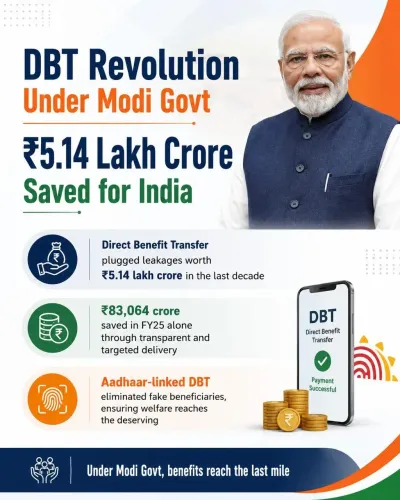
The DBT architecture, built on the JAM trinity (Jan Dhan, Aadhaar, Mobile), has been the central government's primary tool to eliminate leakage in welfare schemes since 2014 .
Opposition groups and civil society have challenged the zero-leakage claim, citing exclusion of eligible farmers from beneficiary lists as a form of effective leakage.
Upcoming Union Budget allocations and any CAG audit findings on DBT efficiency will be key tests of the government's delivery claims.
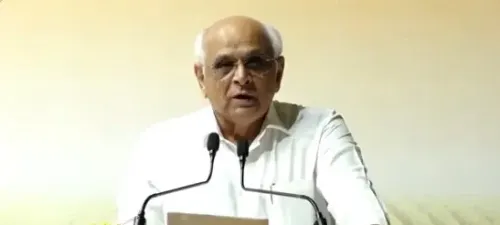
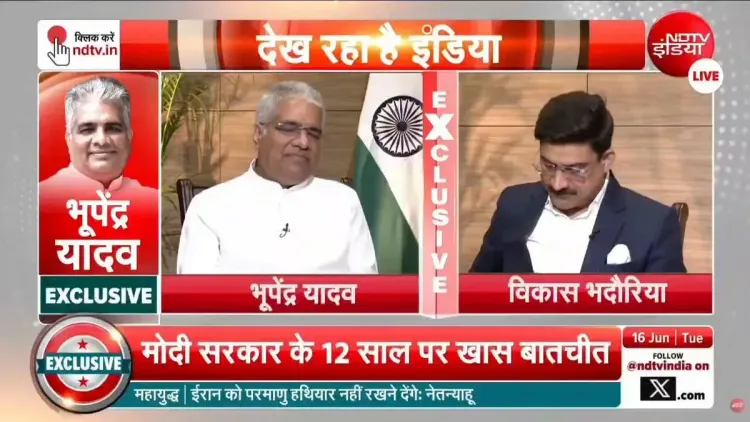
Union Environment Minister and senior BJP leader Bhupender Yadav on Wednesday, June 17, 2026, reaffirmed the central government's claim that welfare funds sent to farmers reach their bank accounts in full, without any deduction or leakage, citing the Direct Benefit Transfer architecture underpinning schemes such as PM-KISAN.
Context
In his post on X, Yadav quoted the government's own position verbatim: 'ये सरकार कहती है कि हम 100 रुपये ऊपर से भेजते हैं और किसान के अकाउंट में 100 का 100 रुपये पहुँचता है' — ('This government says that we send Rs 100 from the top, and Rs 100 out of Rs 100 reaches the farmer's account.'). The statement is a direct assertion of zero leakage in the government's farmer-welfare pipeline, invoking the principle of end-to-end Direct Benefit Transfer (DBT).
The post was accompanied by a video, suggesting it may be a clip of a speech or public address in which the claim was made, though the exact occasion could not be independently confirmed.
Policy Backdrop
PM-KISAN, launched in February 2019, provides Rs 6,000 per year to landholding farmer families in three equal instalments of Rs 2,000 each, transferred directly into beneficiary bank accounts. It is one of the flagship applications of the JAM trinity — Jan Dhan bank accounts, Aadhaar biometric identity, and Mobile connectivity — which successive governments have used to route subsidies and welfare payments without intermediaries.
The DBT push gained momentum after 2014, progressively replacing older input-subsidy mechanisms in sectors including fertilisers, LPG, and MGNREGA wages. The government has repeatedly argued that DBT eliminates 'ghost beneficiaries' and middlemen who historically siphoned a share of welfare funds before they reached intended recipients.
Stakeholders and Impact
The primary stakeholders in this assertion are India's landholding farmer families — estimated in the crores — who are enrolled as PM-KISAN beneficiaries, as well as state agriculture departments responsible for maintaining beneficiary lists and validating Aadhaar-linked bank details. For farmers in remote or digitally underserved areas, the quality of banking infrastructure remains a practical determinant of whether the 'full Rs 100' claim holds on the ground.
Opposition parties and civil society groups have periodically contested the zero-leakage narrative, pointing to exclusion errors — eligible farmers left off beneficiary lists — as a form of effective leakage even when transferred funds reach enrolled accounts intact. Any forthcoming audit or third-party assessment of DBT efficiency is likely to be cited by both sides of this debate.
What's Next
The credibility of the '100 out of 100 rupees' claim will be tested by the next Union Budget allocation for PM-KISAN and any Comptroller and Auditor General (CAG) or independent audit findings on actual DBT delivery rates. As India's welfare architecture deepens, the political stakes around demonstrable last-mile delivery will only grow — making transparent, third-party verification of end-to-end transfer efficiency increasingly central to public debate ahead of state and national electoral cycles.
Point of View
Positioning the party as the architect of a leakage-free welfare state — a contrast implicitly drawn against pre-2014 subsidy regimes. The timing, with no specific policy trigger confirmed, suggests a broader campaign to keep the PM-KISAN success story in public discourse, possibly ahead of electoral or budgetary cycles. The 'Rs 100 out of Rs 100' framing is rhetorically potent but remains contested by exclusion-error data, meaning the claim is as much a political assertion as a technical one. How audit bodies and independent researchers respond will shape whether this narrative holds.
NationPress
21 Sept 2026
Frequently Asked Questions
What is PM-KISAN and how does it transfer money to farmers?
PM-KISAN is a central government scheme launched in February 2019 that provides Rs 6,000 per year to landholding farmer families in three instalments of Rs 2,000 each, transferred directly into Aadhaar-linked bank accounts via Direct Benefit Transfer (DBT), bypassing intermediaries.
What did Bhupender Yadav say about farmer welfare payments?
Yadav reposted the government's claim that when Rs 100 is sent from the centre for a farmer, the full Rs 100 reaches the farmer's bank account — asserting zero leakage in the DBT pipeline.
What is Direct Benefit Transfer (DBT) in India?
DBT is a government mechanism that transfers subsidies and welfare payments directly into beneficiaries' bank accounts using the JAM trinity — Jan Dhan accounts, Aadhaar identity, and Mobile connectivity — to eliminate middlemen and reduce leakage.
Is there any leakage in PM-KISAN payments?
The government asserts zero leakage in DBT transfers, but critics and researchers have flagged 'exclusion errors' — eligible farmers not enrolled in beneficiary lists — as an indirect form of leakage. CAG audits periodically assess actual delivery rates.
Why is Bhupender Yadav, an Environment Minister, commenting on farmer welfare?
As a senior BJP leader, Yadav regularly amplifies the party's broader policy positions beyond his environment portfolio, including on agriculture and rural welfare schemes that are central to the BJP's political messaging.