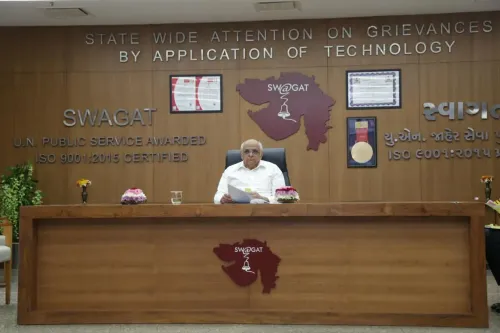
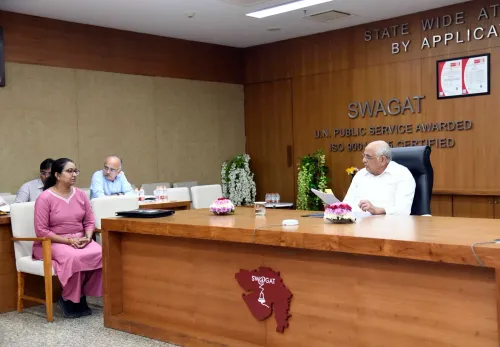
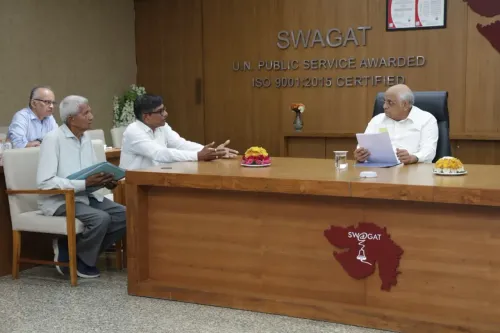
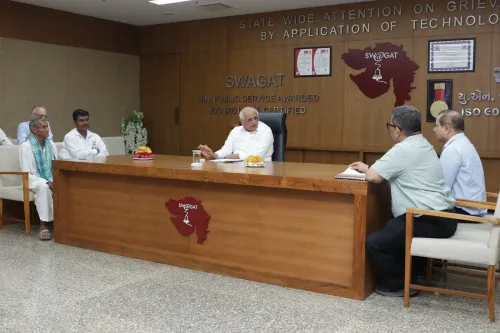
CM Bhupendra Patel Chairs May 2026 SWAGAT Grievance Session in Gandhinagar
Synopsis
Gujarat Chief Minister Bhupendra Patel chaired the May 2026 state-level SWAGAT online grievance session in Gandhinagar on 30 May, directing officials to resolve citizen complaints swiftly, ordering police action against road encroachments, and instructing districts to ensure farmer safety and timely redressal.
Key Takeaways
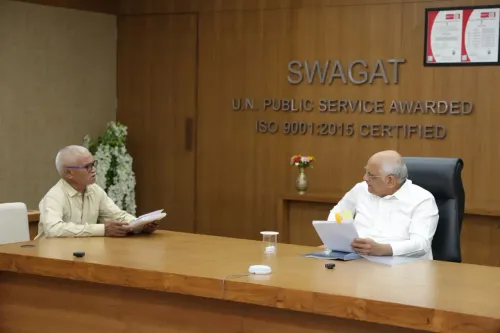
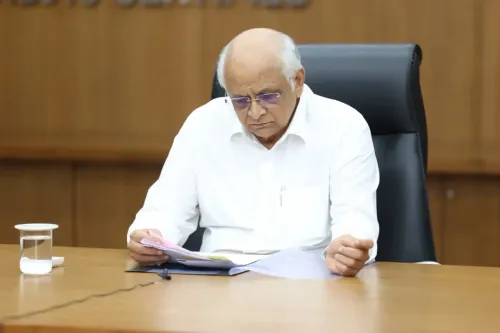
CM Bhupendra Patel presided over the May 2026 state-level SWAGAT online grievance redressal programme at Gandhinagar on 30 May 2026 .
He directed officials to ensure prompt resolution of citizen complaints heard during the session.
The Gujarat Police was instructed to take strict action against anti-social elements encroaching on public roads.
Special emphasis was placed on ensuring that farmers feel safe and secure.
District administrations were directed to resolve grievances in a timely, just, and simple manner to strengthen public trust in the government.
The SWAGAT programme, launched in 2003 , has been Gujarat's flagship e-governance grievance platform for over two decades.
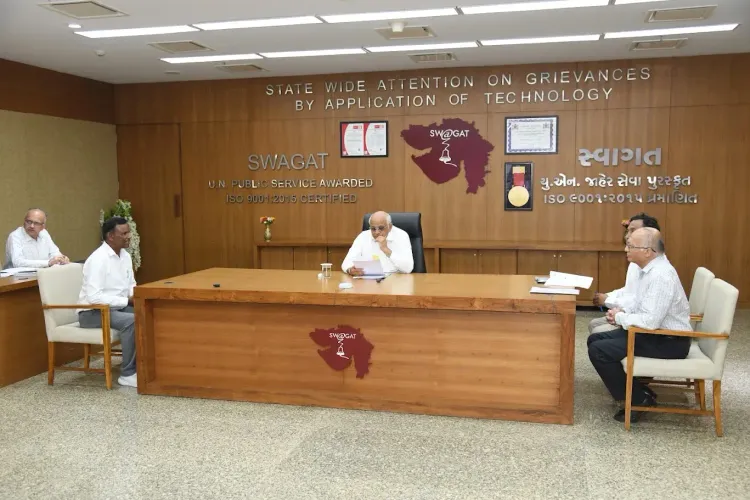
Gujarat Chief Minister Bhupendra Patel on Saturday, 30 May 2026, presided over the state-level SWAGAT (State Wide Attention on Grievances by Application of Technology) online public grievance redressal programme for May 2026 at Gandhinagar, hearing citizen complaints and issuing directives to officials for their swift resolution.
Context
In a post on X, CM Patel stated that he listened to citizens' representations at the state-level monthly SWAGAT session and gave necessary instructions to officials for their prompt redressal. He directed the police machinery to act firmly against anti-social elements encroaching on public roads and to ensure that farmers feel secure. ('ખેડૂતોને સલામતીની અનુભૂતિ થાય' — 'that farmers feel a sense of security'.)
He also issued guidelines to district administrations to resolve citizen grievances in a timely, just, and simple manner — with the stated aim of strengthening public trust in the government.
Policy Backdrop
The SWAGAT programme was launched in 2003 as part of Gujarat's e-governance push, enabling citizens to submit and track complaints directly with district and state authorities through an online platform. Monthly hearings at the state level allow the Chief Minister or senior officials to personally monitor pending cases and push for resolution within fixed timelines.
The programme has been a consistent feature of Gujarat's governance model for over two decades, positioning the state as an early adopter of technology-driven public administration. The emphasis on road encroachments and farmer safety reflects recurring law-and-order concerns that surface regularly in these sessions, particularly those affecting rural constituencies.
Stakeholders and Impact
Gujarat's farming community stands as a direct beneficiary of the CM's directive to the police, as rural areas are frequently affected by encroachments on agricultural access roads and public pathways. District-level officials have been put on notice to ensure grievances are addressed within set timelines, raising accountability across the administrative machinery.
Citizens across the state who have filed complaints through the SWAGAT portal stand to see faster action following the May session. The instruction to district administrations to handle cases 'judicially and simply' signals an intent to reduce bureaucratic delays that erode public confidence.
What's Next
The resolution statistics from the May 2026 SWAGAT round and any police action reports on road encroachments will be the key indicators of follow-through. The next monthly SWAGAT session will serve as a benchmark for whether the directives issued on 30 May have translated into measurable outcomes on the ground.
With the state government's credibility partly tied to the visible responsiveness of this long-running programme, consistent delivery on these directives will be central to reinforcing the administration's public-service narrative ahead of future political cycles.
Point of View
Patel reinforces the image of an accessible, action-oriented administration. The real test, as always with SWAGAT, lies in the resolution data from the next cycle.
NationPress
14 Oct 2026
Frequently Asked Questions
What is the SWAGAT programme in Gujarat?
SWAGAT (State Wide Attention on Grievances by Application of Technology) is Gujarat's flagship online grievance redressal platform, launched in 2003, which allows citizens to submit and track complaints directly with district and state authorities through monthly hearings.
What happened at the May 2026 SWAGAT session?
Gujarat CM Bhupendra Patel chaired the May 2026 state-level SWAGAT session in Gandhinagar on 30 May 2026, heard citizen grievances, and directed officials, police, and district administrations to resolve complaints swiftly and ensure farmer safety.
What did CM Bhupendra Patel instruct the Gujarat Police at the SWAGAT session?
CM Patel directed the Gujarat Police to take strict action against anti-social elements encroaching on public roads and to ensure that farmers feel secure.
How often is the SWAGAT grievance programme held in Gujarat?
The SWAGAT state-level grievance redressal programme is held monthly, with the Chief Minister or senior officials personally monitoring citizen complaints and directing officials to resolve them within fixed timelines.
Who benefits from the SWAGAT programme in Gujarat?
All Gujarat citizens can file grievances through SWAGAT, but the programme particularly benefits rural residents and farmers who face issues such as road encroachments and delays in administrative services.