Gujarat CM Bhupendra Patel sets 30-day deadline for grievance redressal at SWAGAT
Synopsis
Gujarat CM Bhupendra Patel has formalised a rule that could cut through one of India's most persistent bureaucratic traps: when multiple departments are involved in a grievance, one department must own the outcome. With 5,200 representations processed in a single SWAGAT session and hard deadlines of 15 to 30 days attached to specific cases, the pressure on district collectors is now explicit and on record.
Key Takeaways
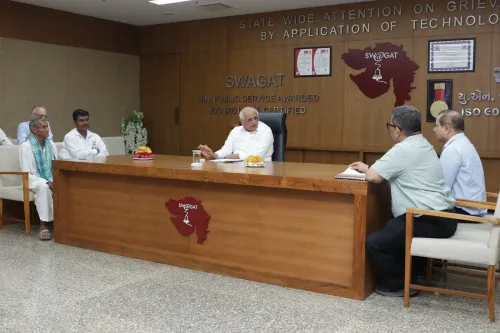
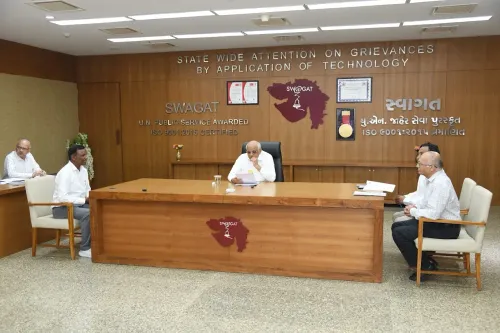
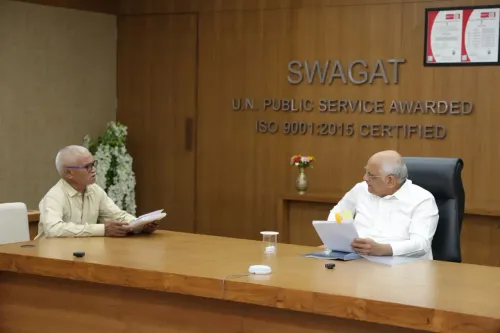
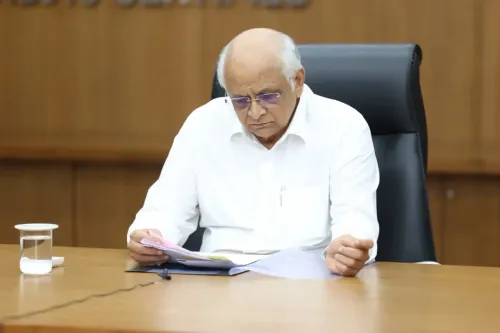
Gujarat CM Bhupendra Patel chaired the State SWAGAT grievance redressal session on 22 June in Gandhinagar .
The principal department concerned will now be held solely accountable for resolving grievances that span two or more departments .
A total of 5,200 representations were processed across State, District, and Taluka SWAGAT platforms this month.
Patel set a 30-day deadline for alternative land allotment to a Chhota Udepur farmer displaced by an irrigation project.
A Mehsana land re-survey dispute was ordered resolved within 15 days by the district collector.
An unresolved grazing land encroachment in Visnagar taluka drew a direct order for immediate removal.
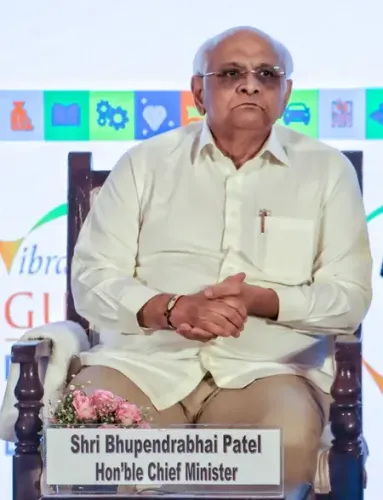
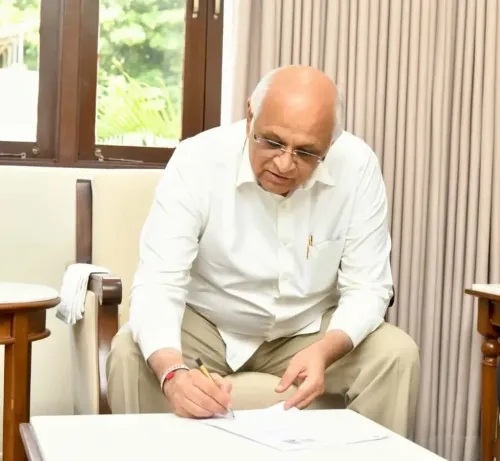
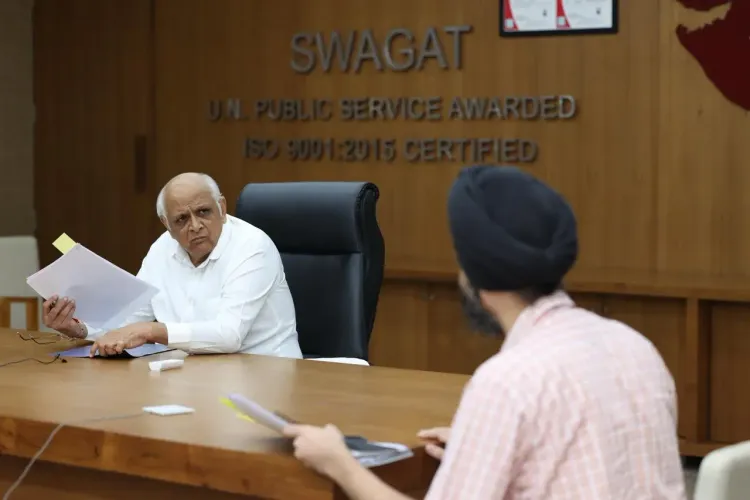
Gujarat Chief Minister Bhupendra Patel on Monday, 22 June directed that public grievances involving multiple departments will be the sole accountability of the principal department concerned, as he chaired the monthly State SWAGAT public grievance redressal programme in Gandhinagar. The directive marks a sharper push toward time-bound resolution and inter-departmental coordination in the state's flagship citizen outreach mechanism.
Key Directives from the Chief Minister
Patel instructed district administrations and government departments to resolve citizens' applications in a speedy, transparent and time-bound manner. He emphasised that district-level officials should examine and decide cases at their own level wherever possible, forwarding only those matters falling under state jurisdiction — and doing so without delay.
'The responsibility for resolving issues involving two or three departments will rest with the principal government department concerned,' Patel stated, making clear that applicants should not be left in limbo due to inter-departmental coordination failures.
Scale of This Month's SWAGAT Session
A total of 5,200 representations received across State, District, and Taluka SWAGAT platforms were forwarded to relevant departments for action. Of these, 2,228 were received at the district level and 2,854 at the taluka level. More than 120 applicants attended in person at the Chief Minister's Office Public Relations Unit to submit grievances directly.
The June session was held on Monday instead of the customary fourth Thursday of the month, as the state-wide school enrolment drive is scheduled from 23 to 25 June. Issues raised spanned rehabilitation land allotments, encroachments on grazing land, and discrepancies stemming from land re-surveys.
Cases That Drew the Chief Minister's Direct Intervention
Farmers from Chhota Udepur and Mehsana districts presented concerns directly before Patel. One applicant from Chhota Udepur stated that land owed to him under a rehabilitation package had not been allotted even though his original land had been submerged by an irrigation project. Patel called the repeated hardship 'inappropriate', assigned primary accountability to the Irrigation Department, and directed that alternative land be allotted within 30 days.
In a separate case, a farmer from Mehsana complained that his recorded land area had shrunk following a re-survey. Patel directed the district collector to order immediate measurement and complete corrective action within 15 days. He also instructed the Inspector of Land Records (ILR) office to resolve land-measurement disputes within prescribed timelines and to eliminate unnecessary back-and-forth correspondence between Mamlatdar offices and the ILR office.
Grazing Land Encroachment in Visnagar
The Chief Minister also intervened in a grazing land encroachment case in Visnagar taluka, where a decision had already been taken at the District SWAGAT level but action had not followed. Patel directed the district collector to remove the encroachment immediately, underscoring that decisions without follow-through defeat the purpose of the grievance mechanism.
Officials Present and Next Steps
The programme was attended by Additional Chief Secretary to the Chief Minister Sanjeev Kumar, Secretary Dr Ajay Kumar, Officers on Special Duty Dhiraj Parekh and Rakesh Vyas, and senior secretaries of the concerned departments. District collectors and administrative officials joined via video conference to provide additional information on cases under review.
With firm deadlines now attached to specific cases and primary-department accountability formalised, the onus shifts to district collectors — whom Patel explicitly identified as the appropriate authorities to lead timely resolution of local grievances.
Point of View
But Monday's session exposed a structural flaw it has long struggled with: inter-departmental diffusion of responsibility. Patel's directive — pinning accountability on a single principal department — is administratively sensible, but its effectiveness will depend entirely on whether district collectors enforce it or treat it as another circular. The 30-day and 15-day deadlines attached to individual cases are a useful accountability signal, yet the Visnagar encroachment case, where a District SWAGAT decision sat unimplemented, suggests that the gap between order and action remains the real governance challenge in Gujarat's grievance infrastructure.
NationPress
21 Sept 2026
Frequently Asked Questions
What is the State SWAGAT programme in Gujarat?
State SWAGAT is Gujarat's flagship monthly public grievance redressal programme, chaired by the Chief Minister, where citizens can submit complaints directly to senior officials. It operates at state, district, and taluka levels, with cases forwarded to relevant departments for time-bound action.
What new accountability rule did CM Bhupendra Patel announce at SWAGAT?
Patel directed that when a grievance involves two or more government departments, the principal department concerned will bear sole responsibility for ensuring its resolution. The move is aimed at preventing applicants from being caught in inter-departmental coordination delays.
How many grievances were received at the June 2025 SWAGAT session?
A total of 5,200 representations were received across State, District, and Taluka SWAGAT platforms this month. Of these, 2,228 came at the district level and 2,854 at the taluka level, covering issues such as rehabilitation land, grazing land encroachments, and land re-survey discrepancies.
What deadlines did CM Patel set for specific grievance cases?
Patel ordered that a Chhota Udepur farmer — whose land was submerged by an irrigation project — be allotted alternative land within 30 days, with the Irrigation Department assigned primary responsibility. A separate Mehsana land re-survey dispute was directed to be resolved within 15 days by the district collector.
Why was the June SWAGAT session held on a Monday instead of the usual fourth Thursday?
The June session was rescheduled to Monday, 22 June, because the state-wide school enrolment drive is scheduled to run from 23 to 25 June, which would have coincided with the customary fourth Thursday slot.