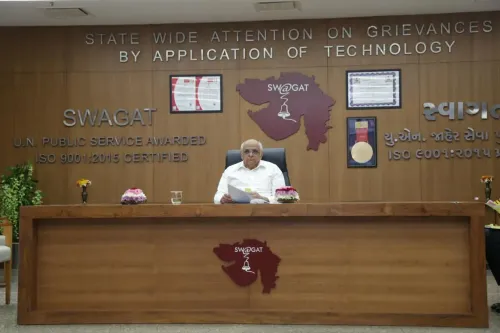
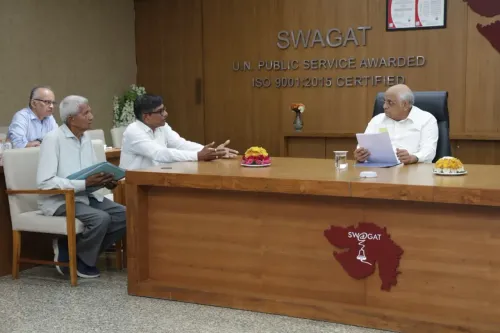
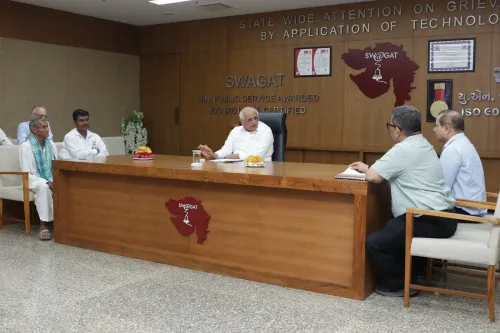
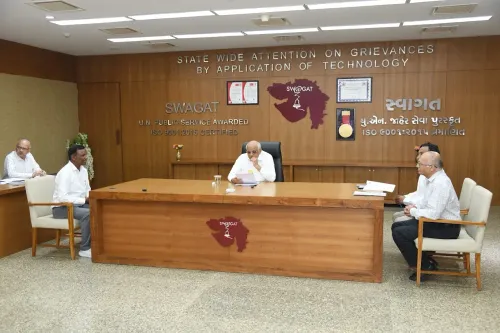
CM Bhupendra Patel Chairs September Swagat to Resolve Citizen Grievances
Synopsis
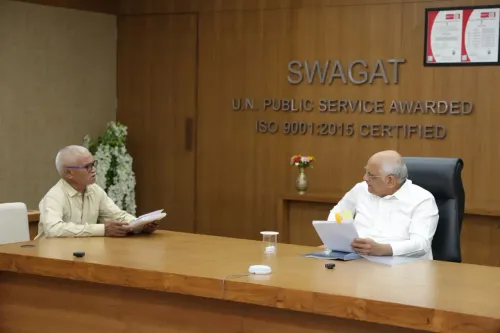
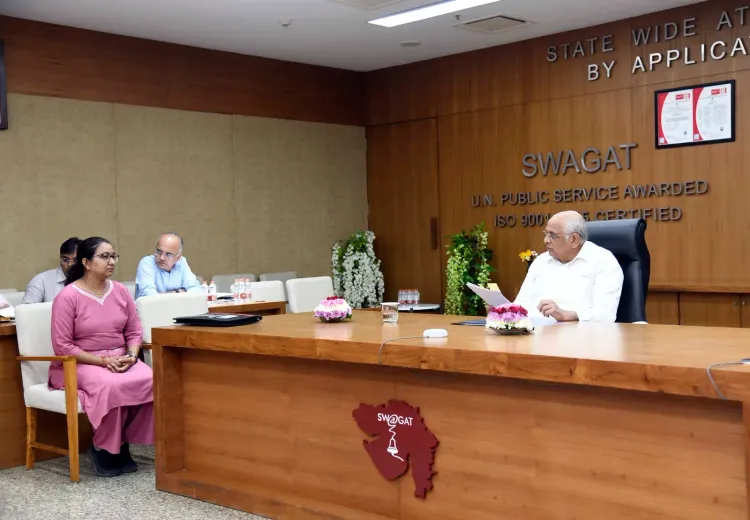
Gujarat CM Bhupendra Patel personally heard citizen grievances from multiple districts on September 24, 2026, during the monthly Swagat online programme, held under the Seva Sankalp Abhiyan dedicated to PM Modi's 25 years of public service. Directives for swift resolution were issued to district administrations.
Key Takeaways
Gujarat CM Bhupendra Patel chaired the September 2026 Raj ya Swagat programme on September 24, 2026 .
The session is part of Seva Sankalp Abhiyan , a campaign marking PM Narendra Modi's 25 years of public service since October 2001.
Citizens from various districts across Gujarat presented their grievances directly to the CM.
Patel issued directives to local administration and relevant departments for positive and speedy resolution of issues.
The Swagat platform, first established under Modi as CM, remains Gujarat's primary institutional channel for direct citizen-to-government grievance redressal.
A direct line between Gujarat's citizens and its government opened once again on Thursday, September 24, 2026, as Gujarat Chief Minister Bhupendra Patel personally heard grievances from residents across multiple districts during the September 2026 Rajya Swagat programme — the flagship online public-outreach session that has become a hallmark of governance in the state.
What Swagat brings to the table
The Swagat (which translates to 'welcome') online programme is Gujarat's institutionalised mechanism for direct citizen-to-administration grievance redressal. Launched originally under then Chief Minister Narendra Modi, the platform allows ordinary people — regardless of where they live in the state — to place their complaints before the highest levels of administration without the maze of bureaucratic intermediaries. CM Patel, continuing that tradition, described it in his post as 'saamaanya maanvini samasyaano setu' — 'a bridge for the swift resolution of the common person's problems.'
Seva Sankalp Abhiyan: 25 years of Modi's public service as the backdrop
Today's session was held as part of the Seva Sankalp Abhiyan, a campaign dedicated to marking 25 years of Prime Minister Narendra Modi's public service. Modi first became Chief Minister of Gujarat in October 2001, a tenure that shaped many of the administrative systems — including Swagat itself — that the state still runs. The Abhiyan frames these governance outreach events explicitly as a tribute to that quarter-century of service, tying current state administration to a continuous institutional legacy.
Directives issued to districts after hearing representations
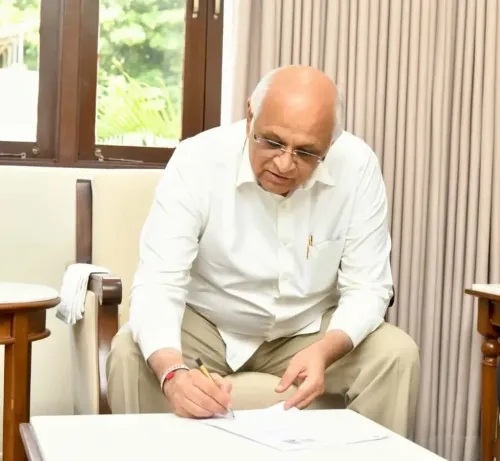
Following the personal hearings, CM Patel said he issued necessary directives to local administrative machinery and relevant departments for a positive and speedy resolution of each issue raised. The session drew representations from citizens of various districts across Gujarat. No specific case figures or district names were disclosed in the post, but the directional instruction to administration — resolve quickly and constructively — signals a clear accountability expectation from the top.
Gujarat's model of technology-enabled, leader-chaired grievance redressal has drawn attention as a replicable governance template within India's BJP-ruled states. The fact that this format has survived and scaled across multiple Chief Ministerial tenures speaks to its institutional depth — not a one-time headline event, but a recurring calendar fixture. Whether the September resolutions reach citizens in time or get caught in departmental follow-through will be the real test that matters.
Point of View
Framing frontline outreach as a continuation of Modi's founding legacy. Hosting these sessions under the Seva Sankalp Abhiyan banner consciously links present-day state governance to the PM's 25-year arc, reinforcing a BJP strategy of blending institutional governance with party identity. For CM Patel, regular, personal chairing of Swagat also serves a legitimacy function: it positions him as an accessible, execution-focused administrator rather than a distant political figure. The critical variable, as always, is departmental follow-through after the cameras leave.
NationPress
24 Sept 2026
Frequently Asked Questions
What is Gujarat's Swagat online programme?
Swagat is Gujarat's institutionalised online grievance redressal platform that allows citizens to present complaints directly to the Chief Minister and senior administration, bypassing routine bureaucratic channels. It was launched under then-CM Narendra Modi and has been continued by successive Gujarat chief ministers.
What is Seva Sankalp Abhiyan?
Seva Sankalp Abhiyan is a campaign dedicated to marking 25 years of Prime Minister Narendra Modi's public service, counting from his first assumption of the Gujarat Chief Ministership in October 2001. State-level governance events, including Swagat sessions, are being organised under its banner.
What did CM Bhupendra Patel do at the September 2026 Swagat?
CM Patel personally heard representations from citizens of various Gujarat districts and subsequently issued directives to local administrative machinery and relevant departments for positive and speedy resolution of the issues raised.
How often is the Swagat programme held in Gujarat?
The Swagat programme is held on a monthly basis, with the Chief Minister chairing the state-level 'Raj ya Swagat' session and district-level programmes running in parallel across Gujarat.
When did Narendra Modi start his public service that the 2026 campaign marks?
Narendra Modi became Chief Minister of Gujarat in October 2001, which marks the 25-year milestone being commemorated by the Seva Sankalp Abhiyan in 2026.