CM Manik Saha joins Shyama Puja at Rabindra Bhavan, Agartala
Synopsis
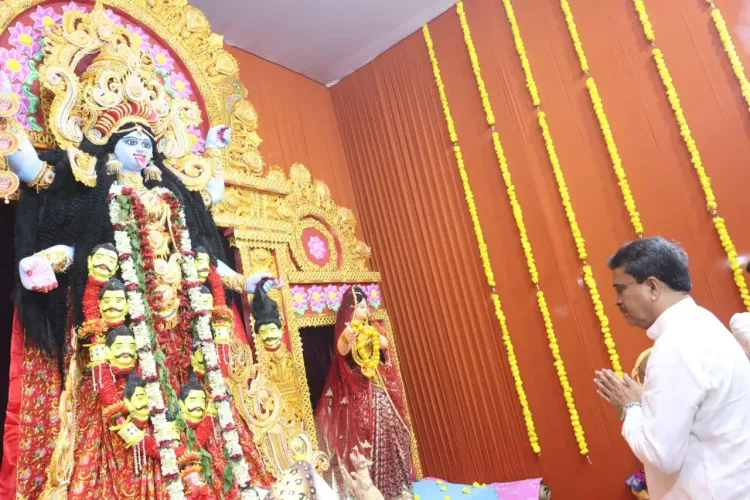
Tripura Chief Minister Dr. Manik Saha participated in the Shyama Puja ceremony organised by Barodowali Mondal at Rabindra Bhavan, Agartala, on 9 November 2026, sharing photographs from the event on X with the invocation 'Jai Maa Kali'.
Key Takeaways
Manik Saha attended Shyama Puja at Rabindra Bhavan, Agartala on 9 November 2026 .
The puja was organised by the community group Barodowali Mondal .
Shyama Puja is one of the most significant annual festivals for Tripura's Bengali Hindu population.
Saha shared four photographs from the ceremony on his official X account.
The event was held in the compound of Rabindra Bhavan , a prominent cultural auditorium in Agartala.
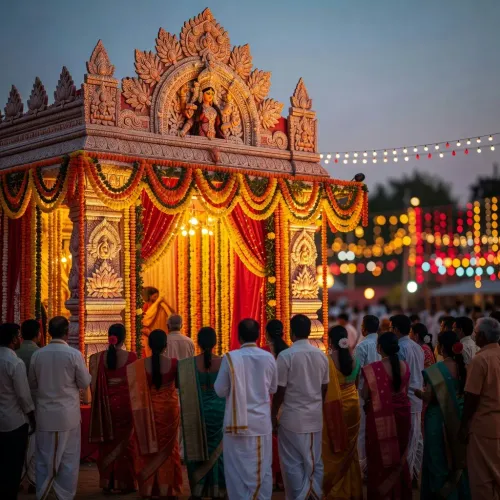
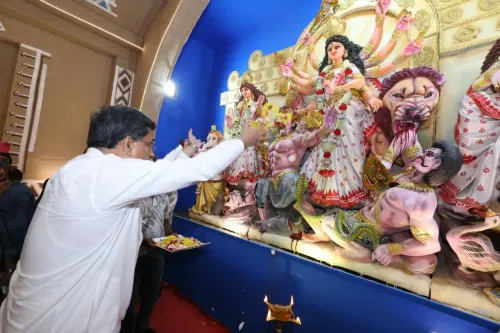
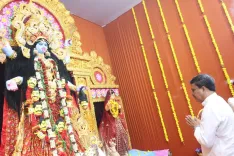
Under the glow of a November night in Agartala, Tripura Chief Minister Dr. Manik Saha joined the faithful at Rabindra Bhavan for the annual Shyama Puja organised by the Barodowali Mondal — offering prayers to Maa Kali alongside devotees in one of the state capital's most prominent cultural spaces.
Posting on X on 9 November 2026, Dr. Saha shared photographs from the ceremony and wrote in Bengali: 'রবীন্দ্রভবন প্রাঙ্গণে বড়দোয়ালী মন্ডল আয়োজিত শ্যামা মায়ের আরাধনায় ব্রতী হওয়ার সৌভাগ্য হয়। জয় মা কালী 🙏' — ['I was fortunate to be part of the worship of Shyama Maa, organised by the Barodowali Mondal at Rabindra Bhavan. Victory to Maa Kali.']Shyama Puja at the heart of Agartala's cultural calendar
Rabindra Bhavan, Agartala's well-known cultural auditorium, served as the backdrop for the evening's rituals. Shyama Puja — the worship of the goddess Kali in her gentle, benevolent form — is among the most deeply observed annual festivals in Tripura, a state with a predominantly Bengali Hindu population. The occasion typically falls on the new-moon night of the month of Kartik, drawing large congregations of devotees across the Barak and Brahmaputra cultural belt that stretches through northeastern India and Bangladesh.
A chief minister in the mandap
Dr. Saha's presence at the community-organised puja follows a familiar pattern for state chief ministers, who regularly participate in major regional religious observances as both a civic duty and a signal of cultural solidarity with their constituents. For BJP leaders in particular, visible participation in Hindu festivals carries added political resonance — an affirmation of the party's cultural identity politics in a state it has held since 2018.
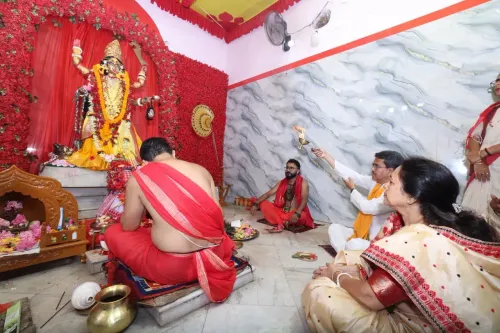
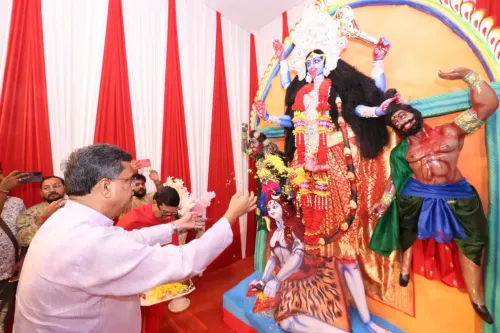
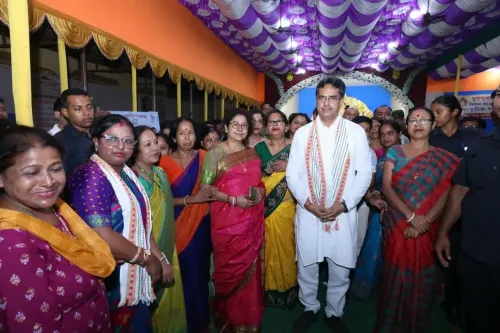
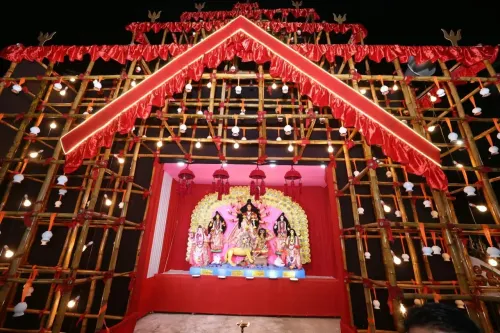
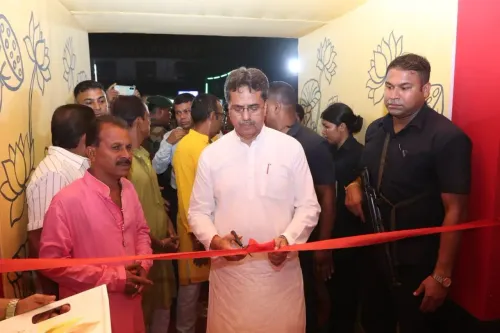
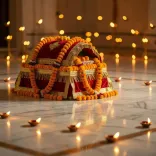
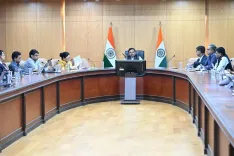
The four images shared with the post showed the ceremonial setting at the Rabindra Bhavan compound, underscoring the community character of the event rather than a private observance.
When a chief minister steps into the mandap alongside neighbourhood devotees, the act is at once personal piety and public statement — in Tripura, on Shyama Puja night, those two things have never been entirely separate.
Point of View
A civic cultural space rather than a private temple, amplifies the community optics. For a state government that has invested in both cultural infrastructure and religious tourism, such appearances are as much governance signalling as personal devotion. The gesture also fits a wider pattern among BJP chief ministers of converting festival seasons into sustained public-outreach cycles.
NationPress
9 Nov 2026
Frequently Asked Questions
Why did Tripura CM Manik Saha attend Shyama Puja at Rabindra Bhavan?
Dr. Manik Saha participated in the Shyama Puja organised by the Barodowali Mondal at Rabindra Bhavan, Agartala, as part of his public engagement during the Kali Puja festival season, sharing the event on X on 9 November 2026.
What is Shyama Puja and why is it important in Tripura?
Shyama Puja is the worship of goddess Kali in her benevolent 'Shyama' form, observed on the new-moon night of Kartik. It is one of the most widely celebrated festivals in Tripura, which has a predominantly Bengali Hindu population.
Where is Rabindra Bhavan in Agartala?
Rabindra Bhavan is a well-known cultural auditorium in Agartala, the capital of Tripura, commonly used for public cultural and community events throughout the year.
Who are the Barodowali Mondal?
Barodowali Mondal is the community group that organised the Shyama Puja ceremony at Rabindra Bhavan in Agartala on 9 November 2026, as mentioned in Chief Minister Dr. Manik Saha's post.
What did Manik Saha say about Kali Puja 2026?
Dr. Manik Saha wrote on X that he was 'fortunate to be part of the worship of Shyama Maa' at Rabindra Bhavan, concluding with the invocation 'Jai Maa Kali', accompanied by four photographs from the ceremony.